
Road trip through the wild south: from Souillac to Chamarel
Updated: November 2018
Two days to discover the true face of the south
I’d been warned. “The south of Mauritius is rugged, it’s not the west coast.” That’s exactly why I’d booked a car from the second day of my trip onward. I wanted rugged. I wanted something that didn’t look like the retouched photos in tourist brochures.
This two-day road trip between Souillac and Chamarel turned out to be one of the best travel decisions of my life. Here’s how I experienced this adventure, and how you can plan your own. For the practical background on road-tripping around the island, our complete guide to a Mauritius road trip covers everything you need to know.
At a glance
| Where | From Souillac to Chamarel, via Bel Ombre |
| Recommended duration | 2 full days, 1 night on the road |
| Budget | About 60 to 80 € per day for two, car included |
| How to get there | A rental car is essential, starting from Mahébourg or the south |
| Best time to go | May to November, avoiding the heavy January-February rains (weather) |
Day 1: Souillac and the wild coast
Setting off from Mahébourg
I chose to start from Mahébourg, a small coastal town in the southeast that makes an ideal base for exploring the south. The B9 road hugs the coast heading west, and the landscape starts to change almost immediately. Gone is the sheltered lagoon, the coral reefs and the calm waters — here, the Indian Ocean bares its teeth.
Mahébourg itself deserves a morning of your time. Its Monday market is legendary — if you happen to pass through on a Monday morning, don’t miss it under any circumstances. And the town’s history museum recounts the wreck of the Saint-Géran in 1744 and the Battle of Grand Port in 1810, one of the rare Napoleonic naval victories commemorated on the Arc de Triomphe in Paris.
Souillac is about 40 minutes from Mahébourg. The town itself isn’t especially picturesque — a few shops, a church, quiet streets. But it wasn’t the town that interested me.
The Robert Edward Hart garden
At the entrance to Souillac, the Robert Edward Hart garden stopped me in my tracks. This small museum dedicated to one of Mauritius’ greatest poets sits in a white coral house facing the sea. The building itself, with its thick walls carved from fossil coral, is beautiful. Inside, the poet’s furniture, books and manuscripts remain, in an atmosphere of rare authenticity.
I spent half an hour there, listening to the waves crash against the cliffs, reading a few verses displayed on the walls. A timeless place that perfectly illustrates the cultural side of Mauritius that classic tourist circuits so often overlook. For more on these cultural aspects, our guide to markets and culture covers the island’s most interesting heritage sites.
The Gris-Gris cliffs
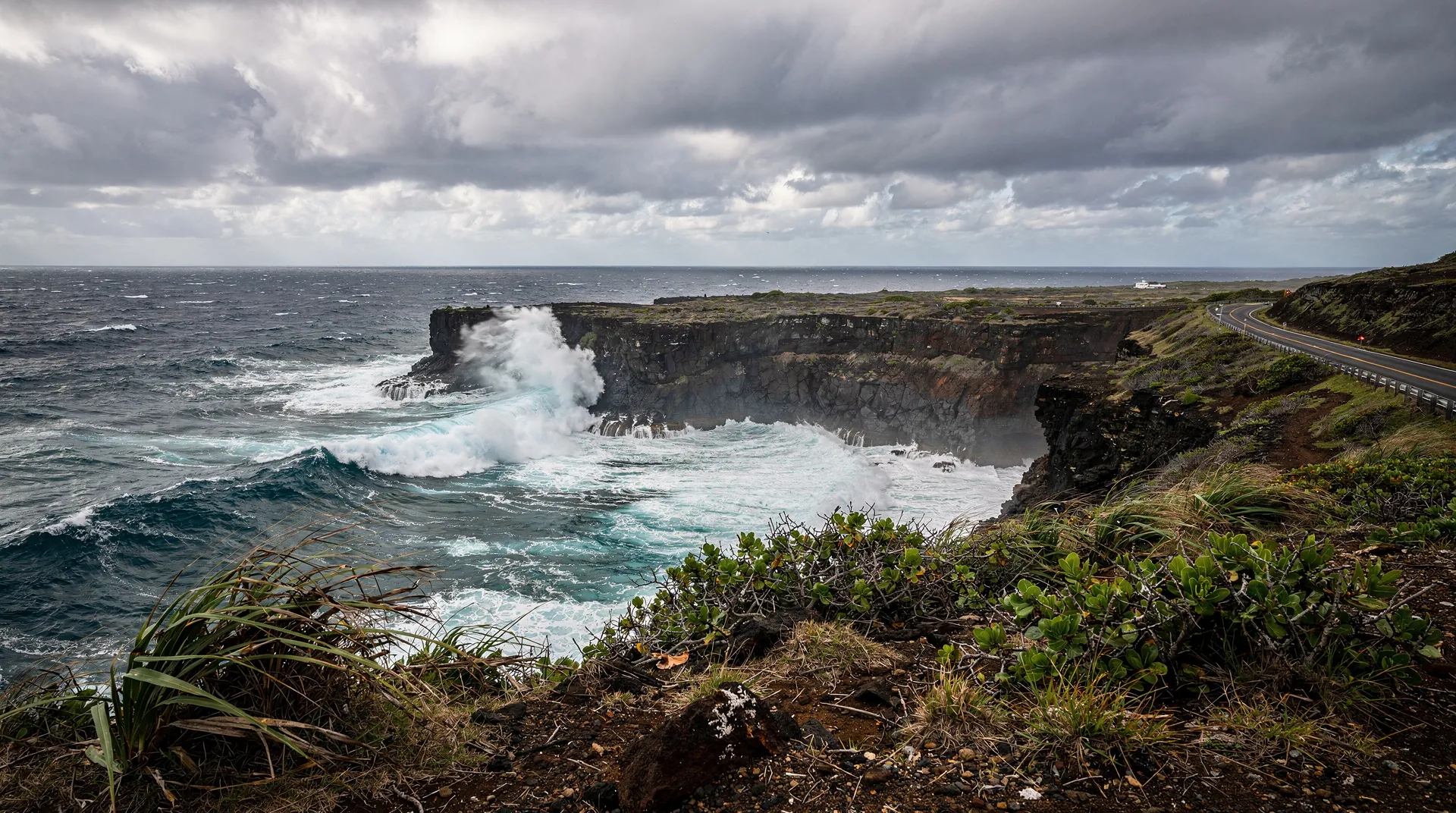
Gris-Gris — the name already sounds mysterious. These wind-battered black basalt cliffs are one of the island’s most spectacular spots, and one of the least visited. There’s no sheltered lagoon here, no turquoise water. The ocean arrives in massive rollers that crash against the volcanic rock with a deep, powerful roar.
A word of warning: you don’t swim at Gris-Gris. The currents are violent, the waves unpredictable. But you can sit on the rocks, watch, breathe in the salt-laden air, and understand why locals call this spot “the end of the world.”
There’s a path that runs along the cliff heading east. Take it. It offers breathtaking views of waves surging into natural caves carved out of the basalt rock. This is a side of Mauritius most tourists never see — the wild, untamed, unruly version of the island.
Our ranking of the most beautiful beaches in Mauritius includes Gris-Gris not for swimming but for contemplation — a category all its own among the island’s coastal treasures.
The Crying Rock and the Blowhole
A few kilometres west of Gris-Gris, two more natural wonders await. The Crying Rock is a black rock formation over which water constantly trickles, like tears running down a human face. Poetic and a touch melancholy, much like the surrounding landscape.
The Blowhole, meanwhile, is a natural geyser formed by a crack in the rock. When the waves arrive with enough force, water shoots up through the opening in a powerful jet accompanied by a distinctive hiss. On some days, when the swell is strong, the show is spectacular. On others, when the sea is calm, the Blowhole stays silent — such is the beauty of natural phenomena, unpredictable by nature.
A night in Bel Ombre
Late in the afternoon, I pushed on to Bel Ombre, along the southwest coast. This region, long left out of tourism development, has seen renewed interest in recent years with the arrival of a few lodges and estates. I opted for a small room in a charming guesthouse run by a local family — breakfast with homemade cakes, a veranda overlooking sugarcane fields, sunset shared quietly with the ocean.
Bel Ombre is one of Mauritius’ least touristy regions, and that’s exactly what makes it charming. Far from Grand Baie and its bustle, you find yourself in a quiet, authentic Mauritius here. The Bel Ombre estate is one of the island’s last great colonial estates, with its sugarcane fields, nature reserve and luxury hotel accessible to non-residents for a day-pass fee.
Day 2: heading up to the Chamarel highlands
Morning in the gorges
The next morning, I headed north, climbing back into the highlands. The road through the Black River Gorges is stunning — a series of switchbacks climbing through dense vegetation, with sudden viewpoints over steep valleys blanketed in primary forest.
Black River Gorges National Park is the island’s largest protected natural area. A few marked trails let you explore on foot — I’d recommend the hike up to Piton de la Petite Rivière Noire, the island’s highest point at 828 metres. Our guide to hiking in Mauritius details all the trails accessible in this exceptional park, from an hour-long walk to a full day’s trek.
I didn’t have time that day. I settled for a stop at the park’s lookout point, which already offers impressive views over the wooded gorges below — a dense green sea stretching as far as the eye can see, home to species found nowhere else: the Mauritius kestrel, the pink pigeon, the echo parakeet.
Chamarel: the seven-coloured earth
Chamarel. The name is part of the folklore of Mauritius tourism. And for once, reality lives up to the reputation.
The Seven Coloured Earths are a dune of volcanic soil displaying shades ranging from ochre red to purple, by way of brown, green, blue and yellow. What makes the phenomenon so fascinating is that the colours never blend, even in the rain — the separation of mineral pigments is natural and permanent. Our complete guide to Chamarel and its coloured earths explains the geological origin of this one-of-a-kind phenomenon.
If you’d rather not drive, the guided excursion to Chamarel with coloured earths and waterfall includes transport from your hotel.
I arrived mid-morning, ahead of the tour buses (practical tip: come before 10am or after 3pm). The dune is fenced off to stop visitors walking on it and disturbing the formations. That takes nothing away from the beauty of the view from the designated lookout points.
Admission is charged but reasonable. The site also includes a park with giant Aldabra tortoises — a very popular extra stop if you have children or are curious about local wildlife.
The Chamarel waterfall
Less than two kilometres from the coloured earths, the Saint-Denis River falls plunge 83 metres into a pool framed by dense tropical vegetation. It’s one of the tallest waterfalls in Mauritius, and one of the most photogenic.
I took the trail down to the lower lookout point — about twenty minutes’ walk through the forest, with birdsong and frog calls gradually giving way to the roar of the waterfall. The view from below is impressive. The water crashes down in a continuous rumble, throwing a fine cool mist onto the path. Even visitors in light clothing come away wet — bring a change of clothes if you’re heading all the way down.
Lunch in Chamarel village
The village of Chamarel, perched up in the highlands, has a few restaurants worth the detour. I ate on a terrace overlooking the Le Morne peninsula below and the ocean beyond — a setting that would make any dish taste good, but the fish curry was excellent in its own right regardless. Creole cuisine in this authentic village setting, far from the coast’s tourist restaurants, is an experience in its own right.
The village also grows coffee — home to one of the island’s rare coffee plantations. A few places offer tastings of coffee flavoured with Mauritian vanilla, rum or local spices.
The afternoon: the Chamarel distillery
Just below the village, the Chamarel distillery is a must for anyone interested in Mauritian rum. Unlike the large industrial distilleries in the north of the island, Chamarel is a craft distillery that produces its rum from fresh sugarcane juice — a rare method known as rhum agricole.
The guided tour of the distillery is informative and well run. You follow the process from field to bottle, see the copper stills, and learn the difference between a white cane rum and an aged amber rum. And of course, it ends with a tasting.
Their flavoured rums — vanilla, coffee, coconut, pineapple — are of very high quality, well above similar products found in tourist shops. I brought back three bottles. The Chamarel rum distillery also runs a fine-dining restaurant with one of the best views on the island over the coast and the Indian Ocean horizon. You can also book the Chamarel distillery tour and tasting in advance to skip the queues.
Hour-by-hour itinerary
For those who want to plan their two days precisely, here’s the pace I’d now recommend with hindsight:
| Time | Stage |
|---|---|
| Day 1, morning | Departure from Mahébourg, market if it’s a Monday |
| Day 1, late morning | Souillac: Robert Edward Hart garden |
| Day 1, early afternoon | Gris-Gris, the Crying Rock, the Blowhole |
| Day 1, late afternoon | Drive to Bel Ombre, settle in for the night |
| Day 2, morning | Black River Gorges, lookout point |
| Day 2, midday | Chamarel: seven-coloured earths, waterfall |
| Day 2, afternoon | Lunch in the village, Chamarel distillery |
This pacing avoids the classic mistake of trying to cram everything into a single day: the south rewards a slower pace, and the best light (morning on the cliffs, late afternoon on the coloured earths) rewards those who take their time.
Extending toward Le Morne or the full itinerary
If your trip allows it, two options open up after this two-day road trip. The first is to head straight on to Le Morne, 30 minutes from Chamarel, to enjoy the lagoon and possibly a kitesurfing session or a hike up the UNESCO-listed mountain.
The second is to fold this road trip into a full tour of the island: our road trip itinerary and our 7-day itinerary show how to combine the south with the rest of the island without backtracking over the same roads.
For the overnight stay, if the Bel Ombre guesthouse isn’t for you, our guide to where to stay in the south lists other options, from budget stays to resorts.
Practical tips for this road trip
A car is essential. Public transport barely covers this region, and even if it did, the freedom to stop wherever the scenery calls for it is essential. Our car rental guide helps you choose the right vehicle and agency. Driving on the left takes a bit of getting used to, but the roads in the south are generally quiet.
The season: this road trip works year-round, but May to November is the most pleasant time. Mild temperatures, moderate chance of rain, gorgeous light for photography. In the southern summer (December-March), rain can be more frequent up in the Chamarel highlands and the gorges. Our Mauritius weather guide helps you choose the best time to go.
The budget: count on about 60 to 80 euros per day for two people, car rental included, if you go for a local guesthouse rather than a chain hotel. Admission fees (Seven Coloured Earths, distillery) remain affordable. For a detailed breakdown, see our budget guide.
Combining with Le Morne: if you have an extra day, Le Morne Brabant is 30 minutes from Chamarel. The UNESCO-listed peninsula, the deep blue lagoon and the kitesurfers riding the trade winds make it one of the most memorable images of the island.
The roads: some roads in the south are narrow and wind between walls of vegetation. Don’t be surprised to come face to face with a tractor loaded with sugarcane. The unwritten rule: patience and calm settle every situation.
What this road trip taught me
The south of Mauritius is an island within the island. It doesn’t have the softness of the west coast beaches, the glamour of the north, the buzz of the capital. It’s raw, authentic, sometimes a little rough — and that’s exactly what makes it unforgettable.
Those who set out to discover it come away with something the beaches of Grand Baie or Trou aux Biches can’t give you: the feeling of having touched something real. Of having seen Mauritius unfiltered, without any staging.
If you’ve never set foot in the south of the island, you haven’t truly seen Mauritius yet. Take a car, take your time, take the road. Our complete road trip itinerary offers a wider circuit around the whole island if you want to fold this exploration of the south into a bigger trip.
And if two days in the south left you wanting more, our 10-day itinerary folds this region into a full discovery programme of the island.