
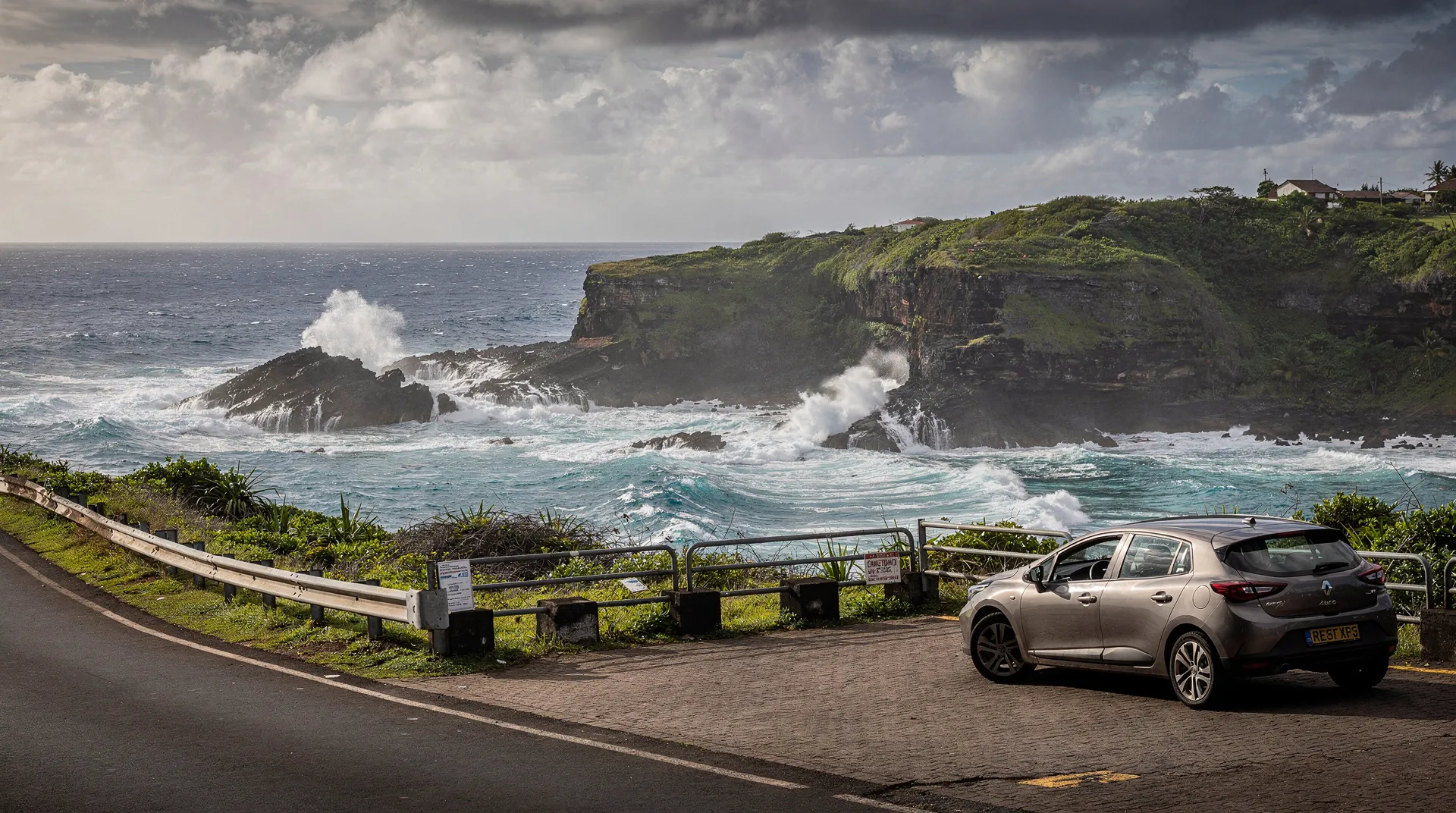
Road trip in Mauritius: must-drive itineraries and routes
Updated: August 2026
How long does it take to drive around Mauritius?
A full loop of the island covers around 150 km and takes 4 to 5 hours of non-stop driving. With sightseeing stops, allow at least 2 days to make the most of it.
Why take a road trip in Mauritius?
Mauritius is an ideal destination for a road trip. At 1,865 km², it’s compact enough to explore fully in just a few days, yet varied enough to offer radically different landscapes from one region to the next. Within an hour’s drive, you can go from the white sand beaches of the north to the green gorges of Rivière Noire, from the sugar cane fields of the central plateau to the volcanic cliffs of the south.
The coastal road offers exceptional views, the villages of the interior reveal an authentic side of Mauritius, and the mountain roads of the centre lead to breathtaking viewpoints. A Mauritian road trip is a full sensory experience: the colours of the lagoon, the smell of spices in village markets, the sound of waves against the basalt cliffs of the south.
To prepare your trip, first read our guide to renting a car in Mauritius to choose the right vehicle, and our guide to driving in Mauritius to get comfortable driving on the left.
At a glance
| Where | The whole island, with itineraries organised by region (north, south, central plateau, coast) |
| Budget guide | Rental + fuel + tolls: around 125 to 215 euros per person for 7 days for two |
| Time needed | From 1 day (central plateau tour) to 3 days (full coastal loop) |
| Getting there | Rental car essential, driving on the left; road network is generally good on main routes |
| Best time | Year-round, but May to December is best to avoid the heavy rains of January–February |
Distances and travel times: the essentials
Before planning your itineraries, here are the key distances to know. These times are estimated without traffic and without stops. Add 20 to 30% for cautious driving if you’re new to driving on the left, and double it if you cross Port-Louis during rush hour.
Port-Louis – Grand Baie: 25 km, about 40 minutes.
Port-Louis – Flic en Flac: 30 km, about 45 minutes.
Port-Louis – Mahebourg (airport): 50 km, about 1h00.
Grand Baie – Belle Mare (east): 35 km, about 1h00 via the coast.
Flic en Flac – Le Morne: 25 km, about 35 minutes.
Le Morne – Mahebourg: 50 km, about 1h00.
Curepipe – Chamarel: 25 km, about 40 minutes.
Full loop of the island (coastal): around 150 km, 4 to 5h of pure driving.
These figures confirm just how compact the island is. Even with several stops and breaks, you’ll never spend more than 2 to 3 hours driving in a single day if you plan your stages well.
Itinerary 1: the grand tour of the island in 2 days
This route is the absolute classic for anyone renting a car in Mauritius. It offers a full overview of the island’s diversity, from the lively north to the wild south, taking in the high central plateau along the way.
Day 1: the north and the east
Starting from Grand Baie or Port-Louis
Cap Malheureux: start with this picturesque fishing village in the north, with its famous little red church set against the turquoise lagoon. The view of Coin de Mire islet is spectacular on a clear day. 20 minutes from Grand Baie.
Pamplemousses: the Pamplemousses Botanical Garden, one of the oldest tropical gardens in the world, is worth a 2-hour visit. The giant Victoria amazonica water lilies are spectacular. Bring along a local guide to fully appreciate its richness. 30 minutes from Cap Malheureux.
Crossing to the east: head towards Belle Mare and Trou d’Eau Douce. The east coast road runs alongside turquoise lagoon beaches alternating with fishing villages. Possible stops at Roches Noires or Belle Mare beach for a swim.
Trou d’Eau Douce: a charming fishing village, the departure point for excursions to Ile aux Cerfs. Have lunch at a local waterside restaurant — the fresh grilled fish is delicious.
Ile aux Cerfs: if your timing allows, a boat trip from Trou d’Eau Douce (20 min round trip, around 500 MUR per person) takes you to the island’s most beautiful beach. For everything you need to know about this must-do excursion, see our Ile aux Cerfs guide.
Overnight in Belle Mare, Trou d’Eau Douce or Mahebourg. For accommodation in this area, our where to stay in Belle Mare guide will give you the best options.
Day 2: the south and the west
Mahebourg and its market: if you happen to be passing through on a Monday, the Mahebourg market is a must-see. Beautiful creole architecture, local buzz, and an abundance of fruit and spices. The Maritime Museum (free or a modest entry fee) tells the story of the Battle of Grand Port in 1810.
The wild south coast: drive to Gris-Gris lighthouse, the black cliffs and the waves of the Indian Ocean. Spectacular, little-touristed scenery. Stop at Souillac and the Robert Edward Hart museum. This is where the lagoon ends and the open ocean begins — a dramatic change of scenery.
Chamarel: climb up to the Coloured Earths of Chamarel (entry fee, around 250 MUR for adults). These hills, in seven shades of volcanic earth, are a geological phenomenon unique in the world. The Chamarel Waterfall, 83 metres high, is a few minutes away by car. You can book a Chamarel excursion including the waterfall and the coloured earths for a complete guided tour of the site.
Black River Gorges: a stop at the Gorges viewpoint offers a panorama over the island’s largest tropical forest. The road through the national park is cool and green — a striking contrast with the heat of the coast.
Le Morne: a peninsula listed as a UNESCO World Heritage Site, with its iconic beach and the Le Morne Brabant rock rising proudly to 556 metres. It’s also home to some of the best kitesurfing and windsurfing spots in the world. To stay in this beautiful area, see our Le Morne accommodation guide.
Flic en Flac: one last beach before heading back, one of the longest and liveliest on the island with its seafront restaurants. Return to Port-Louis or Grand Baie in the evening. For accommodation in this area, our Flic en Flac guide lists the best options.
Itinerary 2: touring the central plateau (1 day)
Less known to tourists but fascinating, the central plateau reveals a very different side of Mauritius from the coastal front. Cool, urban, authentic.
Curepipe: an inland town perched at 550 metres altitude, known for its diamond shops and cooler air. Visit Trou aux Cerfs, an extinct volcanic crater offering an exceptional view over the whole island on a clear day. Free access, a short walk from the town centre.
Quatre Bornes: known for its Thursday and Saturday market, one of the island’s best textile markets, with clothes, fabrics and accessories at unbeatable prices.
Rose-Hill / Beau Bassin: twin towns with beautiful 19th-century colonial architecture. The Jardin de la Compagnie offers a pleasant stroll through streets lined with flame trees.
Moka: a modern residential district home to the charming Eureka estate, a restored colonial creole house. A traditional lunch is served on-site in an exceptional setting.
Floreal: a residential inland village, and the starting point for hikes up Pieter Both (823 m) or Le Pouce (812 m). For hiking enthusiasts, our Mauritius hiking guide details all the trails.
Itinerary 3: the deep south (1 day)
The south of the island is the most authentic, least touristy region and, for many, the most beautiful. Ideal for travellers who want to get off the beaten track.
Starting from Le Morne or Flic en Flac
Baie du Cap: an authentic fishing village on the south-west coast, with a beautiful sheltered bay. Typical creole architecture, fishing nets drying in the sun.
Gris-Gris: black lava cliffs battered by the waves of the Indian Ocean — a wild, dramatic landscape. No coral reef softens the power of the ocean here. The view of the crashing waves is mesmerising.
Saint-Aubin: a former sugar estate converted into a tourist destination. Visit the rum distillery (Rhum Saint-Aubin), the vanilla garden, and enjoy lunch in the creole dining room under the palm trees. An authentic culinary experience — for more on local food, our Mauritian food guide will make your mouth water.
Mahebourg: a lively market, a free naval museum, and views over the historic bay where the Battle of Grand Port took place in 1810. The market’s gâteaux piment and dholl puris are not to be missed.
Blue Bay: the finest beach in the south, with turquoise water and a marine park. Snorkelling here is exceptional — sea turtles, rays and colourful fish. You can book a snorkelling trip at Blue Bay with a local guide to explore the marine park in the best conditions.
To plan your watersports, see our snorkelling and diving guide. To stay in this area, our Blue Bay guide lists the best options.
Itinerary 4: the flavours route (1 day)
A themed circuit around the island’s agricultural and culinary heritage — distilleries, tea plantations, nature parks.
Domaine de l’Etoile (east): a nature park with 4x4 safaris to spot local wildlife (deer, monkeys, wild boar). Great for families — our family activities guide lists all the options.
Bois Chéri: the tea plantation of Mauritius, in production since 1892, with a museum, a tour of the processing workshops and a tasting. Exceptional panoramic views over the south of the island from the restaurant terrace.
Domaine des 7 Vallées in Chamarel: the Chamarel agricultural rum distillery, one of the finest on the island. Guided tour of the stills, tasting of the different vintages. Chamarel rum is among the best in the Indian Ocean.
La Vanille: a nature reserve in the south with giant Aldabra tortoises and Nile crocodiles. Hugely popular with children, and enjoyable for adults too.
Itinerary 5: the full coastal road trip in 3 days
For travellers with 3 full days who want to cover the entire coastline of the island.
Day 1: the north coast and the east coast
Departing from Grand Baie, head to Cap Malheureux, Pamplemousses, then across to the east coast. Belle Mare, Trou aux Biches (from the east coast), Trou d’Eau Douce. Overnight in Belle Mare or Trou d’Eau Douce.
Day 2: the east coast and the south
Head down to Mahebourg, Blue Bay, then the wild road to Gris-Gris, Souillac, Saint-Aubin. Climb up to Chamarel for the Coloured Earths. Overnight in Chamarel or Rivière Noire.
Day 3: the south-west and the west coast
Le Morne in the morning, Tamarin for lunch, Flic en Flac in the afternoon. Return to Grand Baie or Port-Louis in the evening via the west coast. Watch the sunset over the sea from Flic en Flac or Le Morne.
For a more structured plan with accommodation ideas for each stage, our road trip itinerary guide offers a ready-made programme.
The best scenic drives not to miss
The south coast from Le Morne to Mahebourg: wild and beautiful, this road runs alongside quiet beaches and offers views of the inland mountains. It’s the least touristy and most authentic route on the island.
The Chamarel road: the climb from the west coast up to the Chamarel plateau is spectacular, with hairpin bends and sweeping views over the Indian Ocean and the lagoon. Take your time on the bends.
The Route Royale (north): a long, straight road through the sugar cane fields in the north of the island, typical of the Mauritian landscape. Especially beautiful at sunset, when the cane stalks turn golden.
The Gorges road: Black River Gorges National Park offers a road through tropical forest, cool and green. Macaques and deer sometimes cross the road.
The coast from Grand Baie to Trou aux Biches: a coastal road hugging the lagoon, with constant views of beaches and sailboats. The most beautiful road on the north coast.
Practical tips for your road trip
Planning and navigation
Download Google Maps with an offline map of Mauritius before you leave home. Mobile signal can be patchy in some rural areas of the south and the interior. To stay connected everywhere, see our internet and eSIM guide to Mauritius.
Build in buffer time for each day. Google Maps’ time estimates don’t account for Port-Louis traffic jams, the many speed bumps, or the inevitable photo stops in front of stunning scenery.
Fuel and refuelling
Fill up as soon as the tank drops below half full. Petrol stations (Engen, Total, Shell) are well distributed along the main routes but can be scarce in some rural areas of the south and the interior.
Carry plenty of water, especially for the heat-exposed south coast. Super U, Winner’s and Jumbo supermarkets are found across the island and stock everything you need for a roadside picnic.
Accommodation along the way
For a multi-day road trip, book your accommodation in advance, especially in high season (July–August, December–January). Small family-run guesthouses in the villages of the interior or the south are often the most authentic and affordable option. Our road trip accommodation guide gives you ideas for each stage.
Safety and good habits
Check our safety guide before you set off. The main hazards on Mauritian roads are unmarked speed bumps, traffic in town centres, and night driving on unlit roads. Avoid leaving visible items in the car when you stop at the beach.
Fitting the road trip into your budget
A self-drive road trip remains the most economical way to explore the island in depth, especially for two or more people. Our Mauritius budget guide helps you estimate the full cost:
- Car rental (7 days, small automatic hatchback with insurance): 200 to 350 EUR
- Fuel (full week, around 400 km): 40 to 60 EUR
- Tolls: 10 to 20 EUR for a week
- Total transport for 2 people: around 125 to 215 EUR per person for 7 days, or under 30 EUR/day/person — far less than taxis.
Recommended length by travel style
3 days: the grand coastal tour at a fast pace, hitting only the main sites. Demanding but doable.
5 days: the full tour including the central plateau and a few watersports excursions. A comfortable, satisfying pace.
7 days or more: in-depth exploration, backroads, authentic villages, hikes in the national park. The ideal amount of time to really get to know the island in all its diversity.
For structured itinerary suggestions, see our 7 days in Mauritius and 10 days in Mauritius guides.
Whatever the length, a road trip in Mauritius is a memorable experience. The diversity of the landscapes, the quality of the roads, the friendliness of the Mauritian people and the richness of the local cuisine make this island an exceptional road trip destination, ideal for travellers who want to experience the island from the inside rather than from a hotel sun lounger.
Road trip or no car: which should you choose?
A road trip isn’t the only way to explore Mauritius, but it’s by far the most flexible option for anyone who wants to escape organised tours.
| Rental car | No car (bus, taxi) | |
|---|---|---|
| Route freedom | Total, stop wherever you like | Limited to bus schedules and routes |
| Budget for 7 days (2 people) | Around 250 to 430 EUR (car + fuel) | Variable, often cheaper but daily taxis add up |
| Access to remote sites (south, plateau) | Easy | Difficult, requires several connections |
| Comfort | Full independence, no waiting | Cheap buses but slow and sometimes crowded |
For a detailed comparison of these two approaches, our with or without a car in Mauritius comparison guide breaks down the costs and constraints in detail. If you opt for public transport, our Mauritius bus guide explains the network and fares, and our Mauritius taxi guide explains how to negotiate a full day with a driver.
Before you go: the road tripper’s checklist
A few simple checks can save you a lot of hassle once you’re on Mauritian roads.
- Download an offline map and locate the main routes on our map of Mauritius before you get behind the wheel.
- Check the real travel times between your stops with our travel times between areas guide, which details distances beyond the main routes covered above.
- Photograph the condition of the vehicle when you pick it up, including any small scratches, to avoid disputes when you return it.
- Keep a digital copy of your driving licence and rental agreement on your phone.
- If you’re considering a two-wheeler for short trips, our scooter guide to Mauritius details the rules and specific risks on the island.