
Renting a scooter in Mauritius: prices, rules, risks and where to rent
Updated: August 2026
Do you need a motorcycle licence to rent a scooter in Mauritius?
Yes, a valid driving licence is required. Your European licence (category AM, or A for larger engines) is accepted. Rental companies rarely check categories in practice, but your insurance may refuse to pay out after an accident if you didn't hold the appropriate category.
Scooters in Mauritius: freedom at a price
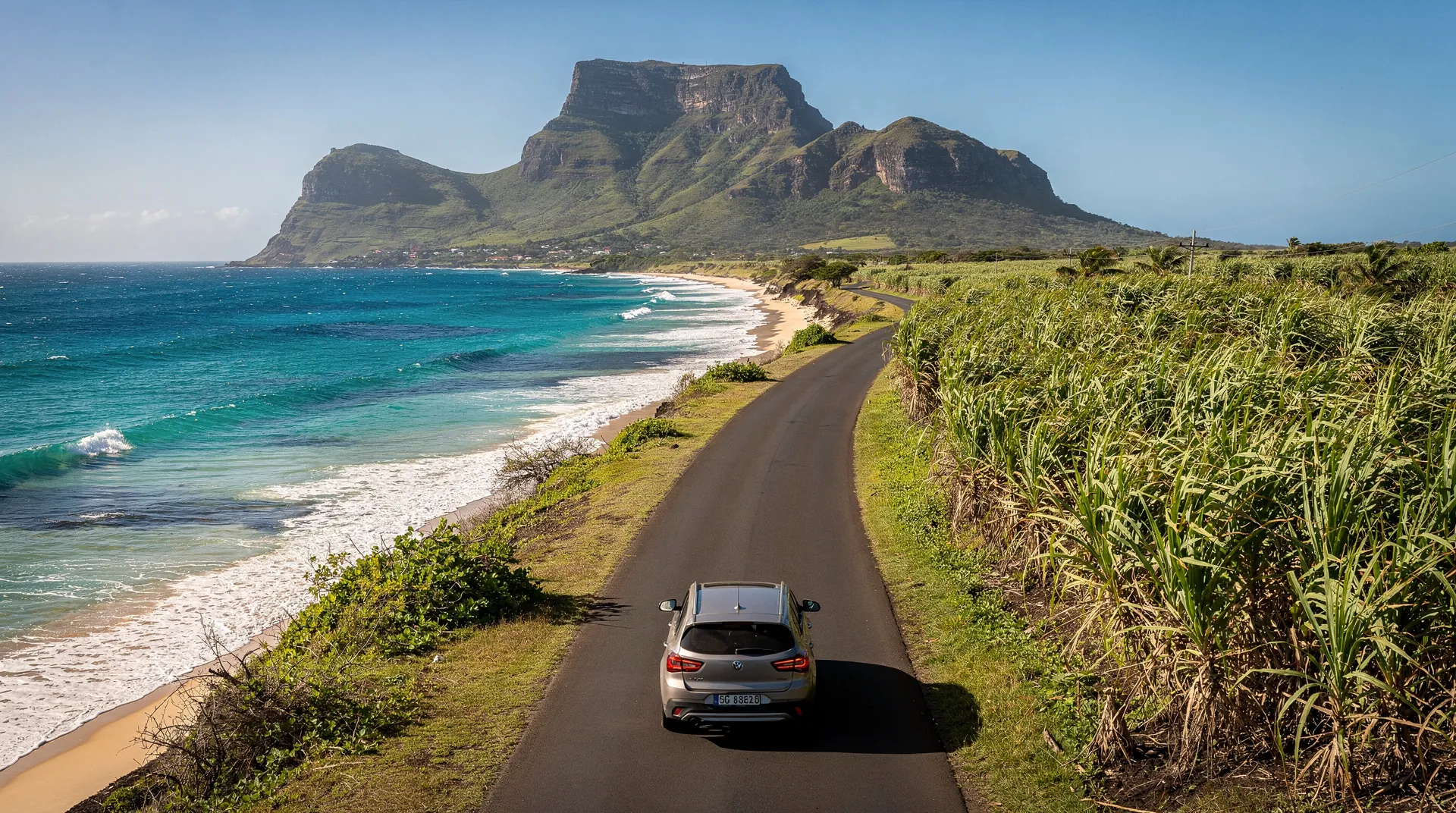
For many travellers to Mauritius, the scooter represents the ideal image of tropical mobility: wind in your hair, coastal roads rolling by, the freedom to stop wherever you like to photograph a sunset or dive into an impromptu lagoon. That image isn’t entirely wrong — a scooter really does give you a freedom of movement that taxis can’t offer, at a much lower cost than a rental car.
| At a glance | |
|---|---|
| Where to rent | Grand Baie, Flic en Flac, Trou aux Biches, Péreybère; rarer in the south |
| Price | Around 600 to 1,500 rupees per day depending on engine size |
| Licence required | Valid driving licence (category AM, A1 or A2/A depending on engine size) |
| Helmet | Mandatory for driver and passenger, must be provided by the rental company |
| Best time | May to October (dry roads, less risk of a slippery surface) |
| Recommended for | Experienced two-wheeler riders, comfortable with left-hand driving |
But let’s be honest: Mauritius is one of the Indian Ocean countries where riding is most dangerous for two-wheelers. Traffic is heavy, roads are sometimes narrow and winding, potholes are common, and local drivers have habits that catch Europeans used to strict traffic rules off guard. Accidents involving tourists on scooters are unfortunately frequent.
This guide will give you all the information you need to make an informed decision on whether a scooter is right for you, and, if you do decide to rent one, how to do so under the best possible conditions. For those who prefer a safer option, our guide to car rental in Mauritius is essential further reading.
Rules and regulations
Driving licence
A valid driving licence is mandatory to rent and ride a scooter in Mauritius. Your European licence is accepted under the following conditions:
- Scooters up to 50cc: category AM licence (or the old “code” alone for those who obtained their licence before 2013 in France)
- Motorbikes and scooters between 50 and 125cc: category A1 licence
- Motorbikes and scooters over 125cc: category A2 or A licence
In practice, most scooter rental companies don’t rigorously check licence categories. But in the event of an accident, your travel insurance may refuse to reimburse you if you were riding an engine size not covered by your licence. This distinction matters for your coverage in case of injury or material damage.
Mauritian traffic rules
Mauritius drives on the left — a legacy of British administration. This is the first, essential thing continental Europeans used to driving on the right need to adjust to. This change in the direction of traffic significantly increases the risk of an accident during the first few days, especially at junctions and roundabouts. Stay extremely vigilant on this point until the reflex is well established.
Speed is limited to 60 km/h in built-up areas and 80 km/h on main roads. In practice, these limits are frequently exceeded by local drivers. Helmets are mandatory for both driver and passenger — make sure the rental company provides two helmets in good condition.
Insurance
Insurance is a crucial issue. Check your coverage carefully before renting:
-
The rental company’s insurance: It generally covers the minimum mandatory third-party liability. In the event of an at-fault accident, you may be held liable for material and bodily damage caused to third parties.
-
Your travel insurance: Our guide on travel insurance for Mauritius details what to check in your policy. Some travel insurance policies explicitly exclude motorbike or scooter accidents, or only cover engines under 50cc.
-
Your premium bank card: If you paid for the trip with a Visa Premier, Mastercard Gold or Amex card, check the two-wheeler coverage conditions — they vary a lot from card to card.
Scooter rental prices
Scooter rental rates in Mauritius in 2026 are approximately:
- 50cc scooter (moped): 600 to 900 rupees per day
- 125cc scooter: 800 to 1,200 rupees per day
- 150–200cc scooter: 1,000 to 1,500 rupees per day
- Weekly rental: 10 to 20% discount on the daily rate
These rates generally include basic third-party liability insurance. Helmets, an anti-theft lock and a safety vest are usually provided — check this when you pick up the vehicle.
Compared to a rental car (from 1,500 rupees a day for a small city car) or a taxi (1,000 to 2,500 rupees per trip), the scooter is the cheapest option for individual mobility. But that saving needs to be weighed against the increased risk of accident. To compare all transport options, see our Mauritius budget guide.
Where to rent a scooter
Scooter rental companies can be found in practically every tourist area on the island:
Grand Baie and the north: Several rental agencies in and around Royal Road in Grand Baie. Competition is strong here and prices are negotiable. Check the condition of the vehicle, brakes, oil level and tyres before setting off.
Flic en Flac: The main area on the west coast has several rental companies, often linked to small hotels and guesthouses. Rates are comparable to the north.
Trou aux Biches and Péreybère: A few rental companies in each of these resorts. Rates and vehicle quality vary.
Mahebourg and the southeast: Rental companies are rarer here but do exist. The east coast and the south have less choice.
Favour rental companies recommended by your hotel or with recent reviews on trustworthy platforms. Always ask for a written rental contract specifying the insurance terms, liability in case of damage, and the deposit amount.
The real risks in Mauritius
It would be irresponsible not to clearly address the risks of riding a scooter in Mauritius:
Road traffic is heavy in all urban areas and on main roads, particularly during rush hour (7–9am and 4–6pm). Mauritian drivers are in the habit of honking, overtaking in tight spaces and taking initiatives that can surprise European drivers.
Road conditions vary considerably. Main roads are generally well maintained, but many secondary roads have potholes, uneven surfaces or blind bends that can be dangerous at normal speed for an unfamiliar rider.
Fatigue caused by heat, jet lag and the unfamiliar experience of riding on the left increases the risk of error. Avoid riding at night if you’re not fully comfortable with left-hand driving, as the risks multiply.
Power cuts can turn off traffic lights in towns, creating potentially dangerous junctions.
Practical advice: if you haven’t ridden a two-wheeler regularly in Europe over the past six months, a scooter in Mauritius may not be the right choice for you. A rental car offers better protection in the event of an accident and an easier adjustment to left-hand driving thanks to the driver’s seating position.
Recommended scooter routes
If you do opt for a scooter, here are the most pleasant and least dangerous roads:
The north coast road: From Trou aux Biches to Péreybère via Grand Baie — a coastal road with little traffic in the morning, lovely views over the lagoon and several beaches along the way.
The east coast road: From Flacq towards Belle Mare — near-empty secondary roads through sugar cane landscapes and along the coast. One of the most beautiful two-wheeler rides on the island.
The Chamarel road: From the west coast towards the interior — winding but well-maintained roads through forests and tea plantations. Watch out for tight bends.
To avoid on a scooter: the M1 motorway (Port Louis–Mahebourg), the entrances/exits of Port Louis during rush hour, and mountain roads after rain (slippery surface).
Equipment and checks before setting off
Vehicle handover checklist
Before signing and hitting the road, take the time to inspect the vehicle with the rental company, ideally filming its overall condition on your phone:
- Brakes: test them while stationary and over a few metres at low speed before heading into traffic
- Tyres: check wear and pressure, especially if you’re planning long distances
- Oil and fuel level: ask for a full tank or note the exact level at the start
- Lights: headlight, taillight and indicators must all work, useful given how quickly tropical night falls
- Helmets: two helmets in good condition (functioning chin strap, intact inner foam), not just left on the seat for the photo
- Lock and reflective vest: often provided — check they’re actually there
What to bring with you
A waterproof bag or pouch for your phone and documents is essential — sudden tropical downpours are common even in the dry season. Also bring sunscreen (scooter exposure to the sun is direct and prolonged), water, and keep a copy of your driving licence separate from the original in case of loss. To stay reachable and be able to navigate offline if needed, a local eSIM is a practical addition to your safety kit.
What to do in the event of an accident or breakdown
In the event of an accident, even a minor one, contact your rental company immediately — most have a dedicated emergency number — and take photos of the damage before moving the vehicles, if traffic conditions allow it safely. For any injury, even a minor one, a medical consultation is still recommended: our health guide to Mauritius details the local healthcare system and how to proceed with your travel insurance. In the event of mechanical breakdown, most local rental companies respond quickly within a reasonable radius of their rental area; keep their phone number accessible even without an internet connection.
Alternatives to the scooter
Before settling on a scooter, consider these alternatives:
- Car rental: More expensive but far safer, with real freedom of movement. Our car rental in Mauritius guide covers all the practical aspects.
- Shared taxi: Economical for fixed destinations. Our taxi in Mauritius guide explains rates and how to find reliable drivers.
- Bus: The bus network covers the main towns and tourist areas well at a very low cost. Handy for Port Louis and the main routes.
- Bicycle: In flat coastal areas (north, east), a rental bike is a pleasant option for short distances. Hotels and guesthouses often offer them.
Our guide to travel times between areas will help you work out which transport option best suits each trip you’re planning.
If you’d rather go on organised excursions than get around independently, the northern Mauritius excursion lets you discover the north without driving, while the southern excursion with Chamarel covers the most beautiful sites in the south with transport included.
The final decision is yours. A scooter in Mauritius, for an experienced rider who follows the rules and chooses their routes carefully, can be a wonderful experience. For a rider unfamiliar with two-wheelers or tropical road conditions, the risks are real. Weigh the pros and cons honestly before signing the rental contract.
If you decide in the end not to take a scooter, know that chauffeured car transfers are very accessible in Mauritius — book a private airport transfer or guided excursions such as the excursion to the north of the island, which will let you discover the island without the risks of driving yourself.