
Flacq
Flacq: the east coast's capital with its unmissable Sunday market, unspoiled beaches, and authentic Mauritian life. Complete guide.
- Area
- East coast
- Vibe
- Authentic and commercial
- Specialty
- Big Sunday market
- Access
- 45 min from the airport
Flacq: the authentic pulse of the east coast
| At a glance | |
|---|---|
| Where | East coast, administrative capital of the Flacq district |
| Price | The market itself is free to enter; you only pay for what you buy |
| Time needed | Half a day, ideally Sunday morning for the big market |
| Getting there | About 45 minutes from the airport by car; bus from Port Louis (about 1 hour) |
| Best time | Year-round, with Sunday morning being the market at its best |
Flacq is the administrative capital of Mauritius’s east coast and one of the island’s most authentic centers of everyday life. Unlike the busy, tourist-heavy coastal resorts, Flacq is above all a Mauritian town that exists for its residents: overflowing markets, all kinds of shops, popular restaurants, and streets buzzing with traffic that has nothing in common with the palm-lined driveways of the resorts.
Flacq’s big Sunday market is known across the island. Mauritians come from everywhere to shop here: it’s one of the largest and most complete markets in Mauritius, covering food as well as textiles, hardware, spices, and household goods. For a tourist who wants to understand how Mauritian society really works — and grab some good deals along the way — this market is an experience unlike any other.
The Flacq region is also the natural gateway to Mauritius’s east coast, an area home to some of the island’s most beautiful beaches. Belle Mare and its kilometers of immaculate white sand are just a few minutes away by car. Our guide to renting a car in Mauritius is essential for exploring this east coast freely, since it demands some mobility.
What to do in Flacq
The big Sunday market
Flacq’s market is the largest on the east coast and one of the five most important markets in Mauritius. It’s held mainly on Sunday, with a smaller version on Wednesday. Mauritians from surrounding villages, the eastern highlands, and even the west coast sometimes make the trip to Flacq on Sunday morning to take advantage of the variety and the prices.
The market spreads across several streets around the town center and overflows into adjacent open spaces. You’ll find everything here: locally grown seasonal fruit and vegetables (mangoes, lychees, pineapples, ambarella depending on the season), spices sold loose (turmeric, cumin, cardamom, Indian Ocean cinnamon), fresh fish and seafood brought in by coastal fishermen, textiles and clothing at factory prices, kitchenware, crockery, medicinal herbs, and aromatic plants.
The colors, smells, and sounds of Flacq market alone make for a memorable sensory experience. Mauritian Creole, Hindi, and French blend together in the market’s characteristic hum. The photo opportunities are wonderful, and vendors are generally happy that you take an interest in their products. Our guide to markets and culture in Mauritius goes deeper into the island’s market culture and gives you tips for negotiating and shopping wisely.
The east coast from Flacq
Flacq makes an excellent base for exploring the east coast, one of the island’s most unspoiled and beautiful areas. A few kilometers north and south of town, beaches stretch for miles with little tourist infrastructure — just sand, a turquoise lagoon, and a coral reef breaking the waves offshore.
Belle Mare is the most famous of these beaches: a long stretch of remarkably pure white sand, lined with coconut palms and a shallow lagoon in extraordinary colors. Several of Mauritius’s most luxurious hotels (including the Emeraude Beach Hotel, the Constance Belle Mare Plage, and the St. Regis) have set up along this coast, drawn by the exceptional quality of the marine environment.
Our guide to the most beautiful beaches in Mauritius ranks Belle Mare among the island’s five must-see beaches. For snorkeling and diving, the east coast offers excellent conditions in the passes through the coral reef.
Ile aux Aigrettes from the southeast coast
Continuing south from Flacq, you quickly reach the Mahebourg and Blue Bay area. It’s from the southeast coast that you can access Ile aux Aigrettes, an island nature reserve where endemic Mauritian species have been reintroduced. This island, entirely managed by the Mauritian Wildlife Foundation, shows what Mauritius looked like before humans arrived and before many species went extinct. Our guide to Ile aux Aigrettes gives you everything you need to organize this unique visit.
The eastern hinterland
The inland areas between Flacq and the central highlands offer a surprising landscape of tropical forest, tea plantations, and sugar estates. A trip to Eau Bleue, the east coast waterfalls, or the villages of the hinterland reveals a rural, little-visited Mauritius that most tourists never see.
These areas are best explored by bike or scooter on the small back roads, away from the tourist highways. Our guide to scootering in Mauritius gives you practical tips for this mode of travel, which allows for a genuinely authentic experience.
Local food in Flacq
The town of Flacq has a popular and affordable food scene that’s worth lingering over. Sino-Mauritian restaurants, Creole canteens, and street food stalls serve tasty dishes at very reasonable prices. A lunch of fried rice with chicken and wonton soup at a Chinese restaurant in Flacq costs less than 200 rupees, and will often be better than the same dish served at a hotel restaurant three times the price.
On Sunday morning, after visiting the market, breakfast at one of the snack stands around the market — hot dholl puri with dal and pickles, or dumplings in a spicy broth — is a memorable culinary experience. Our guide to Mauritian cuisine introduces the specialties you absolutely must try during your trip.
Where to stay near Flacq
Flacq itself has no upscale tourist accommodation. Visitors who want to stay in the area tend to choose Belle Mare with its large resorts, or the small hotels and guesthouses scattered along the east coast.
The east coast is known for its discreet luxury properties set within an exceptional natural environment. It also offers a number of mid-range accommodation options that are much less known but often excellent value for money. Our guide to where to stay in Mauritius covers every area of the island so you can choose with confidence.
How to get to Flacq
Flacq is accessible by bus from Port Louis (about 1 hour), from Mahebourg (45 minutes), and from towns in the highlands. The Mauritian bus network serves the east coast well, though frequencies can be limited outside peak hours.
By car from the airport, allow about 45 minutes via the southern highway and the east coast road. From the north of the island, allow 1 hour to 1 hour 15 minutes depending on traffic. Our guide to travel times between areas of Mauritius gives you a full picture of the distances involved. For a stress-free arrival from the airport to the east coast, a private chauffeured transfer is the most comfortable option.
From the east coast, excursions to the south of the island including Chamarel and Grand Bassin make for an excellent day trip to discover the island’s interior.
Flacq in your travel plans
An ideal plan around Flacq is to arrive on Sunday morning for the market, have lunch in town, then head to Belle Mare beach for the afternoon. The following day, an excursion to the wild beaches of the northeast coast or to Ile aux Aigrettes in the south rounds out this east coast stay perfectly.
For a complete tour of the island, the east pairs naturally with the south to create a wonderful route. Our guide to 7-day itineraries in Mauritius gives you an optimized plan for exploring both areas in depth. Before you go, check out our guide to budgeting for a trip to Mauritius to plan your spending.
Comparing Flacq and Mahebourg for a market stop
Flacq and Mahebourg are the two great “authentic market” destinations in Mauritius, but they’re not alike.
| Criteria | Flacq | Mahebourg |
|---|---|---|
| Vibe | Busy commercial town, less tourist-oriented | Historic village, more picturesque |
| Market | Big Sunday market, the most complete on the east coast | Monday market, smaller but known for its fish |
| Pairs well with | Belle Mare and the east coast | Blue Bay and Ile aux Aigrettes |
| Distance from the airport | About 45 minutes | About 20 minutes |
The two are easy to visit in the same week without overlapping: Sunday in Flacq, Monday in Mahebourg.
Fishing and marine life around Flacq
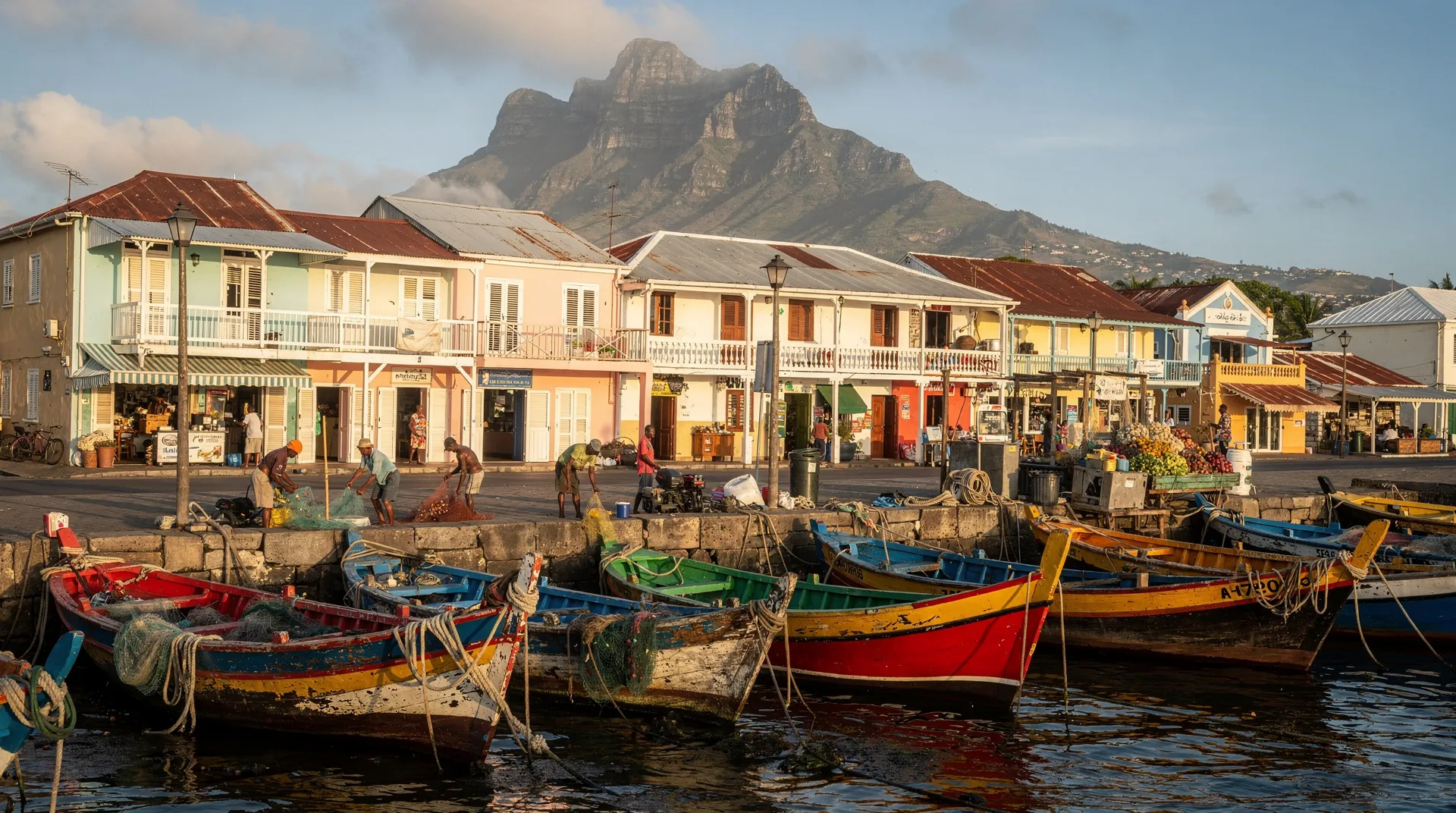
The waters off Flacq and the east coast in general still largely depend on traditional fishing. Colorful pirogues moored along the shore and fishermen returning early in the morning with their catch are part of everyday life here. The fish sold at Flacq market is often caught the night before off the coral reef — a freshness hard to match elsewhere on the island. For sea outings, our guide to catamaran trips and boat excursions in Mauritius lists organized excursions departing from the east coast.