
Mauritian Cuisine: Dishes, Street Food, Restaurants and Creole Flavors
Updated: August 2026
Mauritian Cuisine: A Unique Crossroads of Flavors
| At a Glance | |
|---|---|
| Where to eat best | Markets (Port-Louis, Mahebourg, Flacq) and local “snacks” rather than hotel restaurants |
| Street food budget | About 150 to 500 MUR (3 to 10 EUR) for a full meal |
| Local restaurant budget | About 300 to 800 MUR (6 to 16 EUR) per person |
| Fine dining budget | About 100 to 200 EUR per person at the big hotels |
| Best time | Mahebourg market on Monday morning, Flacq market Wednesday and Sunday |
Mauritius is one of the rare places in the world where Indian, Chinese, African Creole, French and Arab cuisines have mingled, blended and enriched one another for centuries. The result is a cuisine of extraordinary richness and complexity that surprises and delights with every meal.
Understanding Mauritian cuisine starts with understanding the island’s history. Mauritius had no indigenous population when the Dutch arrived in the 17th century. The people who built the island came from everywhere: African and Malagasy slaves, Indian and Chinese indentured laborers, French and British colonists. Each community brought its recipes, spices and techniques. Four centuries of coexistence produced a mixed-heritage cuisine with no equivalent anywhere else in the Indian Ocean.
This diversity shows up on every street corner, in every market: dholl puri stalls sit next to Chinese stir-fried noodles, saffron-scented briani and Creole rougailles. The food is one of the best reasons to visit Mauritius — and one of the cheapest, as you’ll discover in our Mauritius budget guide.
The Great Influences on Mauritian Cuisine
The Indian Influence: The Backbone of the Cuisine
The Indo-Mauritian community makes up about 68% of the population, so its influence on local cooking is major and constant. Indian spices — turmeric, cumin, coriander, cardamom, fenugreek, red and green chili — are everywhere in everyday Mauritian food.
Curries (locally called “carri”) are the staple of the Mauritian diet, eaten at nearly every meal in local homes. White basmati rice, dal (yellow lentils) and spiced sautéed vegetables invariably come alongside.
The Tamil community from southern India brought dosai (fermented rice pancakes), vada (lentil fritters) and biryanis. The Muslim community from northern India (the Indo-Mauritians) introduced briani (the local take on biryani), rotis and samosas.
The Chinese Influence: An Asian Touch
The Sino-Mauritian community (about 3% of the population) is smaller, but its influence on street food and restaurants is considerable. The Chinatown of Port-Louis is one of the oldest and most authentic in the Indian Ocean — a must-see when visiting the capital.
Fried or soup-based Chinese mines (noodles) are among the most popular dishes in Mauritius, so woven into everyday cooking over generations that no one thinks of them as “Chinese” anymore — just “Mauritian.”
The African Creole Influence: Local Terroir Flavors
The Creole community, descended from African and Malagasy slaves, developed a hearty, flavorful terroir cuisine using local produce — leafy greens (brede morelle, brede songe, watercress), cassava, breadfruit, green bananas — cooked slowly over long hours.
Rougailles (tomato-and-spice stews), achards (pickled vegetable condiments) and charcoal grills are the most iconic markers of Creole cooking.
The French Influence: The Art of the Table
French colonists left their mark on table etiquette (tablecloths, cutlery, table service), on baking and pastry techniques, and on the use of wine and rum. French persists in the names of many dishes and ingredients. Mauritius’s fine-dining restaurants often reinterpret classic French dishes with local produce and spices.
Must-Try Dishes
Dholl Puri: The King of Street Food
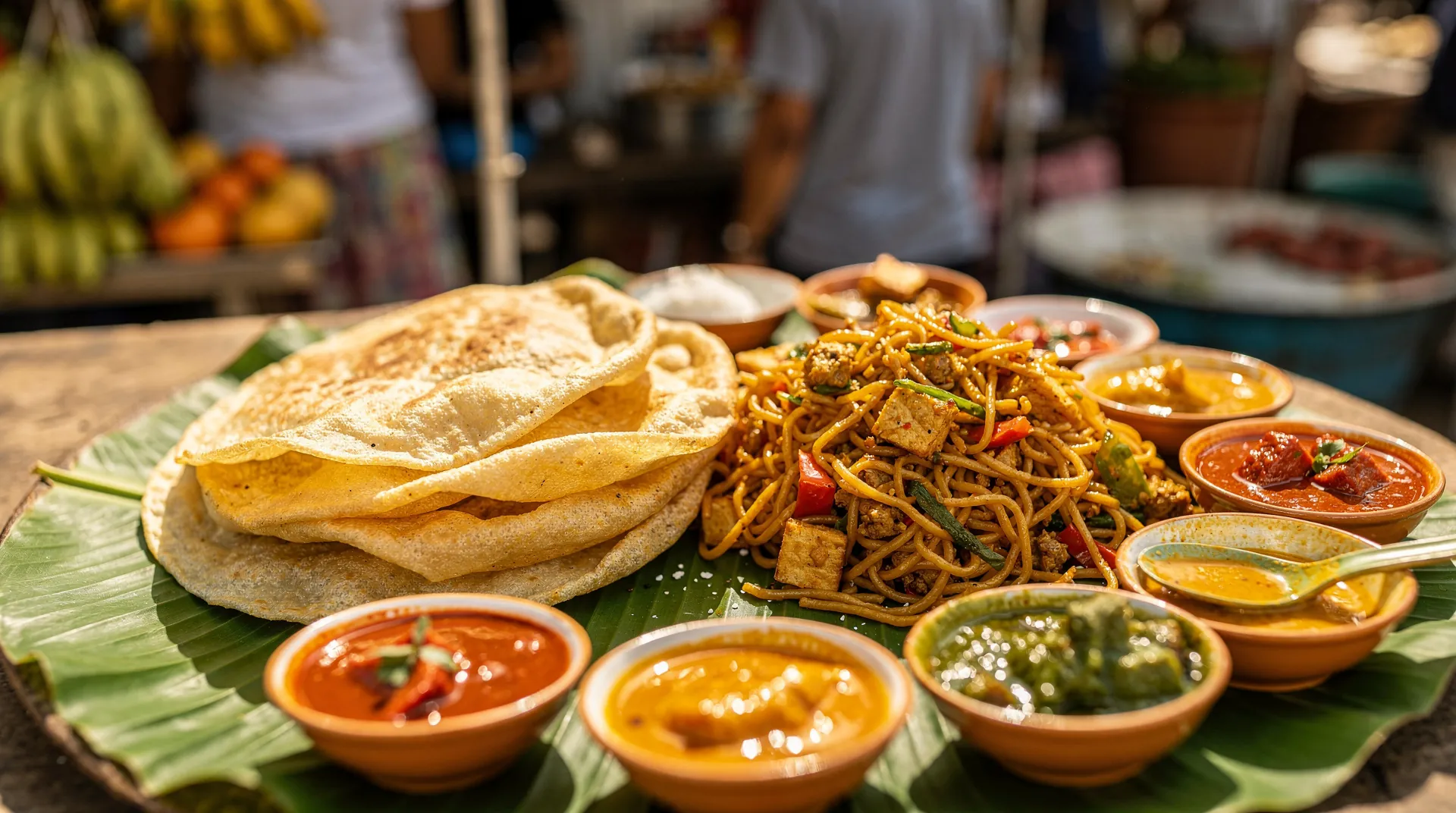
Dholl puri is THE iconic dish of Mauritian street food. It’s a thin, soft flatbread made from flour and cooked, ground split peas (dholl), grilled on an oiled hot plate. It’s served warm, folded around vegetable achards, curry tomato sauce and sometimes a rougaille.
A single flatbread costs 15 to 25 rupees. Eating a dholl puri standing in front of the stall that made it, under the Mauritian sun, watching the vendor stretch the dough with practiced skill, is one of the most authentic culinary experiences on the island.
Where to eat it: at the entrance of every market, in the shopping streets of towns and villages, at local “snacks.” The best are often found in inland villages rather than tourist areas.
Mauritian Biryani (Briani)
Mauritian briani is the local version of Indian biryani. Long saffron-and-spice-scented basmati rice (cardamom, cinnamon, clove, nutmeg), layered with tender meat (chicken, mutton, goat) slow-cooked in a spiced curry. Everything is cooked in a large sealed pot (dam-pokht), which concentrates the aromas remarkably.
Briani is the dish of festivals, weddings and family celebrations in Mauritius. It’s traditionally served on banana leaves in traditional restaurants. The flavor is complex, lightly sweet-spicy and deeply comforting.
Where to eat it: at traditional Mauritian restaurants, at Friday markets (the best brianis are sold on weekends in the streets near the markets), at specialist caterers in Port-Louis.
Fish and Seafood Curry
Fish and seafood curries are an essential specialty in a country surrounded by sea. Capitaine fish curry (one of the most common fish), prawn curry, octopus curry, lobster curry — every coastal restaurant has its own version with its own spice blend.
The base is always the same: onions, garlic, ginger, turmeric, coriander, cumin and chili, cooked in oil until they form a fragrant paste (the “fried masala”), then the fish or seafood is added and cooked just long enough. Curry is served with white basmati rice, dal and sautéed greens (brèdes).
Where to eat it: the best are found at restaurants near the fishing markets — Mahebourg, Trou d’Eau Douce, Grand Baie. Be wary of overly touristy restaurants that tone down the spices.
Rougaille
Rougaille is the base sauce of Mauritian Creole cooking. A thick, fragrant tomato sauce enriched with onions, garlic, ginger, chili, curry leaves and sometimes thyme leaves. Depending on the recipe, it’s made with smoked local sausage (one of the best versions), dried fish, beef, chicken or eggs.
Sausage rougaille is especially popular and delicious. It’s a simple, affordable, tasty everyday dish that Mauritians eat with rice and a brèdes salad.
Where to eat it: at local “snacks,” family canteens and guesthouses that serve meals — wherever Mauritians themselves eat. Don’t expect to find it on the menus of touristy seaside restaurants, which tend to serve international fare.
Mines and Chinese Noodles
Mines (pronounced “meen”) are the Chinese noodles woven into everyday Mauritian cooking. Fried mines (wok-tossed with vegetables, eggs, chicken or prawns), boiled mines (in broth), Napolitaine mines (with a Mauritian-style tomato sauce, a creative Franco-Sino-Mauritian fusion)…
Every restaurant, every snack stall, every school canteen has its own mines dish. It’s comfort food at its finest — quick, cheap and delicious.
Price: 150 to 300 MUR (3 to 6 EUR) at a local snack. Among the most affordable meals on the island.
Fish Vindaye
Vindaye is a distinctly Mauritian preparation method (of Indian origin), halfway between marinated and cooked. The fish (usually tuna or bonito) is fried, then mixed with a cold preparation of onions, mustard, turmeric, vinegar and chili.
Vindaye is eaten cold, at room temperature. It keeps for several days in the fridge. Its sweet-and-sour, slightly spicy flavor is unique and unforgettable. A perfect starter at a traditional Mauritian restaurant.
Gato Piment (Chili Cakes)
Gato piment are the spiced lentil (urad dal) fritters of Mauritian cuisine. Small balls, crispy outside and soft inside, flavored with green chili, curry leaves and garlic. Dirt cheap at 5 to 10 MUR each, and available everywhere.
They’re eaten on their own, with buttered bread, or alongside a glass of tea. This is the ultimate Mauritian snack — the local equivalent of chips or peanuts with drinks.
Alouda and Local Drinks
Alouda is the traditional sweet Mauritian drink: cold milk with crushed ice, orange blossom syrup, basil seeds soaked in water (which look like tiny black gelatinous eyes) and colored agar-agar jelly. Sold at markets for a few dozen rupees, it’s refreshing, odd and delicious.
Mauritian rum: the island produces excellent agricultural rums. Rhum arrange (rum infused with fruit, spices or flowers) is the specialty to bring home. The Rhumerie de Chamarel and Penny Blue rum are the most renowned — a distillery visit is possible during a road trip.
Bois Cheri tea: Mauritius has produced excellent black tea since 1892, grown on the highlands of the Savanne region. Bois Cheri tea, sold in its attractive illustrated tins, is one of the best souvenirs to bring home. Plantation tours and tastings are available on site.
Sugarcane juice: hand-pressed in front of you at the markets, sweet, slightly grassy and refreshing in the heat. 30 to 50 rupees for a large glass. Far less processed than any bottled drink.
Street Food, Local Snack or Restaurant: What to Choose?
| Option | Budget per person | Atmosphere | Ideal for |
|---|---|---|---|
| Street food stall (market) | 50 to 150 MUR | Standing, quick, very authentic | Discovery, small budget, curious travelers |
| Local snack (small family restaurant) | 150 to 300 MUR | Simple, seated, dish of the day | A full, affordable and tasty meal |
| Creole or seafood restaurant | 300 to 800 MUR | Seated, wider menu, often seaside | A relaxed evening meal |
| Hotel fine-dining restaurant | 100 to 200 EUR | Refined, tasting menu | A special occasion, a last night out |
Mauritian Street Food: The Market Guide
Port-Louis Central Market
The great covered market of Port-Louis is the temple of Mauritian street food. From 6 a.m., dozens of stalls come to life: hot dholl puri, golden samosas, marinated skewers, rotis with every filling, fresh fruit juices, gato piment, colorful achards displayed in large trays. The buzz is constant, the smells intoxicating.
Stroll slowly, taste a bit of everything, buy small amounts to try several specialties. A full street food meal at the central market shouldn’t cost more than 300 to 500 MUR for two people (6 to 10 EUR).
Mahebourg Market
The Mahebourg market is held every Monday morning — the most famous market on the island. Exotic fruit and vegetables, fresh spices, street food everywhere. The covered market’s Creole architecture adds to its charm. A must if you’re in the south on a Monday.
Flacq Market
The Flacq market (open Wednesdays and Sundays) is one of the largest open-air markets on the island. Exotic fruit and vegetables, hearty street food, an authentic atmosphere away from the tourist trail. An excellent stop during a road trip along the east coast.
Mauritian “Snacks”
In Mauritius, the word “snack” doesn’t mean a light bite — it refers to a simple, popular restaurant, often family-run, serving full meals for 150 to 300 MUR per person. Rice, curry of the day, sautéed vegetables, homemade achards. The food is often better here than at tourist restaurants.
To find a good snack: follow the mopeds and cars parked outside (Mauritians know best), look for handwritten menus on a blackboard, and favor places where you can see the women of the family cooking in a small open kitchen.
Restaurants: Where to Eat Well in Mauritius by Budget
Creole Fine Dining and Local Bistros
La Table de Chamarel: a breathtaking panoramic view of the west coast from the heights of Chamarel, refined Creole cuisine. Reservations recommended.
La Rhumerie de Chamarel: the authentic setting of an old rum distillery in the hills of Chamarel, terroir cooking, artisanal rum tastings. A must for enthusiasts. To combine Chamarel, the rum distillery and other southern sites in a single guided day: see the Chamarel and the South day tours.
For a tea and rum trail with tastings across several estates, the tea and rum trail is a much-loved gourmet option.
Le Fangourin, Domaine de Labourdonnais: Creole cooking set in a 19th-century colonial agricultural estate, with an on-site rum distillery and fruit orchards.
Le Domaine de Bel Ombre: modern Mauritian fine dining in an exceptional colonial setting in the south of the island.
Fish and Seafood Restaurants
Seaside restaurants serving fish caught fresh that morning are the best addresses for seafood. Favor restaurants near the fishing markets.
In Grand Baie: many beachfront terraces serve fresh grilled fish — Le Capitaine and Yuzu are among the most recommended.
In Mahebourg: Le Bougainville restaurant and the small waterfront eateries serve unpretentious, delicious seafood.
In Blue Bay and Tamarin: restaurateurs serve the day’s catch right on the beach in a relaxed setting.
Fine Dining at the Big Hotels
The restaurants at Mauritius’s grand resorts (Shangri-La, Heritage, One&Only, Constance, Four Seasons) are often open to non-guests by reservation. Some offer tasting menus of international fine-dining quality, blending culinary creativity with local Mauritian produce. Prices are steep (100 to 200 EUR per person), but it’s an unforgettable experience for a special evening.
Key Spices and Ingredients in Mauritian Cuisine
Turmeric: the base spice, found in almost every local dish. It colors food yellow and adds a subtle aroma.
Curry leaves: small fresh leaves from a tree (Murraya koenigii), with a lemony, spicy scent. Essential in curries and rougailles — their absence is immediately noticeable.
Massale: a Mauritian spice blend (similar to Indian garam masala but with its own composition). Every Mauritian family has its own massale recipe, passed down through generations.
Green and red chili: found in nearly every dish, though versions served to tourists are often toned down. If you like heat, say “not too mild” or “with the chili” in Creole: “ek piman.”
Bringele (eggplant): a signature vegetable of Mauritian cuisine. In curries, in briani, in achards.
Brèdes: a generic term for leafy greens — brede morelle, brede songe (taro leaves), brede watercress, brede chouchou. Sautéed with garlic and turmeric, they accompany everyday rice dishes.
Eating with Children or on a Special Diet
Children generally adapt very well to Mauritian food: sautéed mines (noodles), simple rotis or chicken with rice and not too much chili please most young palates. At restaurants, simply asking for “no chili” or “not spicy” is enough — Mauritian cooks are used to adjusting the heat. To plan the rest of your trip with kids, our Mauritius with children guide rounds out these practical tips.
Vegetarians are particularly well catered for in Mauritius thanks to the large Indo-Mauritian community: dal, sautéed vegetables (brèdes), vegetable curries and gato piment (made from lentils) are naturally vegetarian, and many restaurants offer a full vegetarian menu, especially near Hindu temples and around major religious festivals.
Strict veganism requires a bit more care, as ghee (clarified butter) and milk are common in preparations — specify “no dairy” if needed. For those with shellfish or peanut allergies, normal vigilance is needed as anywhere else: local kitchens frequently use dried shrimp and crushed peanuts in condiments, even in dishes that seem neutral at first glance.
A Cooking Class to Extend the Trip
For food lovers who want to bring home more than a souvenir in a box, a Creole cooking class with a chef or a Mauritian family is one of the island’s most popular activities. The classic format combines a tour of the local market to pick out fresh produce, followed by preparing three or four typical dishes (often a curry, a dholl puri and a local dessert) before sitting down to enjoy the meal together.
Our Mauritian cooking class guide lists the best options by region, and a cooking class with tasting makes an excellent addition to a 7-day itinerary.
Bringing Mauritian Food Home
The best food souvenirs to bring back — all allowed through customs in normal souvenir quantities:
- Bois Cheri tea (various blends, in attractive tins): one of the best souvenirs from Mauritius
- Rhum arrange from Chamarel or St Aubin (within duty-free allowances — 1 liter of spirits)
- Homemade massale bought at Port-Louis’s central market (from local spice sellers’ bags)
- Rodrigues vanilla: rarer and more fragrant than Madagascar vanilla, a real find
- Tamarind, guava or papaya jam: handmade, unavailable back home
- Mauritian brown cane sugar: sold in bags at the market, more fragrant and less refined than industrial sugar
To fit meals into your budget, check out our Mauritius budget guide, which breaks down price ranges from street food to fine dining. And for travelers who want to explore Mauritian cuisine while touring the island, our 7-day itinerary includes the best culinary stops.
A Creole cooking class is a way to bring the recipes home in your suitcase: book a street food tour in Port Louis to discover the authentic flavors of the capital. And to go further in the kitchen, a Mauritian cooking class with tasting will teach you to recreate the great Creole classics at home.
Mauritian cuisine is one of the island’s great surprises for travelers who take the time to step outside the hotel restaurants. It’s rich, complex, accessible on any budget, and deeply rooted in the mixed-heritage history of this extraordinary island.