
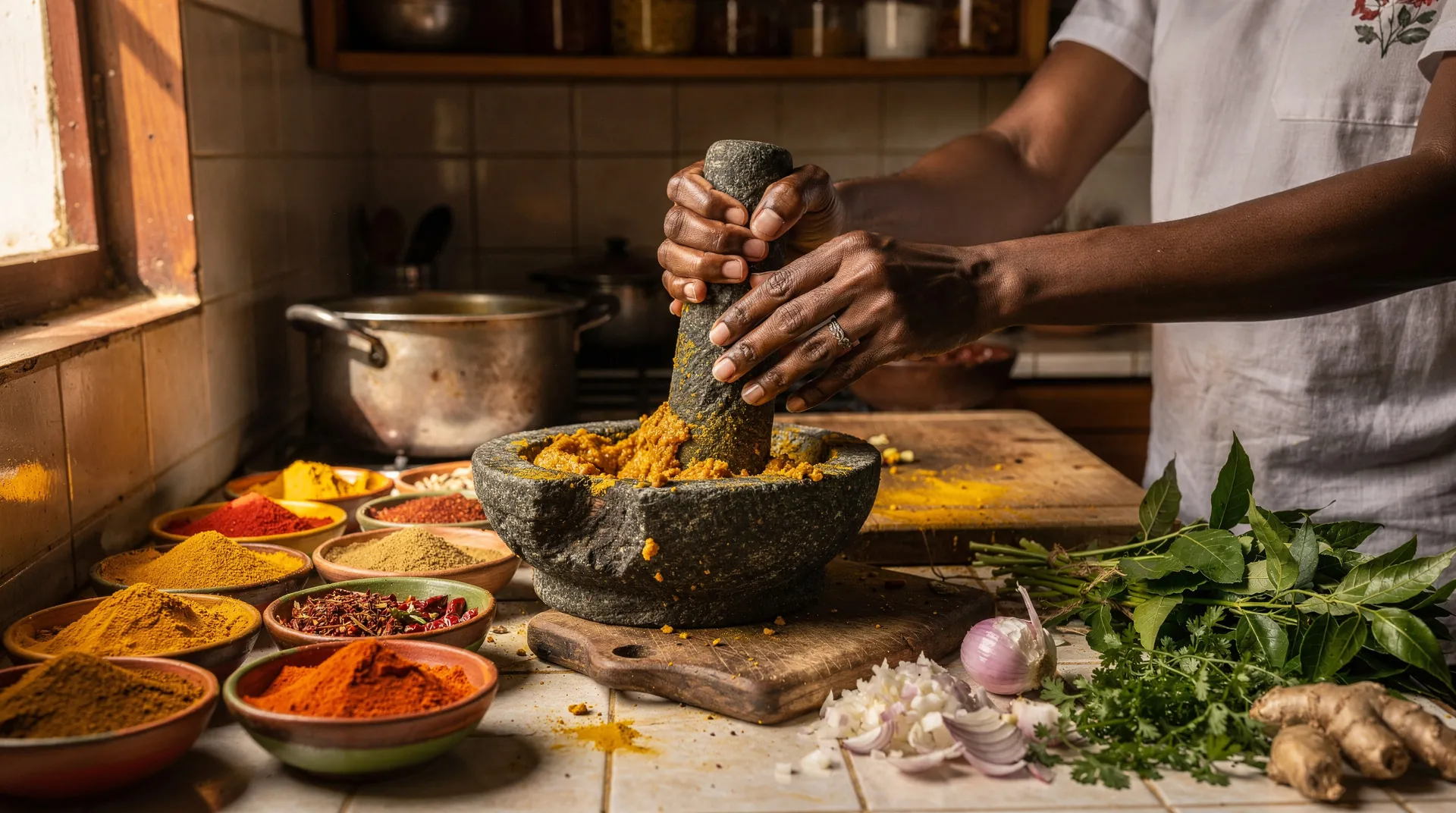
Mauritian cooking classes: learn to cook the flavours of the island
Updated: August 2026
Where can you take a Mauritian cooking class?
Classes are available in Port Louis, Grand Baie and several rural estates. Expect to pay 50 to 100 euros per person for a 3 to 4 hour session including a meal and recipes to take home.
Mauritian cuisine: a unique culinary journey
Mauritian cuisine is one of the most blended and fascinating in the Indian Ocean. Heir to centuries of cultural crossover between Indian, African, Chinese, French and Creole traditions, it offers a range of flavours, spices and cooking techniques that surprises and delights even the most seasoned palates.
Learning to cook a few Mauritian dishes during your stay means bringing home far more than photos. It means importing the island’s flavours, understanding its culture from the inside, and sharing an authentic experience with passionate locals. Cooking classes in Mauritius are increasingly popular, and the offering has grown to suit a wide range of audiences and budgets.
A Mauritian cooking class is especially recommended on a rainy day — our guide to rainy-day activities in Mauritius ranks this experience among the best alternatives to the beach when the weather turns.
In brief
| Where | Curepipe, Quatre Bornes, Vallée des Prêtres, Bel Ombre, the north (Grand Baie / Grand Gaube) |
| Price | Around 50 to 120 € per person depending on the package |
| Time needed | 3 to 4 hours (half a day with the market visit) |
| How to get there | Book directly with the operator or via your accommodation, transport sometimes included |
| Best time | Year-round; mornings are more comfortable in the austral summer |
Mauritian cuisine: understanding its history before cooking
A unique blend of culinary traditions
To understand Mauritian cuisine, you need to understand the island’s history. Mauritius has no indigenous population — every inhabitant descends from immigrants who arrived over the centuries. French colonisers (17th-18th century) brought their cooking techniques, herbs and table habits. African slaves (Mozambique, Madagascar, East Africa) introduced certain preparations and spice combinations.
After the abolition of slavery in 1835, hundreds of thousands of indentured labourers from India arrived in Mauritius — bringing their curries, biryani, achards, spices and rich food culture. The Chinese community, which arrived around the same time, added noodles, soy sauce, Chinese dumplings (bouchées) and wok techniques.
This unlikely mix gave rise to a unique Mauritian Creole cuisine: curries cooked in the French style, rougailles inherited from African traditions, Indianised biryanis, and Chinese dumplings adapted to local tastes. A Mauritian cooking class is also a history lesson.
Markets: the heart of local cuisine
It’s impossible to understand Mauritian cuisine without understanding its markets. The central market of Port Louis — the largest on the island — is a total sensory experience: the smell of freshly ground spices, the colours of tropical fruit (longans, lychees in season, mangoes, jackfruit, star fruit, loquats), the fish stalls, the pyramids of chillies.
The best time to visit is early morning, between 7am and 10am, when the market is liveliest and the produce freshest. Wear comfortable shoes (the floor can be wet) and don’t hesitate to taste the fruit offered by vendors — it’s a local custom to offer a piece to those who are undecided.
The weekly markets of Flacq (Wednesday), Mahébourg (Monday) and Quatre Bornes are also excellent and often less crowded than the Port Louis market.
The must-try dishes you’ll learn to cook
Curry (cari): the national dish
Cari is Mauritius’s national dish. This curry differs from its Indian cousin: generally lighter, often cooked in coconut oil with a spice blend unique to the island. You’ll find chicken cari, goat cari, fish cari, tuna cari, prawn cari or vegetable cari (aubergine cari, cape gooseberry pea cari).
Learning to dry-roast spices before grinding them is one of the first things you learn in a Mauritian class. This step is essential for developing the aromas of the spices — cumin, coriander, cardamom, fenugreek, garam masala — that form the base of cari.
Mauritian biryani
Mauritian biryani is a local take on Indian biryani, made with basmati rice, spices, and chicken or goat, slow-cooked in a sealed pot (the “dum” technique). Milder and less spicy than traditional Indian biryani, it incorporates Creole influences in its finishing spices.
Rougaille: quintessential Creole cooking
Rougaille is an iconic Creole dish: a sauce made with tomatoes, garlic, ginger, onions and thyme, in which smoked sausages (saucisses rougaille), salted fish or chicken are cooked. Simple, flavourful and emblematic of Mauritian Creole cuisine. Rougaille is the comfort food of Mauritian families, served with white rice at any time of day.
Achards: the all-purpose condiment
Achards are vegetable pickles (beans, carrots, limes, green mangoes) marinated in oil and spices. They accompany almost every Mauritian dish and are easy to make at home once you know the technique. Lime achard is the most popular — its tang cuts through the richness of curries perfectly.
Gâteaux piments (chilli cakes)
Gâteaux piments are fried split-pea fritters, crispy outside and soft inside, often flavoured with coriander and turmeric. The quintessential Mauritian snack, sold in every market and on street corners. Learning to make them yourself lets you recreate the atmosphere of the Port Louis markets at home.
Dholl puri
Dholl puri is the essential Mauritian flatbread, filled with split peas and served with curry, rougaille and achards. A delicious street food you can learn to prepare — making the thin, pliable flatbread is a technique that takes practice, but one Mauritian chefs pass on patiently.
Chinese dumplings (bouchées)
Bouchées (Mauritian dim sum) are the legacy of the Sino-Mauritian community. These small steamed dumplings filled with pork or prawns are eaten with soy sauce and chilli. Fried bouchées are a popular variation. Learning to make them reveals a lesser-known facet of Mauritian culture.
Key spices and ingredients in Mauritian cuisine
A Mauritian cooking class always involves discovering the essential spices: turmeric (of which Mauritius is a big consumer), cardamom, cumin, coriander, garam masala, fenugreek, curry leaves (from the Murraya koenigii tree — not fresh coriander), fresh ginger, lemongrass and local chillies.
The Mauritian bird’s eye chilli (Capsicum frutescens) is particularly hot — chefs always warn you about the dosage. The star ingredient that’s hard to find in Europe is the fresh curry leaf: dried, it loses much of its flavour. A cooking class is a chance to use it freshly picked.
Available class formats
Classes in a private home: total authenticity
The most authentic option is cooking in a Mauritian family’s home. Some families, particularly in the villages inland (the Curepipe, Quatre Bornes, Floréal area), welcome groups of 2 to 8 people for informal, friendly classes.
Chez Marie-Hélène (Curepipe area): Marie-Hélène and her mother welcome groups into their family kitchen for Creole cooking classes. You cook 3 to 4 dishes together, then share a meal. Price: 60 euros per person, all-inclusive (class, meal, local beer or fresh juice).
Chez Ram (Quatre Bornes area): specialising in Indo-Mauritian cuisine, this class is run by a passionate retiree who teaches with humour and generosity. Price: 50 euros per person.
This type of class is usually organised through a recommendation, local guides or tourist offices. Your accommodation may sometimes help arrange contact.
Classes at estates and hotels
Domaine les Pailles (Vallée des Prêtres, near Port Louis): this colonial estate regularly runs culinary workshops in its traditional kitchen. The session lasts 3 hours and focuses on Creole and Indo-Mauritian cuisine. Price: 75 euros per person, lunch included.
Heritage Awali (Bel Ombre, south coast): the resort’s cooking school offers themed classes — “Creole cuisine”, “Indian cuisine”, “Mauritian street food”. Price: 90 to 110 euros per person, lunch included.
LUX Grand Gaube (north): LUX’s cooking classes focus on local, sustainable produce. Price: 85 euros per person. Ideal if you’re staying in the north and looking for a quality cultural activity.
The combined market-and-cooking-class format
The combined “market visit + cooking class” format is the most complete and best-loved option. The day starts with a visit to the central market of Port Louis or a local market with a chef or guide, who explains the produce, haggles with vendors and tells the story of Mauritian spices and vegetables. Then it’s off to the kitchen to prepare the meal using the market ingredients.
Cook Me Something Good is a young Mauritian company specialising in this format. Their chefs speak French and English, and adapt the dishes cooked to participants’ preferences. Price: 95 to 120 euros per person (transport from your hotel, market visit, 3-hour class, lunch, recipe booklet).
Mauritius Cooking Experience offers a similar format with a particular focus on street food and street cooking: preparing dholl puris, gâteaux piments, samosas and biryani. Price: 80 euros per person.
Combining a cooking class with other activities
A cooking class fits naturally into a day of cultural discovery on the island. The natural pairing is a morning at the market (leaving at 7am, two hours at the Port Louis central market), a mid-morning cooking class, lunch on the dishes prepared, then an afternoon of cultural sightseeing.
The Pamplemousses botanical garden, in the north of the island, pairs well with a culinary experience in the same area. The garden is home to aromatic plants and spices used in Mauritian cooking — seeing them growing and then finding them again on your plate creates an educational continuity that visitors appreciate.
You can book a street food and market tour in Port Louis to round off your day of cultural and culinary discovery. If you’d like to go deeper into the culinary experience, a Mauritian cooking class with tasting is available in several formats to suit your schedule.
In case of bad weather — common during the rainy season from November to April — a cooking class is the ideal indoor activity. Our guide to rainy-day activities lists the best alternatives to the beach.
For families with children, cooking classes adapted for kids (some operators offer “family” formats) are an original way to introduce them to a different food culture. Children often love preparing their own gâteaux piments or bouchées.
What you take home from your class
At the end of a cooking class in Mauritius, you’ll typically leave with:
A recipe booklet (sometimes bound and illustrated) featuring the dishes prepared during the class, with explanations of the spices used. The recipes are adapted to be reproducible with ingredients found in Asian and Indian grocery stores back home.
Spices bought at the market or given by your host: turmeric powder, cardamom, cumin, dried curry leaves. The markets of Port Louis sell quality Mauritian spices at prices well below those of European grocery stores.
Cooking techniques you can use at home with ingredients available in Europe. Chicken cari, sausage rougaille and vegetable achards are dishes you can cook at home the day after you get back.
Stories and anecdotes about Mauritian culture shared by your hosts throughout the preparation — the human touch that gives the experience its full meaning.
Practical tips for your cooking class
Book ahead: classes with private hosts or small operators often have limited capacity of 4 to 8 people. Book at least 3 to 5 days before your trip. In high season (July-August and December), book even earlier.
State your dietary restrictions: vegetarian, vegan, gluten-free, nut or shellfish allergies. Most classes are flexible and adapt the menu on request — Mauritian cuisine naturally includes a large number of vegetarian dishes.
Choose the right time: classes are usually offered in the morning (starting at 9am, lunch at 1pm) or early afternoon. Morning classes let you visit the market when it opens. Avoid the hottest days if you don’t enjoy cooking in a non-air-conditioned kitchen — morning classes are more comfortable in summer.
Chat with your hosts: Mauritian chefs and hosts love telling the stories of their dishes, their families and their island. It’s an opportunity for cultural discoveries that go well beyond cooking — the island’s history, religious diversity, and the traditions of its different communities.
Total budget: expect to pay 50 to 120 euros per person for a 3 to 4 hour class including the meal. It’s one of the most accessible and culturally rewarding activities you can do in Mauritius. Our Mauritius budget guide gives benchmarks to help you place this expense within your overall budget.
For children: some operators offer classes specially adapted for families with children aged 7 and up. Learning to make gâteaux piments or bouchées is often a highlight for kids, who come away with a real sense of having learned something to tell their friends about.
Mauritian cuisine is relatively easy to recreate at home once you’ve mastered the spice balance and a few basic techniques. Many travellers cook their first Mauritian cari within days of getting home — often sourcing ingredients from the Indian or Asian grocery stores in their own city, whose spice aisles match Mauritian cooking needs perfectly.
Comparing formats to choose the right one for you
Not all class formats are equal, depending on what you’re looking for. Here’s how they compare:
| Format | Atmosphere | Indicative price | Ideal for |
|---|---|---|---|
| With a private host | Friendly, family-style, informal | 50 to 60 € | Travellers seeking an authentic encounter |
| Estate or hotel | Guided, comfortable, well-equipped kitchen | 75 to 110 € | Those already staying on-site |
| Market + class combined | Immersive, the most complete option | 80 to 120 € | First-time visitors wanting cultural context |
No format is objectively superior: the choice mainly depends on your budget, where you’re staying (the north-south comparison can help you place your hotel relative to the operators) and your appetite for the unexpected.
Cooking without a class: accessible alternatives
A cooking class isn’t the only way to dive deep into Mauritian cuisine. The guide to Mauritian gastronomy lists the best street food spots and Creole restaurants if your budget or schedule doesn’t allow for a dedicated class. Eating at local canteens in Curepipe or Quatre Bornes, or simply stopping at dholl puri stalls along the road, remains an affordable and authentic way to discover the same flavours without a booking.
Travellers on a road trip crossing several regions of the island can also combine several regional markets (Flacq, Mahébourg, Quatre Bornes) to compare local produce from one area to another, without ever taking a formal class.