Le Morne
Le Morne Brabant, a UNESCO site and the world capital of kitesurfing: luxury resorts, spectacular lagoons and a moving history. Complete 2026 guide.
- Area
- Southwest tip
- Vibe
- Luxurious, spectacular
- Beaches
- Vast turquoise lagoons
- Access
- 1h from the airport
Le Morne: the ultimate icon of Mauritius
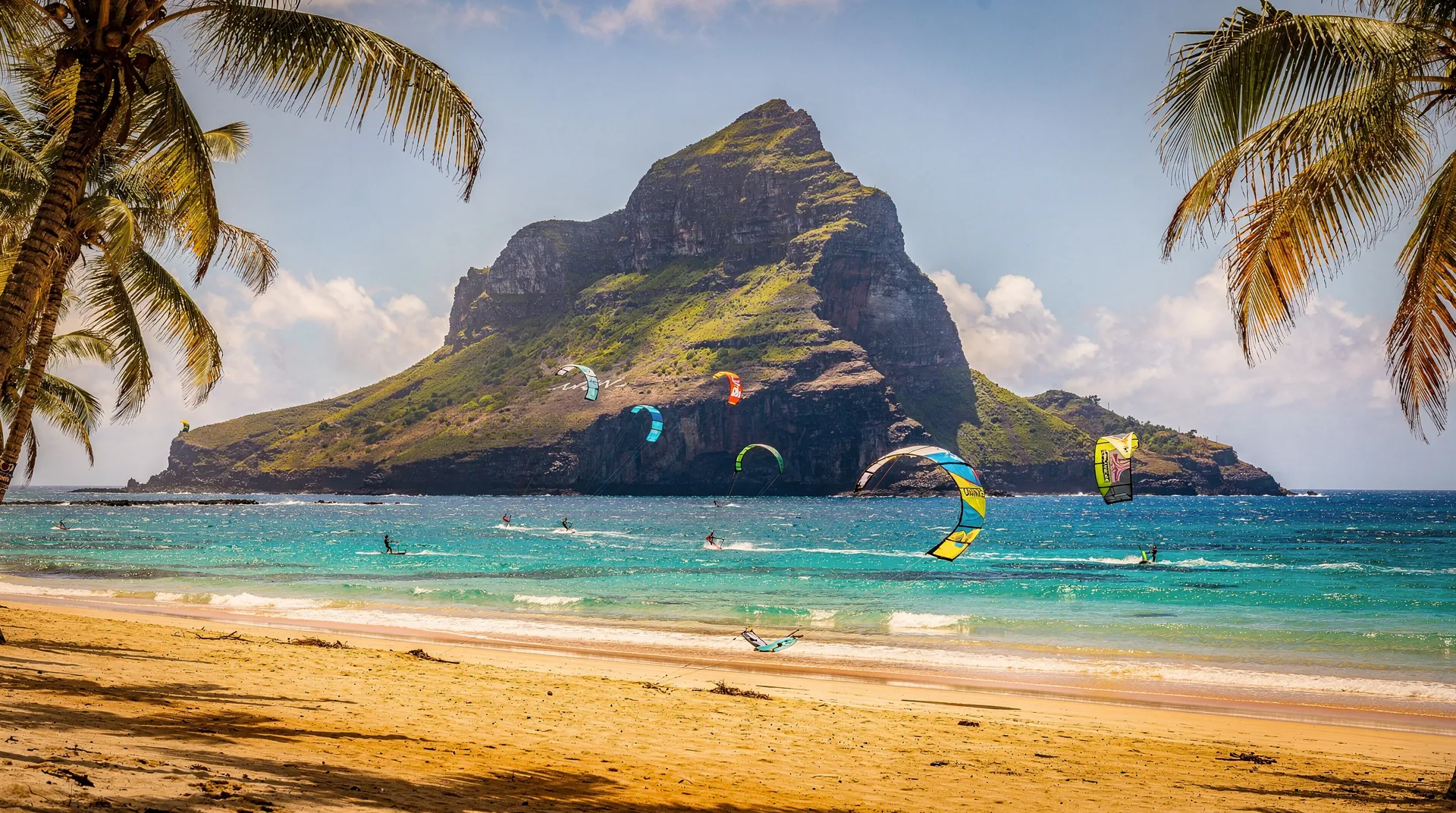
Le Morne Brabant is the most instantly recognizable image of Mauritius. This rocky peninsula, crowned by a basalt mountain rising 556 meters above the ocean, forms one of the most striking panoramas in the entire Indian Ocean. Listed as a UNESCO World Heritage site in 2008 for its history tied to the resistance of escaped slaves, Le Morne is far more than a postcard backdrop — it’s a place charged with history, wild beauty, and a distinctive energy that leaves a lasting impression on those who stay here.
It’s also the world capital of kitesurfing. The lagoon surrounding the peninsula offers steady wind conditions and shallow water ideal for this demanding sport, drawing thousands of kitesurfers from around the world every year. And for those who don’t kitesurf, the luxury resorts nestled at the foot of the mountain represent the pinnacle of high-end Mauritian hospitality — properties where service, cuisine and natural setting come together to create unforgettable stays.
If you’re planning a romantic trip or honeymoon, Le Morne features prominently in our Mauritius honeymoon itinerary. To explore the whole west coast, our Mauritius road trip guide offers itineraries that include Le Morne, Tamarin and Flic en Flac.
At a glance
| Where | Southwest tip of Mauritius, UNESCO-listed peninsula |
| Accommodation budget | Mostly high-end, with more affordable guesthouses in nearby La Gaulette and Chamarel |
| Time needed | 3 to 5 days to enjoy the beaches, the hike and the excursions |
| Getting there | About 1h from the airport, taxi around 1,500-1,800 rupees |
| Best time | April to November for stable weather; May to November for wind |
History and UNESCO heritage
The mountain of the maroon slaves
Le Morne Brabant is listed as a UNESCO World Heritage site for its tragic and deeply human history. During the era of slavery, the inaccessible Le Morne peninsula served as a refuge for escaped slaves, known as “maroons.” Hidden among the mountain’s cliffs and forests, these men and women resisted bondage at the risk of their lives, forming communities of fugitives who organized themselves within the crevices of the basalt rock.
Legend has it that in 1835, on the eve of the official abolition of slavery, a troop of soldiers climbed the mountain to inform the refugees of their newfound freedom. Believing it to be an imminent attack, and preferring death to a return to slavery, several of them threw themselves off the cliffs. This harrowing story illustrates, with rare intensity, the human tragedy of slavery. It is commemorated every February 1st during National Abolition of Slavery Day, a solemn ceremony that brings together many Mauritians at the foot of the mountain.
The Maroon Slaves Memorial, erected at the foot of Le Morne, is a place of remembrance that every visitor should take the time to see. The central sculpture, depicting chained figures, has a striking evocative power. Visiting the memorial adds a profound historical and human dimension to your stay — it transforms the contemplation of a beautiful landscape into a genuinely meaningful experience.
What to do in Le Morne
Kitesurfing and windsurfing: a rider’s paradise
Le Morne is world-renowned for its exceptional kitesurfing conditions. The famous “One Eye” — a legendary spot in the global kitesurfing community — sits in Le Morne’s lagoon and appears on the map of every serious kitesurfer. The trade winds blow steadily, between 15 and 25 knots, offering near-perfect conditions from May to November. Our kitesurfing and surfing guide to Mauritius gives you all the details on conditions, skill levels required, and the best schools.
The kitesurf schools based in Le Morne are among the best in the Indian Ocean. Certified instructors offer full training programs, for absolute beginners and for surfers looking to refine their technique alike. The shallow lagoon — ranging from a few centimeters to about a meter in the teaching zones — is ideal for learning, since falls have no serious consequences. Advanced sessions out in the outer lagoon let experienced kitesurfers work on their jumps and tricks.
Windsurfing is also very popular in the area, benefiting from the same steady wind conditions. The quality of the water is prized by international competitors, who regularly hold events in Le Morne.
Hiking Le Morne Brabant
Climbing Le Morne Brabant is an unforgettable hike, provided you’re accompanied by a licensed local guide. Registration with the relevant authorities is mandatory before any ascent, and hiking solo is strongly discouraged due to the steep cliffs and unmarked trails.
For the best experience, book a guided hike of Le Morne Brabant with a certified guide who knows the trails inside out.
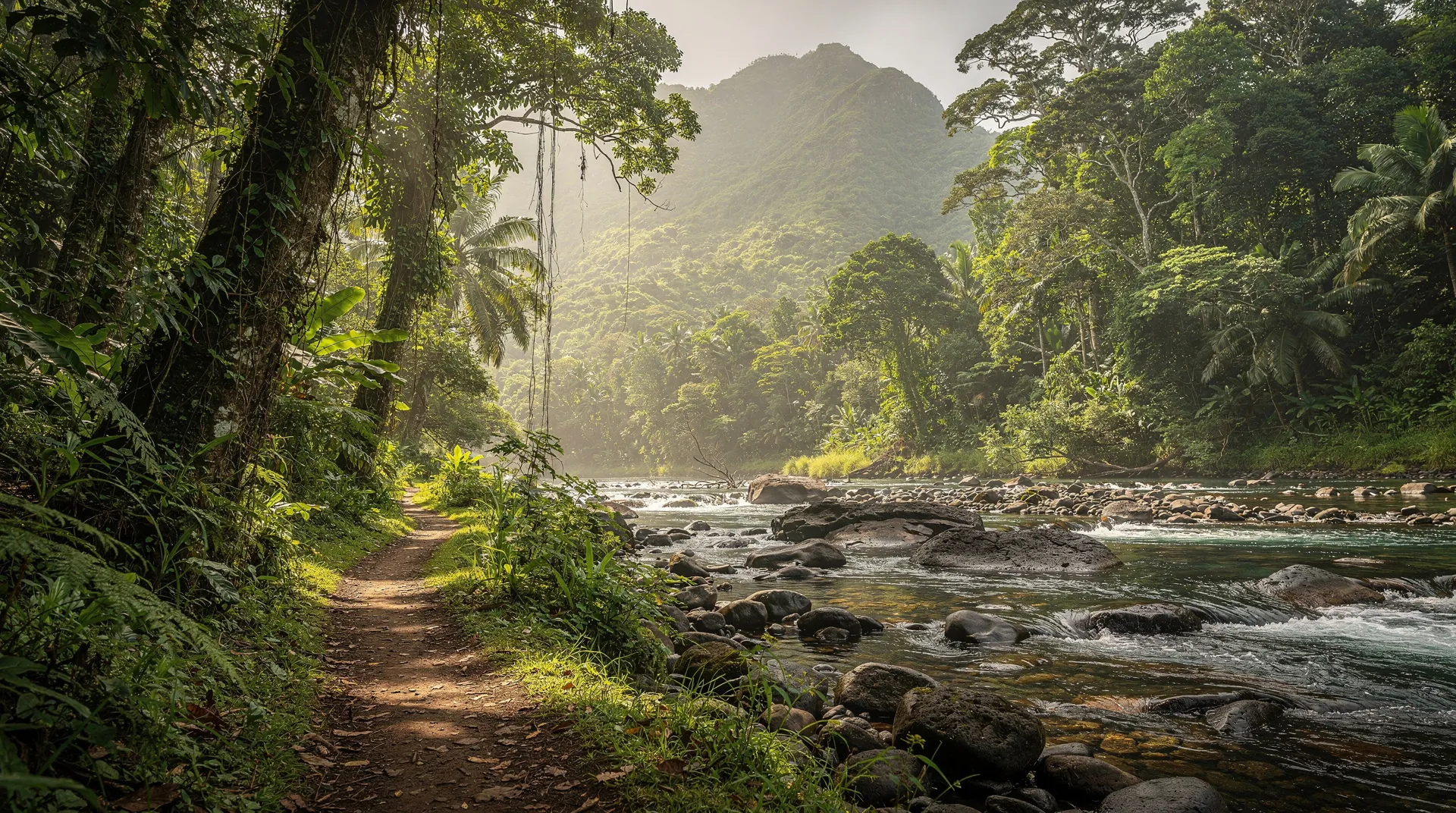
The climb takes about 2 to 3 hours depending on pace. The trail passes through different types of vegetation, from subtropical forest to bare basalt rock. At the summit, the 360-degree view takes in the whole southwest of Mauritius: the turquoise lagoon of Le Morne with its miniature kitesurfers, the beaches of Bel Ombre to the east, and the mangroves and sugarcane fields of the hinterland. On a clear day, you can even spot Réunion Island on the horizon. The descent, along a different route, reveals equally spectacular, different views.
Diving and snorkeling
The waters around Le Morne hold some of the richest marine life in Mauritius. The combination of currents, varying depths, and the shape of the reef creates conditions favorable to exceptional biodiversity. The drop-offs beyond the coral barrier plunge to depths of 30 to 40 meters, home to reef sharks, eagle rays and schools of jack fish. The shallow lagoon areas, accessible from the beach, offer snorkeling suitable for everyone, with colorful tropical fish, sea turtles and healthy coral.
Water sports and wellness excursions
The watersports centers at Le Morne’s major hotels offer a full range of activities: windsurfing, water skiing, wakeboarding, paddleboarding, sea kayaking and catamaran excursions. Most luxury resorts include several non-motorized watersports activities in their rates, which adds significant value. For wellness and recovery after a kitesurf session or a demanding hike, the spas at Le Morne’s major hotels are among the best on the island. Our spa and wellness guide to Mauritius will point you toward the best addresses.
Golf in Le Morne
Several golf courses in Mauritius are accessible from Le Morne, some offering spectacular views over the lagoon and the mountain. Golf in Mauritius benefits from favorable weather nearly year-round, with lush fairways maintained with great care.
The beaches of Le Morne
The main beach: a cinematic setting
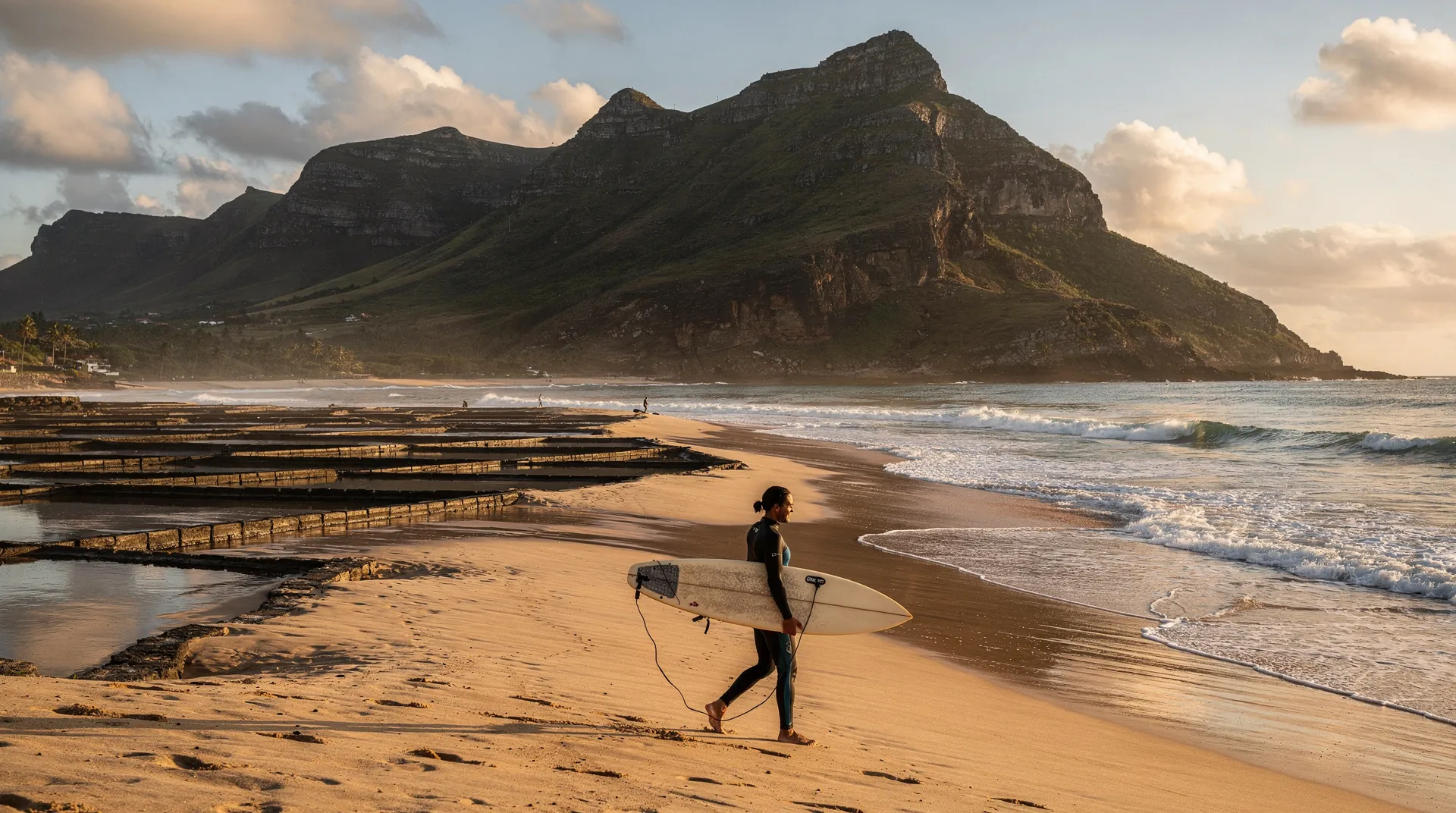
The beach running along the Le Morne peninsula is one of the most spectacular on the island. The contrast between the white sand, the turquoise water in its many shades of blue, and the dark mass of the basalt mountain creates an almost surreal, beautiful picture. This iconic image of Mauritius — featured in countless advertising campaigns — is even more striking in person. The beach is publicly accessible along its entire length, although hotels occupy a large portion of the coastline.
The water on this side of the peninsula is shallow and very clear, ideal for children and swimmers of all levels. The lagoon is protected by one of the sturdiest coral barriers on the island. At low tide, sandbanks emerge within the lagoon — a spectacular phenomenon that makes it look like the kitesurfers are literally walking on water from the shore.
The other side of the peninsula
Rounding the peninsula to the south reveals a wilder coastline, more exposed to the winds and waves of the Indian Ocean. This side is less accessible but offers more dramatic scenery, with black rocks sculpted by the waves and coastal vegetation battered by sea spray. This is also where you’ll find the best spots for advanced kitesurfing, including the legendary “One Eye” spot, accessible from the beach by experienced kitesurfers.
Île aux Bénitiers
A few minutes by boat from Le Morne beach, Île aux Bénitiers is an outstanding snorkeling and beach destination. This pristine islet, accessible only by boat, offers exceptionally clear water and coral reefs in excellent condition. Excursions depart regularly from Le Morne’s hotels. For a full day out that includes dolphin watching and lunch on the islet, book a catamaran trip to Île aux Bénitiers.
Where to stay in Le Morne
Le Morne is synonymous with high-end accommodation. The hotels on the peninsula rank among the most beautiful and exclusive on the island of Mauritius. Our complete guide to where to stay in Le Morne will help you choose the right property for your budget.
Luxury resorts: the ultimate Mauritius experience
Several five-star establishments sit directly on the Le Morne peninsula. These resorts offer villas with private pools, internationally renowned spas, fine-dining restaurants, and flawless service. The setting — between a UNESCO mountain and a kitesurfing lagoon — is unmatched anywhere in Mauritius.
These hotels arrange private catamaran excursions for their guests, kitesurfing sessions with certified instructors, diving programs, and romantic dinners on the beach. Some also offer wellness programs including yoga facing the mountain, meditation, and Ayurvedic treatments. For a full selection, see our luxury hotels in Mauritius guide.
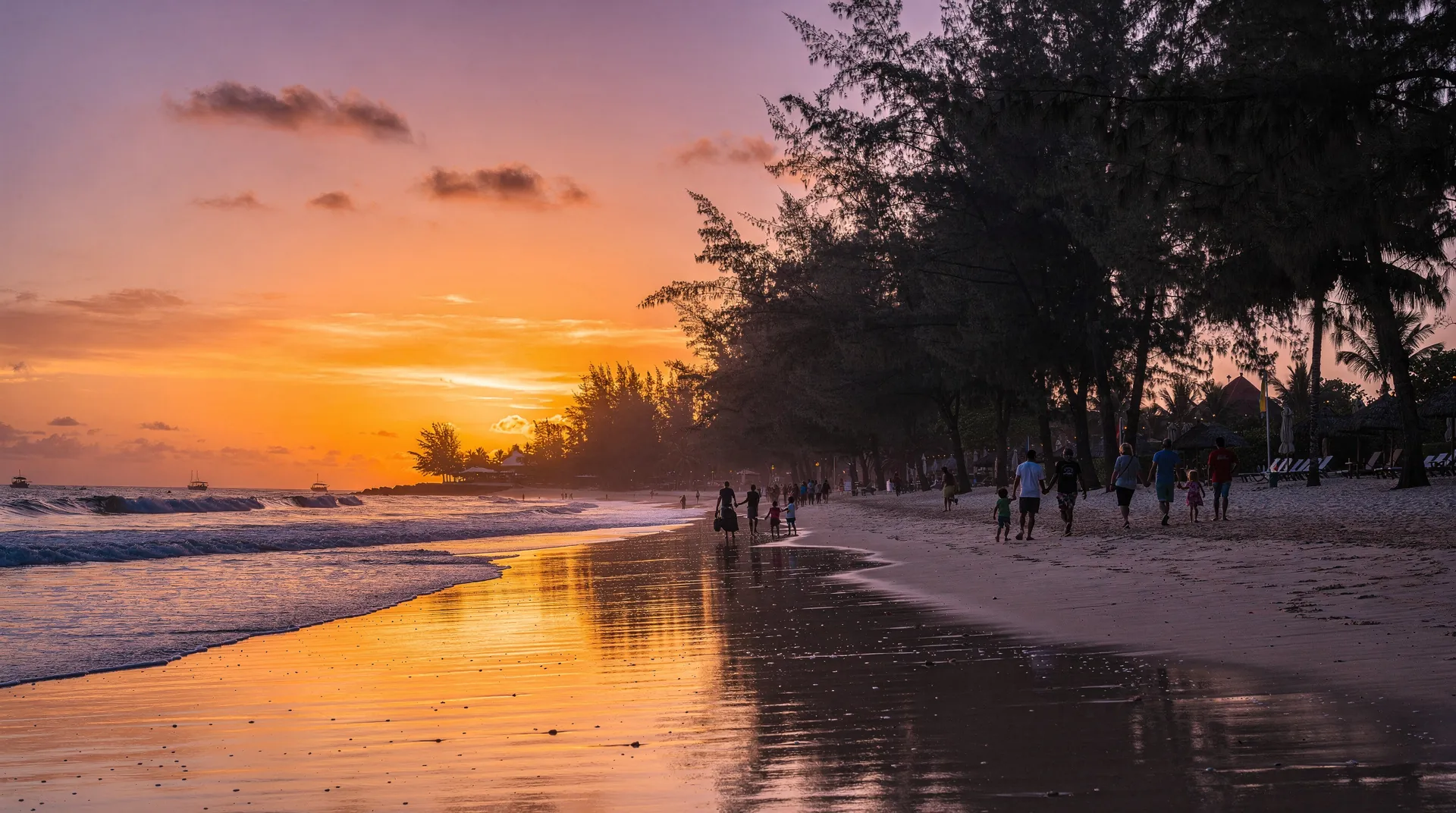
Travelers on honeymoon or an anniversary trip will find unmatched romantic experiences in Le Morne: private dinners with your feet in the sand, a sunset boat trip to Île aux Bénitiers, a suite with a jacuzzi overlooking the lagoon. Our guide to where to stay as a couple in Mauritius presents a dedicated selection.
More affordable alternatives
It’s possible to experience Le Morne without a luxury budget by choosing guesthouses or apartments in the surrounding villages, particularly La Gaulette or Chamarel, 20-30 minutes away by road. This option lets you enjoy the beaches of Le Morne on a day trip while staying somewhere more affordable. For private-pool villas within a 20-minute radius of Le Morne, there are plenty of options offering a great alternative to the big hotels.
How to get to Le Morne and get around
Le Morne is about an hour’s drive from the international airport, via the motorway and then the west coast road heading south. Renting a car in Mauritius is practically essential in this part of the island, where public transport is very limited. For details on airport transfers to Le Morne, see our guide — a taxi is the simplest solution on arrival.
From Flic en Flac, Le Morne is a 40-minute drive. From Tamarin, allow about 15 minutes. From Port Louis, the motorway gets you to Le Morne in about 1 hour. Taxis in Mauritius are available from the village for one-off excursions.
Best time to visit Le Morne
The best time for kitesurfing coincides with the dry season, from May to November, when the trade winds blow steadily and strongly. For beaches and gentler water activities, the whole April-to-November period is excellent, with stable weather and pleasant temperatures.
The austral summer (December to March) is hotter and more humid, but some kitesurfers actually prefer the different wind conditions of this period. Cyclone risk is present between January and March. The lagoon waters stay beautiful year-round. Check our Mauritius weather guide for detailed forecasts and our guide to the best time to visit Mauritius to make the most of your trip.
Excursions from Le Morne
Le Morne is the ideal starting point for exploring the south and southwest of the island. 30 minutes to the east, the Bel Ombre nature reserve invites you to forest safaris, sport fishing, and immersion in unspoiled nature. Further out, Souillac and its spectacular Gris-Gris cliffs are well worth the trip for fans of wild landscapes.
To the north, Tamarin, with its dolphins and genuine waves, is 15 minutes away. Chamarel and its Seven Colored Earths are 30 minutes away through the hinterland hills — a beautiful excursion that perfectly rounds out a beach stay. Our 7-day Mauritius itinerary includes Le Morne as a central stop, while the family itinerary suggests kid-friendly activities from this base.
Practical tips
Visiting the Maroon Slaves Memorial at the foot of the mountain is recommended to all visitors, without exception. This solemn, moving site turns a beautiful beach destination into a place of remembrance and historical understanding that deeply enriches the Mauritian experience.
If you plan to hike Le Morne, book a guide in advance through licensed operators. The climb is done early in the morning to avoid the heat and enjoy the best light. Wear proper hiking shoes, bring plenty of water, and apply sun protection. To stay connected during your excursions, our internet and eSIM guide to Mauritius will point you to the best connectivity options.
Le Morne and the Abolition of Slavery Day
Every February 1st, Mauritius celebrates National Abolition of Slavery Day. This date commemorates the official abolition of slavery in Mauritius in 1835. Le Morne Brabant is at the heart of these national celebrations: official ceremonies are held at the foot of the mountain, Creole artists perform, and thousands of Mauritians come to pay tribute to the ancestors who resisted bondage in the mountain’s cliffs.
For travelers in Mauritius on February 1st, attending these ceremonies is a deep cultural and emotional experience. It offers insight into how the history of slavery remains alive in the Mauritian collective memory, and how current generations shape their national identity from this painful legacy.
Île aux Bénitiers: an excursion from Le Morne
Île aux Bénitiers is a must-do excursion from Le Morne. This pristine islet, accessible only by boat in about 15 minutes from Le Morne beach, offers beaches of immaculate white sand surrounded by absolutely crystalline waters. It’s one of the most pristine and beautiful lagoons in all of Mauritius.
The water around Île aux Bénitiers is shallow over a great distance — sometimes less than a meter deep 200 meters from shore — creating a striking visual effect. Snorkeling here is exceptional, with coral in very good condition and an impressive diversity of marine species. Local fishermen offer excursions from Le Morne beach for a handful of rupees — prefer these local boats over organized tours, which are often more expensive for the same experience.
Kitesurfing in Le Morne: practical information
For travelers wanting to kitesurf in Le Morne, here’s the essential practical information. May to November offers the best conditions, with a steady trade wind blowing between 15 and 25 knots from the southeast. The windiest hours are generally between 10am and 5pm, peaking in the mid-afternoon.
Complete beginners should plan for a minimum of 6 hours of IKO (International Kiteboarding Organization) lessons before riding independently in the lagoon. Lessons in Le Morne are usually given in the shallow lagoon zone, where the water depth makes it easy to stand back up after a fall. Expect to pay 80-120 euros an hour for a private lesson with equipment included at the main schools.
The “One Eye” spot is reserved for experienced kitesurfers — don’t attempt to ride it unless you have at least a confirmed intermediate level. Locals know the spot’s unwritten right-of-way rules, and respecting them is essential to being welcomed there.
Islets near Le Morne: treasures of the southwest lagoon
Le Morne’s lagoon hides several islets and snorkeling spots of exceptional beauty, reachable in 10 to 20 minutes by boat from the main beach. Île aux Bénitiers is the best known — a pristine island whose white-sand beaches and translucent waters make an ideal setting for a half-day of beach time and snorkeling off the main tourist trail.
Other parts of the lagoon, known to local guides, offer exceptional snorkeling conditions, with coral in excellent condition, sea turtles grazing in the seagrass beds, and a remarkable diversity of fish. Local fishermen have known these spots for generations and can take you there for a modest fee from Le Morne beach. This way of discovering the lagoon, without a tourism middleman, is often the most authentic and memorable.
Staying in Le Morne in low season: the upsides
The period from December to March (austral summer) is considered low season for kitesurfing in Le Morne, but it offers its own advantages for other kinds of travelers. Hotel rates are generally 20 to 30% higher in peak season (July-August) than in low season — a significant difference for the peninsula’s five-star establishments. Beach crowds are lighter outside French school holidays.
The lagoon waters are especially warm in summer (28-30°C), ideal for extended swimming and snorkeling. The vegetation on the peninsula and surrounding hills turns a lush green after the tropical rains. Le Morne Brabant itself is often wreathed in a crown of low clouds in summer, giving it a mysterious, highly photogenic atmosphere quite different from the rest of the year.
Comparing Le Morne to its immediate neighbors
Many travelers debate between staying right in Le Morne or in a more affordable neighboring village and visiting its beaches on day trips. This table helps you decide based on your priorities.
| Criteria | Le Morne (resort) | La Gaulette (village, 10-15 min) | Chamarel (hills, 20-30 min) |
|---|---|---|---|
| Budget | High to very high | Very affordable | Moderate |
| Access to Le Morne beach | Immediate, on-site | Short drive or bike ride | Requires a drive |
| Vibe | Five-star luxury and service | Laid-back kitesurfer village | Nature and countryside |
| Ideal for | Honeymoon, full beach stay | Small budget, watersports | Excursions and quiet |
The memorial and the duty of memory: preparing your visit
Beyond the panorama, the Maroon Slaves Memorial deserves more than a few minutes squeezed between beach photos. Set aside 30 to 45 minutes to read the information panels and reflect in front of the central sculpture. Entry is free and access is from the public car park at the foot of the mountain, with no guide required. It’s a natural complement to the hike for those doing the ascent, but it can also be visited on its own, in simple attire and with respect for the site.
Frequently asked questions about Le Morne
Do you need to kitesurf to enjoy Le Morne? No. Le Morne is stunning for any kind of traveler. The beach, the UNESCO mountain, the luxury hotels, the sunsets, and the excursions to Île aux Bénitiers are accessible and fascinating for everyone.
Is the hike up Le Morne suitable for everyone? The hike is physically demanding, with rocky sections and a few spots requiring the use of your hands. It suits people in good physical shape. Children over 10-12 can take part with a guide. Closed-toe shoes with good grip are essential.
Can you access Le Morne beach without staying at a hotel? Yes. The beach is public along its entire length. You can park in designated areas and set up on the section of beach not occupied by the hotels. In practice, the most beautiful spots are often right next to the resorts.
How far is Le Morne from the airport? About 60-70 kilometers by road, roughly 1 hour without traffic. A taxi from the airport costs approximately 1,500 to 1,800 rupees.