
Chamarel: Coloured Earth, Waterfall and Rum Distillery
Updated: August 2026
How much time should I set aside to visit Chamarel?
Allow a full half-day for Chamarel: 1 hour for the Coloured Earths and the waterfall, 1.5 hours at the Rhumerie, plus travel time. Most organised excursions last 4 to 5 hours.
Chamarel: the colourful heart of Mauritius
The village of Chamarel, tucked into the hills of south-west Mauritius at around 200 metres above sea level, is one of the island’s most visited and most authentic destinations. Its international fame rests on two spectacular natural phenomena — the Coloured Earths and the great waterfall — as well as on one of the finest rum distilleries in the entire Indian Ocean. A half-day spent in this unspoiled corner of the island makes for a memorable experience, a world away from the bustle of the coastal resorts.
Chamarel sits within the south-western zone that concentrates the majority of the island’s natural and cultural sites: Black River Gorges National Park is just a few kilometres away, the Black River Gorges themselves are within sight, and Le Morne coastline is under 30 minutes away. It’s the ideal hub for a day exploring this lesser-known face of Mauritius.
To get to Chamarel, a rental car is strongly recommended. Check out our guide to car rental in Mauritius to choose the right vehicle for the mountain road leading to the village — a winding but beautiful route through sugar cane plantations and tropical forest.
At a glance
| Where | Chamarel village, south-west Mauritius, near Le Morne |
| Price | Coloured Earths around 200 rupees, Rhumerie 400-700 rupees, waterfall free |
| Time needed | Half a day (4-5h) for the essentials, a full day for an adventure circuit |
| Getting there | Rental car recommended, otherwise organised excursion or taxi |
| Best time to go | Year-round; colours are more intense after rain (November-April), skies clearer in the dry season (May-October) |
The Seven Coloured Earths of Chamarel
A geological phenomenon unique in the world
The Seven Coloured Earths of Chamarel are a natural and geological curiosity found nowhere else on earth. It’s a stretch of sand dunes in extraordinary hues: red, brown, purple, green, blue, yellow and dark violet blend into coloured bands that look as though they’ve been lifted straight from an expressionist painting.
To visit this exceptional site as part of a full day in the south, you can book a south of the island excursion including Chamarel and Grand Bassin with hotel transport included. No similar formation is known anywhere else in the world with this density of distinct colours packed into such a compact area.
The phenomenon results from the differential weathering of volcanic basalt rock — basalt being the parent rock of Mauritius, born of the volcanic activity that formed the island around 8 million years ago. Depending on the precise mineral composition and degree of oxidation, iron oxides (giving the reds, oranges and browns) and aluminium oxides (giving the blues and purples) create different colours within the lateritic soil.
The most astonishing feature of this coloured sand: if you mix it up and shake it in a jar, it settles back into its natural coloured layers after a while. Geologists still don’t have a fully satisfying explanation for the phenomenon.
Visiting the Coloured Earths
Access: The Coloured Earths are located on private land managed by the company “Terres de Couleurs Chamarel”. The entrance is clearly signposted on the main road through Chamarel.
Tickets: Adults 200 rupees. Children (under 12) 100 rupees. Free for under-3s. Included in most organised excursions from west coast hotels.
Opening hours: Open daily from 8:30am to 5:30pm (last entry at 5pm).
Visit duration: 45 minutes to 1 hour is generally enough to walk round the viewpoints and take photos. The purpose-built viewpoints let you admire the coloured dunes from several different angles and heights, revealing new shades and patterns each time.
Photography tips: Come early in the morning (before 10am) for several reasons: avoid the tour buses that arrive mid-morning, enjoy the golden low-angle light that makes the colours pop spectacularly, and have the viewpoints to yourself for a few peaceful moments. Late-afternoon light is also lovely, but the tour groups have usually left by then.
A souvenir shop sells small glass bottles filled with layered coloured sand — a light, original souvenir that neatly illustrates the geological phenomenon.
What else is on the estate
Within the grounds of the Coloured Earths estate, you’ll also find several complementary attractions worth the stop:
Aldabra giant tortoises: An enclosure is home to several giant Aldabra tortoises (Aldabrachelys gigantea), the same giants found on the Seychelles and on Round Island in Mauritius. These animals can weigh over 200 kg and live for more than 150 years. Children love watching them up close and, under staff supervision, sometimes get to stroke their shells — a memorable experience.
A restaurant with a view: A restaurant offers a Creole lunch or buffet with a direct view over the coloured dunes (800 to 1,500 rupees per person). The quality is decent and the setting exceptional — eating while looking out at the multicoloured earth is an original experience.
A garden of endemic and tropical plants: A small botanical garden showcases Mauritius’s main tropical plant species, with information panels in French.
The Chamarel Waterfall
The island’s highest waterfall
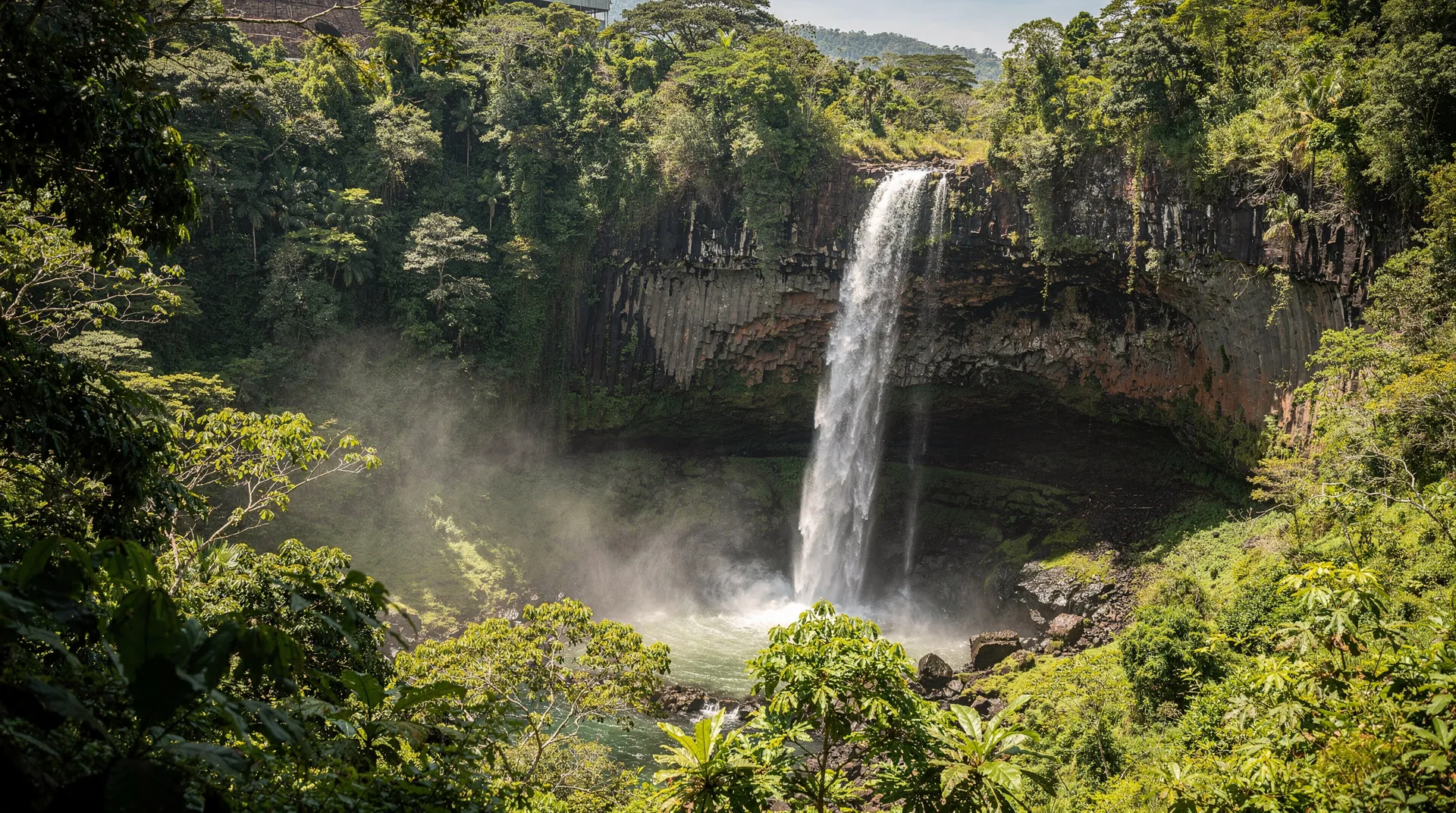
The Chamarel Waterfall is the highest waterfall in Mauritius, with a vertical drop of around 100 metres into a lush, wooded gorge. It’s fed by the Rivière du Cap (also known as the Rivière Saint-Denis), which flows down from the heights of the island’s central plateau. The waterfall plunges into a spectacular gorge cut into black basalt rock, surrounded by dense tropical vegetation.
Seeing the waterfall
The waterfall is visible from two purpose-built viewpoints on the Chamarel road, just 5 minutes’ drive from the Coloured Earths. The main viewpoint offers an impressive front-on view of the falls, letting you take in the full height and power of the water jet. A second, slightly offset viewpoint lets you see the waterfall from a different angle, with more vegetation in the foreground.
Important: There’s no official trail down to the foot of the waterfall — the gorge is too steep and dangerous. Local guides sometimes offer abseiling descents for the more adventurous — an activity reserved for those with abseiling experience. For adventure activities around Chamarel, our quad biking and adventure in Mauritius guide details the zip-lining and canyoning options available in the area.
Best time to see the waterfall: The waterfall is most impressive during the wet season (November-April) when the flow is at its peak and a rainbow regularly forms in the mist of the falls. In the dry season, the trickle of water is thinner but still photogenic against its lush green backdrop.
Access to the waterfall is free and reachable from the main road — no need to pay to reach the viewpoints.
The Rhumerie de Chamarel
An exceptional distillery
The Rhumerie de Chamarel is regarded by many enthusiasts and experts as one of the finest agricultural rum distilleries in the entire Indian Ocean. Founded in 2008 on a 27-hectare family farming estate that has been in continuous operation for generations, it produces high-quality agricultural rums from sugar cane grown on site — a rarity in Mauritius.
You can book your guided tour of the Rhumerie de Chamarel with tasting online to be sure of a spot, especially in high season.
Unlike Mauritius’s large sugar mills, which make their rums from molasses (a residual by-product of sugar production), the Rhumerie de Chamarel uses vesou — the fresh juice pressed from sugar cane within hours of harvesting — to distil its agricultural rums. This method, identical to that used in the best distilleries of Martinique and Guadeloupe for AOC-certified rums, produces rums with a far more complex, fruity and vegetal aromatic profile. The vesou ferments naturally for 24 to 72 hours before being distilled in copper stills.
Touring the distillery
Duration: 1.5 to 2 hours for a full tour — the ideal length to enjoy every stage without feeling rushed.
Indicative 2026 prices:
- Guided tour + tasting (4 rums representative of the range): 400 rupees per person
- Guided tour + premium tasting (6-8 rums including the older reserves): 700 rupees
- Children (under 12): free, with fresh sugar cane juice offered as an alternative
Opening hours: Monday to Saturday 9am to 5pm, Sunday 10am to 3pm. Last guided tour around 1 hour before closing.
The tour includes:
- A tour of the estate by electric buggy through the sugar cane fields (when cane is in season, between May and November)
- A visit to the pressing workshop, with an explanation of the vesou extraction process
- An explanation of the fermentation and distillation process in the copper stills
- A visit to the cellars, with the American and French oak barrels where the rums age
- A guided tasting in the dedicated room, with appropriate glassware and commentary from the tasting guide
- Free access to the shop to buy bottles at distillery prices
The rums of Chamarel
The range at the Rhumerie de Chamarel is one of the most elaborate on the island:
White rum: Crystal clear, with fresh notes of vesou, fresh cane and a light vegetal edge. Perfect for Creole cocktails — daiquiris, mojitos and Mauritian-style punch.
Spiced rum: Flavoured with Bourbon vanilla, tropical spices (nutmeg, clove, cinnamon) and citrus zest. Ideal served on ice or in an iced punch.
Amber rum: Aged 6 months in American oak barrels. Notes of vanilla, caramel and coconut. A gentle bridge into the aged rums.
5-year-old rum: Aged in American oak barrels for 5 years. Complex notes of vanilla, dried fruit (apricot, fig), lightly smoked wood and sweet spice. A beautiful expression of Mauritian terroir.
7-year-old rum: The jewel of the range. Aged in American oak barrels then finished in French oak. Notes of dark chocolate, cherries in eau-de-vie, leather and blond tobacco. A sipping rum that needs nothing else.
Special editions and collaborations: Experimental rums aged in single malt whisky, cognac or Sauternes barrels. Limited, numbered editions, available only at the distillery shop.
Shop prices range from 800 rupees for the white rum (75 cl) to over 3,000 rupees for the older reserves and special editions.
Lunch at the Rhumerie
The restaurant at the Rhumerie de Chamarel is one of the most highly regarded in the entire south-west region. The terrace offers a sweeping panoramic view over the green hills and, on a clear day, all the way to the west coast of the island. The cuisine is a refined take on Mauritian Creole cooking, with rum pairings suggested by the chef — an original and memorable gastronomic experience.
Budget 1,500 to 2,500 rupees per person, excluding drinks. The menu changes with the seasons and fresh produce availability. Reservations recommended, essential for Sunday lunch, which is often fully booked days in advance.
The village of Chamarel
An authentic hilltop village
Beyond its main attractions, the village of Chamarel itself is worth a short stroll. This hilltop village at around 200 metres is one of the most picturesque in Mauritius: colourful Creole houses with painted wooden doors and windows, gardens overflowing with tropical flowers, a small colonial church, and residents who’ve known each other for generations.
The village is home mostly to Mauritians of Creole descent who work on the region’s farming estates. The atmosphere is relaxed and authentic, far removed from the tourist bustle of the coast.
A handful of small family-run restaurants serve simple, tasty local food at very affordable prices (300 to 500 rupees for a full meal). An economical and welcoming alternative to the tourist restaurants at the Coloured Earths site.
Combined excursions from Chamarel
Classic south-west circuit (half-day)
The most popular circuit in the region, ideal for a full half-day:
- Black River Gorges viewpoint: Breathtaking view over the gorges from the road (15-minute stop, free)
- Chamarel village: Coffee break in this picturesque village (30 minutes)
- Chamarel Waterfall: View from the viewpoints (20 minutes, free)
- Seven Coloured Earths: Full visit including the giant tortoises (1 hour, 200 rupees)
- Rhumerie de Chamarel: Guided tour and tasting (1.5 hours, 400-700 rupees)
- Lunch: At the Rhumerie restaurant or a Creole restaurant in the village
Total duration: 4 to 5 hours. Can be done independently by rental car or via an organised excursion from your hotel. For those who’d rather not drive, you can book this full excursion in the south of Mauritius including Chamarel from your hotel, transport and guide included.
You can also add the tea and rum route with tasting to round out your gastronomic discovery of the Chamarel plateau.
Adventure + culture circuit (full day)
For travellers who want to combine nature and adrenaline:
- Quad biking in the Chamarel hills: 1.5 hours
- Zip-lining above the forest: 1 hour
- Visit to the Coloured Earths: 1 hour
- Lunch at the Rhumerie + tasting: 1.5 hours
Set aside a full day for this programme. Local operators offer this type of all-inclusive circuit, with transport from your hotel. For families, this combination works particularly well as it blends adventure (a hit with kids and teens) with culture (of interest to parents).
Chamarel and the south-west as an itinerary
Chamarel fits naturally into a Mauritius road trip. The south-west region is rich in sites to discover: besides Chamarel, you can visit Le Morne and its spectacular beaches, Souillac and its cliffs, and the Bel Ombre area with its unspoiled nature reserve. A day and a half dedicated to this part of the island is the minimum needed to appreciate its richness.
Our 7-day Mauritius itinerary includes Chamarel in a well-balanced programme, and our 10-day itinerary allows for a deeper, more relaxed exploration of this region.
Getting to Chamarel
By rental car (recommended option)
This is the most practical and flexible way to discover Chamarel at your own pace. From Flic-en-Flac: 30 to 40 minutes. From Le Morne: 25 minutes. From Port Louis: 1 hour. From Grand Baie: 1.5 hours. From Belle Mare (east coast): 1.5 to 2 hours.
The road to Chamarel is spectacular in its own right — it climbs gradually into the hills through sugar cane fields, crosses areas of dense forest, and offers increasingly spectacular views over the west coast as you gain altitude. Take the time to stop at the viewpoints marked along the road.
By organised excursion
Most hotels on every coast offer excursions to Chamarel, either by minibus with a guide or by shared taxi. It’s a good option if you’d rather not drive or if you’re travelling without a rental car. Budget 2,000 to 4,000 rupees per person for an organised excursion including transport, entry fees and sometimes lunch.
By taxi
From Flic-en-Flac or Black River, a return taxi trip to Chamarel costs around 2,000 to 3,000 rupees for the whole car (not per person). Negotiate the price and waiting time in advance. Make sure the driver knows the sites well — some drivers act as informal guides and can show you lesser-known viewpoints. Our guide to taxis in Mauritius will help you negotiate and choose a reliable taxi.
Practical tips
Dress code: The Rhumerie de Chamarel is a smart tourist site. Neat attire is appreciated. Closed shoes are recommended for the estate tour.
Money: Both major sites (the Coloured Earths and the Rhumerie) accept bank cards. Still bring some rupees for the small restaurants and craft stalls in the village, and for any tips.
Combining sites: Don’t try to cram too much into one day. Chamarel + Black River Gorges National Park + Le Morne + Bel Ombre in a single day is generally too ambitious. Stick to 2-3 sites maximum to properly enjoy each place.
Alcohol: If you’re tasting at the Rhumerie, designate a driver before the visit. Roadside checks are frequent on the way back to the coast, especially at weekends.
Photographers: Drones are banned at the Coloured Earths site without prior authorisation. Handheld or tripod photos are free to use for personal purposes.
When to visit: Chamarel can be visited year-round. During the rainy season (November-April), the earth colours are often more intense after rain, and the waterfall is more impressive. During the dry season (May-October), the sky is more often clear for photos and the road is easier to access.
For a complete taste of Mauritian culture beyond the natural sites, our guide to markets and culture in Mauritius will suggest other cultural destinations to weave into your stay.
Chamarel with kids
Chamarel works well as a family visit, as long as you pace yourself. The Coloured Earths and the giant Aldabra tortoises appeal to children of all ages, and the walk between viewpoints stays short and easy. The Rhumerie is less suited to very young children (alcohol tasting, longer visit) but offers free fresh cane juice and a pleasant setting for a break. Avoid combining Chamarel with a hike through the Black River Gorges on the same day if you’re travelling with young children — the day would be too packed. Our guide to family activities in Mauritius offers other ideas for balancing your stay.
Chamarel compared to other natural inland sites
Chamarel stands out among the island’s natural sites for the sheer variety it offers within a small area: a unique geological phenomenon, a waterfall, a distillery and an authentic village, all within a few minutes’ drive of each other. Grand Bassin is more of a spiritual site than a natural curiosity, and pairs well with Chamarel on the same day trip south. For a more active, less structured taste of Mauritian nature, hiking in Mauritius through the nearby Black River Gorges makes the perfect complement to a Chamarel visit.
Chamarel embodies the heart of Mauritius beyond the well-trodden tourist trail. This corner of the island, with its uniquely coloured earth, its majestic waterfall, its award-winning rums and its authentic hilltop village atmosphere, illustrates the natural and cultural richness of an island that never stops surprising and delighting its visitors, trip after trip.