
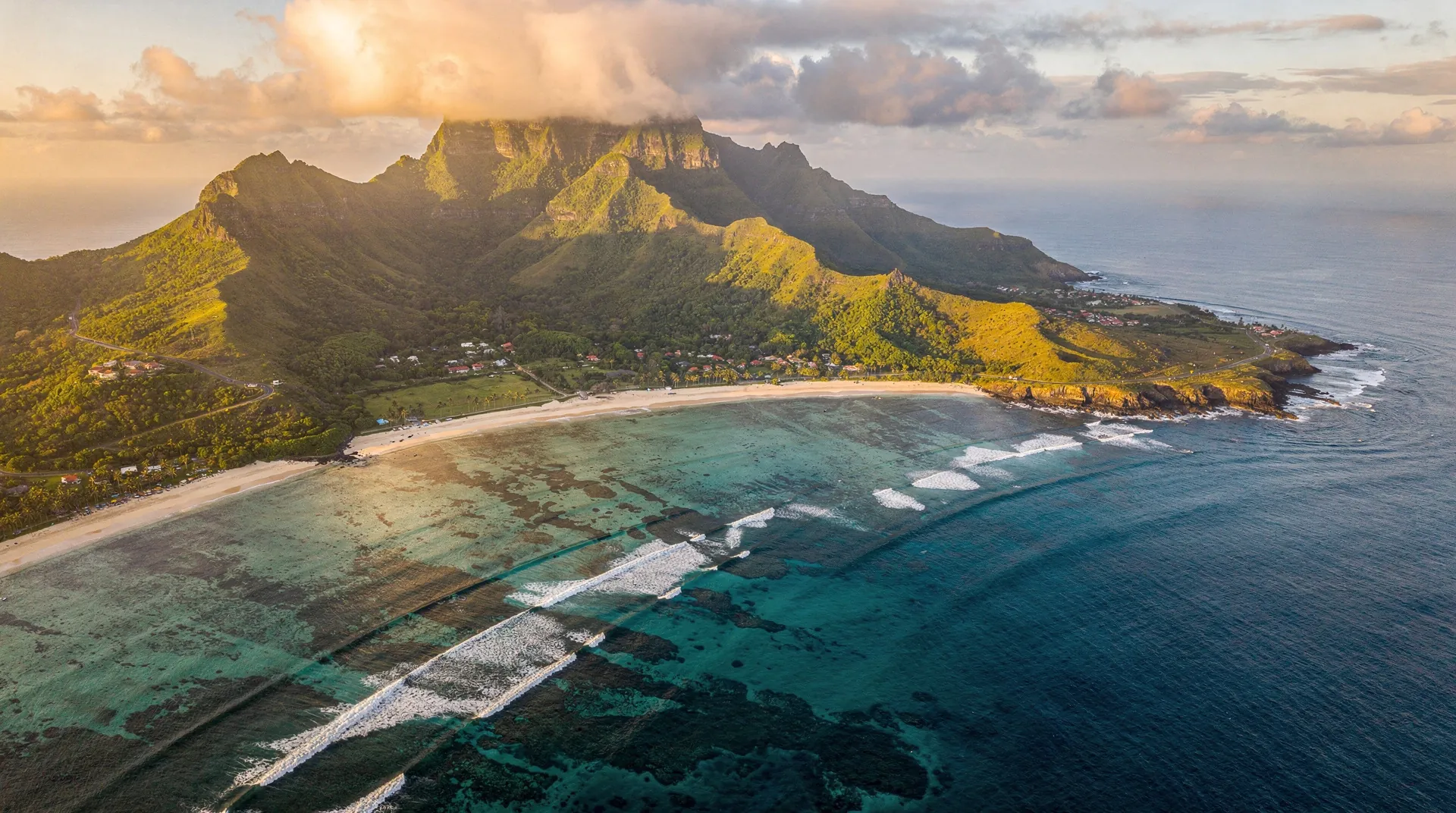
Why Mauritius Deserves More Than a Beach Holiday
Updated: June 2018
Mauritius: far more than a postcard
The first time I told my friends I was going to Mauritius, the reaction was unanimous: “Oh, the honeymoon trip!” Or: “You’re going to sunbathe on the beach all week?” I don’t blame them. For decades, Mauritius has cultivated an image as a luxury destination — white sand, turquoise lagoon, five-star hotels you barely ever leave. An image that’s partly deserved, sure, but one that hides something far richer, more complex, more flavourful, in every sense of the word.
After three stays on the island, including one of nearly three weeks spent driving the back roads, eating in roadside eateries the guidebooks ignore, and talking with Mauritians from every walk of life, I’m convinced of one thing: Mauritius deserves infinitely more than the classic beach holiday.
| At a glance | |
|---|---|
| Where | The whole island, beyond the coastal resort zones |
| Price | A car rental budget plus local meals (a few euros per person) is enough to explore widely |
| Time needed | Ideally 10 days or more to see several facets of the island |
| How to get there | Car rental recommended (see our car rental guide) |
| Best time to go | May, September-October, for a calmer island and ideal light |
An island that swallowed the world
What strikes you first is the island’s cultural density. In less than 50 kilometres of width, Mauritius brings together Indian, African, Chinese, French and British influences. This isn’t an artificial mosaic built for tourists — it’s the result of centuries of colonial history, forced immigration and human mixing.
Take a walk through Port Louis on a Tuesday morning. You’ll pass a mosque, a Catholic cathedral, a Tamil temple and a Chinese pagoda within ten minutes. Vendors at the central market call out to you in Kreol, French, Bhojpuri or English depending on how you look. Chicken curry is sold next to dim sum, and rotis sit alongside chilli cakes.
This diversity isn’t just about food or places of worship. It runs through the language, the festivals, the beliefs, the social relationships. Mauritians move with disarming ease between multiple cultural identities, and that fluidity is in itself a lesson in coexistence that many countries could learn from.
Our Mauritius food guide explores this culinary diversity in depth — from markets to table d’hôte meals, and the specialities of each community.
The island’s centre, tourism’s poor relation
For years, tourists have followed the same path: flight, coastal hotel, beach, catamaran trip, back home. The central plateaus, meanwhile, have stayed in the shadows. That’s a mistake I strongly encourage you to correct.
Curepipe, Vacoas, Floréal, Rose Hill — these central towns have an atmosphere radically different from the coast. Temperatures are cooler, the pace slower, and the architecture bears witness to a colonial past that’s still very much present. The grand Creole houses with their verandas, wooden shutters and gardens overrun with bougainvillea are still there, a little forgotten, magnificent in their patina.
The Pamplemousses Garden, one of the oldest botanical gardens in the southern hemisphere, is worth half a day on its own. Its giant water lilies, century-old palm trees and timeless atmosphere are a world away from the bustle of the coastal resort areas.
Car rental in Mauritius becomes essential for exploring the island’s interior. Public transport serves the towns, but to venture onto the small country roads, among the sugarcane fields and tea plantations, only a car gives you the freedom you need.
Nature, beyond the beaches
Mauritius’s beaches are undeniably beautiful. Our guide to the most beautiful beaches in Mauritius presents the finest of them. But reducing Mauritian nature to its beaches means missing the forest for the trees. Or rather, missing the forest entirely.
Black River Gorges offers hikes through dense tropical vegetation, with breathtaking views over valleys and peaks. The Pétrin Nature Reserve, on the Upper Plains, is a highland moorland ecosystem unique in the Indian Ocean, swept by cool winds and covered in a distinctive low-lying vegetation.
Le Morne Brabant, that wild peninsula in the southwest, is much more than a pretty backdrop. A UNESCO World Heritage Site, it carries a painful history — that of the maroon slaves who hid in its cliffs in the 19th century. Walking at its base or attempting the climb to its peak radically changes how you see the island. Our hiking guide to Mauritius details this iconic ascent.
Chamarel with its seven-coloured earths, the Chamarel River waterfalls, the Chamarel national park with its giant tortoises — the island’s southwest is a succession of landscapes that have nothing to do with the usual Mauritius postcard. Our Chamarel and coloured earths guide prepares you for this exploration.
The east of the island: the wildest
The east coast of Mauritius is the island’s hidden face. Exposed to the easterly trade winds and less developed than the north or west coast, it retains a raw, authentic character that appeals to travellers seeking the island in its most natural state.
Belle Mare offers one of the island’s longest and most beautiful beaches, commercially undeveloped and frequented mainly by Mauritian families at weekends. Further north, fishing villages like Roches Noires reveal an authentic coastal life that resort tourism hasn’t yet transformed.
Île aux Cerfs, accessible from Trou d’Eau Douce, is the quintessential island getaway: white sand, crystal-clear water, picnicking on the beach. Our Île aux Cerfs guide prepares you for this excursion.
Eating Mauritian, an experience in itself
I’ll be blunt: if you spend your stay eating only at your all-inclusive hotel, you’re missing one of the best parts of the trip.
Mauritian cuisine reflects its culture — an extraordinary blend of influences. Creole cuisine, spicy and generous, offers curries, achards, rougailles and brèdes with incomparably rich flavours. Indo-Mauritian cuisine, both Hindu and Muslim, has its own specialities — biryanis, dhals, flaky rotis served in banana leaves for Diwali.
Local roadside eateries, often with barely a sign, serve full meals for a few euros. Markets offer fresh fruit juice, samosas, chilli cakes fried right in front of you. Table d’hôte meals, run by Mauritian families, offer a culinary and human experience no fine-dining restaurant can match.
And Mauritian rum deserves a chapter of its own. The Chamarel distillery, the Médine cellars in the west, New Grove in the southeast — a genuine artisanal rum culture has developed on the island. Our guide to Mauritian rum walks you through these discoveries.
The island off-season
Most tourists come in July-August or between December and January. That’s fine, but it’s not necessarily the best time. Prices are higher, beaches busier, and the atmosphere sometimes a bit packaged around tourism.
May, or September-October, offer a calmer island, softer prices and absolutely gorgeous photographic light. The rainy season, from November to April, puts some travellers off — wrongly, in my view. The showers are often brief and spectacular, the landscapes an intense green, and hotels offer much more attractive rates.
Our Mauritius weather guide breaks down month by month what to expect on each coast of the island. To plan your budget by season, our Mauritius budget guide compares accommodation and activity prices across the different periods.
Extraordinary marine experiences
Mauritius’s beaches are magnificent, but what lies beneath the water is just as remarkable. Snorkelling and diving reveal an exceptionally rich underwater world, with healthy coral, hundreds of species of fish and a few stars like sea turtles and dolphins.
Catamaran trips let you explore the northern islets and picnic on deserted beaches. The catamaran cruise to the northern islets is one of the most memorable excursions available in Mauritius.
The swim-with-dolphins excursions in Tamarin are among the island’s most memorable marine experiences — book the swim-with-dolphins excursion in Tamarin in advance.
In season (June-October), humpback whales pass off the island’s southwest coast. Our whale watching guide presents the best trips for observing them in their natural environment.
Meeting Mauritians
Beyond the landscapes and the food, what struck me most in Mauritius was the quality of the human encounters. Mauritians are, on the whole, sincerely hospitable — not the professional friendliness of the hospitality industry, but real human warmth.
If you rent a car and venture into the inland villages, expect to be invited for tea by someone you’ve just met. If you ask about the food at a market, the vendor will spend twenty minutes explaining how their grandmother makes her vegetable achard. If you get lost, someone will get in their car to show you the way.
This generosity is a richness that conventional beach tourism doesn’t showcase, because it requires leaving the hotel.
What to actually do to go beyond the beach
A few practical ideas to enrich your stay:
Rent a car rather than staying on a full-board plan. Driving on the left is quickly learned, the roads are generally in good condition, and the freedom it brings is invaluable. Our Mauritius car rental guide gives all the practical advice. Plan at least two days of touring inland — Chamarel, Le Morne, the gorges, the plateau towns.
Shop at local markets rather than shopping-centre supermarkets. The central market in Port Louis in the morning, and the weekly village markets in places like Mahébourg or Flacq, are experiences in their own right.
Choose at least one night in a table d’hôte rather than a hotel. Mauritian families from every community offer rooms and home-cooked meals often of a quality superior to many restaurants, at very reasonable rates.
Take an interest in the island’s history. The Aapravasi Ghat in Port Louis, a UNESCO World Heritage Site, bears witness to the arrival of indentured Indian labourers in the 19th century. The old slavery museum in Mahébourg, the remains of colonial sugar mills in the countryside — Mauritius has a complex, fascinating history that few tourists take the time to discover.
If you’re travelling as a couple, our guide to couple activities in Mauritius and our honeymoon itinerary will guide you towards the island’s most romantic experiences. If you’re travelling as a family, our family itinerary offers a programme suited to all ages.
An island that has to be earned
I’m not saying Mauritius’s beaches are overrated. They’re genuinely among the most beautiful in the world. But it would be a shame to fly twelve hours just to spend a week lying on a sun lounger.
Mauritius is a destination that has to be earned — not through physical effort or budget, but through curiosity and open-mindedness. It rewards those who look beyond the lagoon, who agree to get lost on unmarked roads, who eat an overly spicy curry with their hands in a nameless roadside eatery.
This blog was born from that conviction. We want to help you discover Mauritius in all its complexity — its beaches, of course, but also its markets, its mountain roads, its cuisine, its festivals, its people. Because that’s where the island’s true richness lies.
Our 7-day Mauritius itinerary embodies this philosophy: beaches in the morning, cultural exploration in the afternoon, local restaurants in the evening. A balance that does justice to everything the island has to offer.
So, ready to go beyond the postcard?
The five Mauritius that coexist on one territory
After several stays on the island, I eventually realised there isn’t just one Mauritius but several — layered over the same territory, accessible if you’re willing to look.
Coastal Mauritius: the one with turquoise lagoons, white sand beaches, five-star hotels and catamaran trips. It’s the best known, the most photographed, the one travel agencies have been selling for decades. It’s real and beautiful — just incomplete.
Highland Mauritius: Curepipe, Vacoas, Floréal — a cooler, more urban inland island, with Victorian Creole houses and a different way of life. Few tourists know it. Yet it’s where most Mauritians actually live.
Agricultural Mauritius: the sugarcane fields that still cover a significant part of the island’s land, the sugar estates converted into tourist attractions (Chamarel, Médine, Labourdonnais), the Bois Chéri tea plantations, the vanilla and coffee farms. An essentially agricultural island behind the tourist veneer.
Multicultural Mauritius: Tamil temples right by the roadside, immaculate white mosques next to Chinese pagodas, families who speak Bhojpuri at home and Creole outside. This cultural density across 1,860 km² is a geographic and human curiosity few islands in the world offer on this scale.
Wild Mauritius: the endemic forests of the highlands, the basalt cliffs of the east coast, the limestone caves of the north, the wetlands of the Mahébourg coast. An island still partly untouched, if you take the trouble to venture into it.
How to allocate your time depending on trip length
Not every facet of Mauritius is accessible on a short trip. Here’s how to prioritise depending on how much time you have.
| Trip length | What you can reasonably explore |
|---|---|
| 3-5 days | One coastal base plus one trip inland (Chamarel or the centre); see our 3-day guide |
| 7 days | Two coastal regions plus the centre plus one marine experience; our 7-day itinerary balances this well |
| 10-14 days | North, west, wild south and centre, with time to change base; see our 10-day itinerary or our 14-day itinerary |
| 3 weeks or more | The island in depth, with time for Rodrigues and table d’hôte stays; our 3-week itinerary details this format |
A realistic budget for exploring beyond the beach
Getting away from all-inclusive hotels doesn’t necessarily cost more — often less. A meal at a local eatery costs a few dozen rupees, against several hundred at a hotel restaurant. Car rental is the main extra cost compared with a purely beach-based stay, but it quickly pays for itself in freedom and savings on taxis and organised excursions. Our Mauritius budget guide breaks down price ranges by spending category, season by season.
Why come back more than once
Mauritius is one of those destinations where returning is almost a requirement if you want to see it all. In one week, you can explore two or three facets of the island — never all of them. In two weeks, you start to get a fuller picture. Over three stays across a few years, you start to actually understand it.
The travellers I met on the island who were coming back for the third or fourth time all talked about it the same way: “This time, I’m finally going to Rodrigues.” Or: “This time, I’m renting an apartment in Mahébourg and really getting to know the south.” Or: “This time, I’m taking the time to drive round the island with no fixed plan.”
That’s what Mauritius is. An island that makes you want to come back, not because you didn’t get enough beach, but because you know there are still markets, country roads, table d’hôtes and conversations you haven’t had time to explore yet.
To help you make your choices, our Mauritius beaches guide presents the finest beaches to suit your preferences, our hiking guide lists trails by level, and our food guide will point you to the best culinary experiences in each region. Now it’s up to you to build your own Mauritius.