
Trou d'Eau Douce
Trou d'Eau Douce, a peaceful east coast village: the departure point for Ile aux Cerfs, luxury resorts and a laid-back atmosphere. 2026 Guide.
- Area
- East coast
- Atmosphere
- Peaceful, authentic
- Beaches
- Access to Ile aux Cerfs (15 min by boat)
- Access
- 1h from the airport
Trou d’Eau Douce: the enchanting gateway to Ile aux Cerfs
Trou d’Eau Douce is a fishing village on Mauritius’s east coast whose poetic name — “hole of fresh water” — evokes the natural springs that once bubbled up in this coastal area, forming small pools of fresh water just a few metres from the salt sea. This geological quirk, tied to the permeability of the basaltic soil, created a natural curiosity that fishermen once used to quench their thirst on returning from a day at sea.
Today, this peaceful, authentic village is best known as the main departure point for reaching Ile aux Cerfs, Mauritius’s most famous and most visited islet. Hundreds of visitors pass through its small jetty every day to catch the boats that cross the lagoon in 15 minutes to reach this island paradise.
But Trou d’Eau Douce is well worth discovering in its own right: its tranquil, authentic atmosphere, its tasty seafront restaurants, its estuary-side promenade and the handful of luxury hotels set here make it a destination in its own right for travellers looking for the east coast without the crowds of the bigger resorts.
To plan your visit to Ile aux Cerfs from Trou d’Eau Douce, our detailed guide Ile aux Cerfs: everything you need to know has all the practical information on arranging the transfer, the activities on offer and the best beach spots. Our 7-day Mauritius itinerary includes Trou d’Eau Douce and Ile aux Cerfs in its optimised east coast circuit.
At a glance
| Aspect | Detail |
|---|---|
| Where | East coast, 15 minutes by boat from Ile aux Cerfs |
| Price | Public boat crossing a few dozen rupees, catamaran excursion with lunch around €60-90, luxury hotel €250 and up |
| Time needed | 2 to 3 days, including at least a full day for Ile aux Cerfs |
| Getting there | About 1h from the airport by car, via Mahebourg |
| Best time | May to November for calm seas; arrive early (8am) in July-August |
Ile aux Cerfs: the pearl of the lagoon
Mauritius’s most famous island
Ile aux Cerfs is an 87-hectare islet set in the vast lagoon of the east coast, about 15 minutes by boat from the Trou d’Eau Douce jetty. Its dazzlingly white sand beaches, its impossibly clear turquoise waters and its remarkably preserved natural setting make it one of the most photographed destinations in the entire Indian Ocean — an image that has travelled the world and, for many, embodies exactly what “paradise” means.
For a full day with a creole lunch served on board and snorkeling stops, book a catamaran excursion to Ile aux Cerfs — a hugely popular all-inclusive package.
To move faster, the speedboat to Ile aux Cerfs and the 5 islands lets you cover more ground in less time, or choose the direct speedboat to Ile aux Cerfs to reach the island in just 10 minutes.
The island is only accessible by boat, which gives it a preserved, island-like character despite the tourist numbers. Transfers run all day from the Trou d’Eau Douce jetty, operated by private companies offering fast boats (10 minutes) or slower, more sociable ones. Some east coast hotels have their own fleet and run a private shuttle service for their guests.
The beaches of Ile aux Cerfs
Ile aux Cerfs is ringed by several beaches with very different characters, each worth exploring. The main beach, on the west side of the island facing the lagoon, is protected by the coral reef and its waters are exceptionally calm, shallow and crystal clear. This is where the organised water sports, restaurants and main buzz are concentrated — the busiest spot, but also the most convenient.
Other beaches, on the north and east sides of the island, are more exposed to the trade winds and the light waves that cross the lagoon. Some are almost deserted, offering an unexpectedly wild, unspoilt beach experience just a few hundred metres from the main activity. These quieter beaches, a 10-15 minute walk from the jetty, are popular with travellers seeking solitude and nature. For a full overview of beaches in Mauritius, our dedicated guide will help you plan your visit to the island.
Activities on Ile aux Cerfs
The island offers a full range of water sports to suit every taste. Parasailing gives a 360-degree view over the turquoise lagoon from up high — a unique perspective on the island’s geography. Waterskiing, jet-skiing, windsurfing, kayaking, pedal boats and snorkeling from the shore are all available at the water sports centres on the main beach. The coral reefs surrounding the island are home to rich, accessible marine life — sea turtles are regularly spotted in the shallow waters of the lagoon.
Golf is the other signature activity on Ile aux Cerfs. The Ile aux Cerfs Golf Club has a spectacular 18-hole course, built partly on the island with several holes right on the water offering views over the lagoon. It’s one of the most beautiful and unique golf courses in Mauritius — playing golf on an island in a turquoise lagoon is an experience with no real equivalent.
Well-stocked restaurants on the island serve creole cuisine, seafood and Mauritian specialities in a setting of coconut palms right on the beach. Prices, understandably higher than in town given the island’s remoteness and logistics costs, remain reasonable considering how exceptional the setting is. For catamaran excursions that include Ile aux Cerfs on their route with lunch on board, our guide will point you to the best options.
The village of Trou d’Eau Douce
The promenade and the estuary
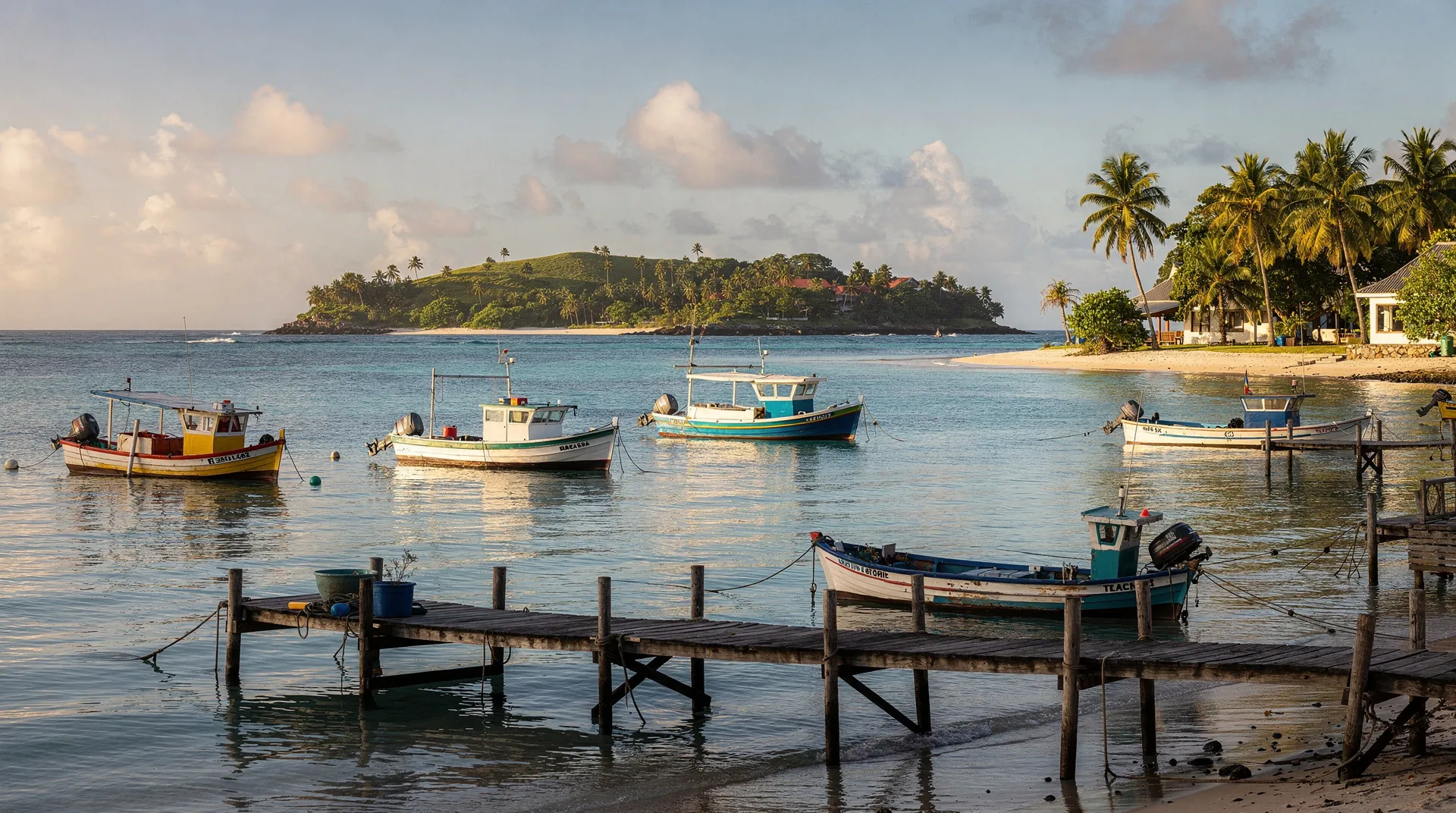
The village of Trou d’Eau Douce is built around a tranquil estuary and a very pleasant seafront promenade. Colourful fishing boats and the boats heading to Ile aux Cerfs share this small natural harbour, creating an authentic, picturesque maritime atmosphere that photographers particularly enjoy at golden hour. A late-afternoon stroll, as the sun sinks over the lagoon and the last boats return from Ile aux Cerfs, is a quintessentially Mauritian moment of calm.
The estuary is where a small coastal river meets the sea. This wetland attracts grey herons, little egrets and various water birds hunting in the shallows at low tide. A simple watch from the promenade at the end of the day is enough to catch these scenes of nature in an authentic fishing village setting.
Restaurants and local life
Trou d’Eau Douce has several restaurants and snack bars serving good honest local food at prices lower than those found on Ile aux Cerfs. Seafood, prawns (local or imported) and the catch of the day are the stars of the menu. Grilled captain fish, fish vindaye and prawn curry are among the most popular specialities. To explore Mauritian cuisine in greater depth, our guide will take you beyond the standard tourist menus.
A supermarket and a handful of shops provide everything needed for a self-catering stay. The weekly local market is a great chance to stock up on fresh fruit and vegetables straight from local growers — mangoes, papayas, pineapples, aromatic herbs and chillies of every colour.
Snorkeling and diving from Trou d’Eau Douce
The waters of the east coast around Trou d’Eau Douce offer excellent conditions for snorkeling and scuba diving. The reefs in the main bay, and especially those surrounding Ile aux Cerfs, are home to diverse marine life — sea turtles, a variety of tropical fish, stingrays and a few harmless reef sharks frequent these well-protected waters. Local dive centres and those run by nearby hotels organise guided outings to the best spots in the area.
Where to stay in Trou d’Eau Douce
Trou d’Eau Douce is home to one of the most celebrated hotels on the east coast, alongside more modest options for different budgets. Our guide where to stay in Mauritius covers what’s available along the whole east coast.
An iconic luxury resort
The luxury resort set directly on the Trou d’Eau Douce lagoon is one of the flagships of upmarket Mauritian hospitality. This five-star property offers villas with private pools, several fine-dining restaurants, an exceptional spa and privileged access to Ile aux Cerfs via the hotel’s private shuttle. The view of the lagoon from the villas — boats crossing to Ile aux Cerfs, herons fishing in the shallows — is among the finest on the east coast. For a full selection of the best luxury hotels on the east coast, our guide luxury stays in Mauritius is essential reading.
For honeymoons from Trou d’Eau Douce, our guide where to stay as a couple in Mauritius picks out the best rooms with lagoon views and the most romantic experiences on the east coast.
Mid-range and budget options
A handful of smaller hotels and guesthouses can be found in the village and its immediate surroundings. These properties offer a personal welcome and easy access to the Ile aux Cerfs jetty, just a few minutes’ walk away. Our guide budget stays in Mauritius picks out the best affordable options on the east coast.
Belle Mare as an alternative base
The proximity of Belle Mare (15 minutes north along the coast road) offers a very attractive alternative: staying at one of Belle Mare’s grand luxury hotels and making daily excursions to Ile aux Cerfs via Trou d’Eau Douce. This approach gives you a longer white sand beach and a more complete hotel infrastructure while still keeping Ile aux Cerfs within easy reach for a day out.
Getting to and around Trou d’Eau Douce
Trou d’Eau Douce is about an hour’s drive from the international airport. The road passes through Mahebourg then follows the east coast north — a 60-70 kilometre drive that takes in some lovely coastal scenery. Car rental in Mauritius offers the greatest flexibility for exploring the east coast and nearby destinations. For details on arranging your airport transfer, our dedicated guide has up-to-date rates and the best options.
From Port Louis, allow around 1h30 via the central route or 1h via the M1 motorway. The public bus regularly serves Trou d’Eau Douce from Mahebourg and other east coast towns, but the schedules can be restrictive for early-morning Ile aux Cerfs excursions. Taxis in Mauritius are available in the village for local trips.
Best time to visit
The east coast enjoys pleasant weather from April to November. May, June and September-October are particularly good: calm seas, stable weather, ideal conditions for Ile aux Cerfs and snorkeling, and more moderate crowds than in peak season.
July and August coincide with French school holidays, and demand for Ile aux Cerfs transfers peaks — arrive very early (by 8am) to get the best spots on the beach. From December to March, the hot season brings more humidity and some weather risk, but the water is especially warm and the beaches less crowded than in summer. Check our guide to weather in Mauritius for detailed forecasts, and our guide to the best time to visit Mauritius to plan your trip.
Excursions from Trou d’Eau Douce
Trou d’Eau Douce is well positioned for exploring the whole east coast. 15 minutes to the north, Belle Mare and its kilometres of pristine white sand are a must for a beach day out. 45 minutes to the south, Mahebourg offers a taste of authentic Mauritian town life, with its Monday market and historic museum.
For boat trips, catamaran excursions from Trou d’Eau Douce or nearby hotels offer full circuits that include Ile aux Cerfs, snorkeling stops in protected areas of the lagoon and a creole lunch served on board. Our 10-day Mauritius itinerary offers a full east coast circuit that includes Trou d’Eau Douce and its surroundings. The family itinerary suggests the activities best suited to children from this base.
Practical tips
Arrive early in Trou d’Eau Douce to catch the first boats to Ile aux Cerfs, ideally by 8am. This lets you enjoy the beach before the organised excursions arrive mid-morning with their groups of 30 to 50 people. The early morning hours on Ile aux Cerfs are the most beautiful — golden light, near-empty beaches, crystal-clear water without the crowds.
If you’re visiting Ile aux Cerfs on a day trip from a hotel elsewhere, organised catamaran excursions generally include transfers, a creole lunch and activities — a good option if you don’t have a car or would rather leave the organising to someone else. To stay connected, our guide to internet and eSIM in Mauritius will point you to the best connectivity options on the east coast.
Ile aux Cerfs and golf: a one-of-a-kind experience
Golf on Ile aux Cerfs is one of the most unusual and memorable experiences Mauritius has to offer golf lovers. The Ile aux Cerfs Golf Club course, designed by European champion and master of the game Bernhard Langer, stretches across part of the island with several holes directly overlooking the lagoon. Some fairways offer 360-degree views over the turquoise waters — a view few golf courses in the world can match.
The course is open to non-hotel guests, with advance booking required. The green fee is significant (around 100-150 euros depending on the season), but the experience more than lives up to it — it’s one of the rare moments where the word “unique” truly applies. Our guide to golf in Mauritius covers all the island’s courses, their features and their prices, to help you plan your rounds.
The east coast by kayak: exploring the lagoon at your own pace
Sea kayaking is one of the best ways to explore the east coast lagoon around Trou d’Eau Douce. The lagoon’s calm, shallow waters, protected by the coral reef, allow independent paddling with no particular experience needed. By kayak, you can get close to mangrove areas only accessible from the water, explore small coves between rocky points, and even paddle across to Ile aux Cerfs in around 30-40 minutes from the Trou d’Eau Douce jetty.
This kayak crossing to Ile aux Cerfs is a great alternative to motorboats for more active visitors. The physical effort is moderate if the sea is calm, and arriving on the island after paddling across the lagoon adds a real sense of achievement. Check with local rental operators about conditions and navigation rules before setting off.
Trou d’Eau Douce through the seasons
The east coast offers a different experience depending on the season. From May to November (dry season), the water is a deep blue, underwater visibility is at its best and the weather is stable and pleasant — ideal for all water sports and Ile aux Cerfs excursions. June to September are the coolest (22-24°C) and windiest months, which can create light waves on the lagoon but makes the days very pleasant physically.
From December to April (hot, humid season), the water is warmer (28-30°C) and tropical rain showers can occur, generally short bursts that don’t stop water activities. The vegetation turns a deep green and the particular light of the rainy season makes for interesting photography. Crowds are higher during this period as it coincides with French school holidays. Check our guide to weather in Mauritius for detailed forecasts.
East coast cuisine: seafood and tradition
The cuisine of Mauritius’s east coast reflects its closeness to the sea and the small-scale fishing tradition that defines the coastal villages. In Trou d’Eau Douce, several family-run restaurants offer daily menus built around the local catch: grilled captain fish with lemon butter, prawn curry made with fresh spices, palm heart salad, and the famous fish vindaye (fish marinated in turmeric and local saffron, then fried and served with onions and chilli), one of Mauritius’s tastiest specialities.
The more tourist-oriented restaurants in the area also offer full creole menus with various curries, rougailles (creole tomato sauce) and sautéed brèdes (leafy greens). Our guide to Mauritian cuisine gives you everything you need to navigate the culinary richness of the east coast.
The fishing villages of the east coast: preserved authenticity
The east coast around Trou d’Eau Douce is dotted with small fishing villages whose authenticity has been better preserved than on the more touristy coasts of the north and west. Villages such as Quatre Cocos, L’Arsenal and Bambous Virieux have kept their character as fishing communities living by the rhythms of the sea, even as recent tourism development has begun to reshape them.
In these villages, colourful fishing boats are pulled up onto the sand under the coconut palms, nets are laid out to dry, and street vendors sell fresh fish from makeshift stalls straight off the water. These scenes of authentic maritime life, no longer found at the big beach resorts, are among the most memorable experiences on the east coast for travellers who take the time to stop and look.
Fishing families in these villages often practise mixed livelihoods — fishing for sale, subsistence farming in the adjoining gardens. This semi-traditional way of life, combining a maritime economy with food self-sufficiency, is increasingly rare in Mauritius and deserves to be observed with respect.
Ile aux Cerfs as a place of work: beyond tourism
Ile aux Cerfs is not just a holiday destination — it’s also a workplace for the restaurant and water sports centre staff who work there every day. These workers cross the lagoon from Trou d’Eau Douce morning and evening, in all weather, in small motorised boats. Their intimate knowledge of the lagoon, its currents and its sea conditions is remarkable.
Behind the island’s tourist-facing side lies a complex logistics operation: daily supply runs, waste management, upkeep of facilities, boat maintenance. This invisible infrastructure is what lets visitors enjoy the island without worrying about the practicalities. Respecting the work of these teams by behaving responsibly on the island (no littering, respecting nature) is the least visitors can do in return.
Trou d’Eau Douce with children
Ile aux Cerfs and its shallow lagoon are very well suited to children, but the boat crossing and the midday crowds call for a bit of planning with young kids. Our selection of family activities in Mauritius and our guide to the best beaches for families point out the best time slots and providers. Taking the first boat of the morning, around 8am, lets you avoid the large groups that arrive later and enjoy the main beach in peace with the kids.
Trou d’Eau Douce or Belle Mare: where to base yourself
| Criteria | Trou d’Eau Douce | Belle Mare |
|---|---|---|
| Atmosphere | Fishing village, quiet | Large beach resort town |
| Beach | Modest in the village, superb at Ile aux Cerfs | Long white sand beach on site |
| Access to Ile aux Cerfs | Direct, 15 min by boat | 15 min by car then boat |
| Best for | Travellers who prioritise Ile aux Cerfs | Families looking for a big beach on site |
Many travellers choose to stay in Belle Mare for its beach and travel to Trou d’Eau Douce on a day trip to Ile aux Cerfs — both approaches work well depending on your priorities.
Frequently asked questions about Trou d’Eau Douce
Can you get to Ile aux Cerfs without going through Trou d’Eau Douce? Some operators run catamaran excursions from Grand Baie or other points on the east coast, but Trou d’Eau Douce remains the simplest and cheapest access point for day trips.
Do you need to book the boat to Ile aux Cerfs in advance? In high season, advance booking (at least the day before) is recommended for the most in-demand time slots. In low season, boats leave roughly every 30 minutes and booking isn’t essential.
Is there anything to do in Trou d’Eau Douce besides Ile aux Cerfs? Yes. The estuary promenade, the seafood restaurants, snorkeling in the bay and the authentic fishing village atmosphere make Trou d’Eau Douce a pleasant destination in its own right, independent of Ile aux Cerfs.
Is Ile aux Cerfs suitable for children? Perfectly. The calm lagoon waters, shallow-water snorkeling, gentle water activities (kayak, pedal boats) and beachfront restaurants make it an ideal destination for families with children of all ages.
How much time should I allow to visit Ile aux Cerfs? A full day is ideal, from the first boat of the morning (around 8am) to the last return in the late afternoon. That leaves time to enjoy the main beach, try a water sport and have lunch on site or during a catamaran excursion.