
What's changing in Mauritius in 2026: new flights, hotels and activities
Updated: January 2026
Mauritius in 2026: an island that keeps evolving
Mauritius is not a static destination. Every year brings its share of news — new flight routes, new openings, infrastructure projects, regulatory changes. If you’re planning a trip in 2026, it’s worth knowing about recent changes before you book.
Here’s a full rundown of the main developments and changes in Mauritius for 2026, updated as of April.
| At a glance | |
|---|---|
| Where to find information | Official airline websites, regional tourist offices, our guide to Mauritius hotels |
| Budget impact | Low to moderate: the new flights haven’t lowered prices yet, and boutique hotels are widening the choice without pushing prices up |
| Time to stay up to date | A quick overview before booking is enough; major changes are rare within a given year |
| How to make the most of it | Book early during peak periods, compare new direct routes before going through a layover |
| Best time to book | 4 to 8 months ahead for July-August and December-January, more flexibility the rest of the year |
New flight routes
Air Mauritius and the strengthening of European frequencies
Air Mauritius continued through 2025 and 2026 to strengthen its links with Europe. The national carrier has operated direct flights from Paris CDG for years, but frequencies from other European cities had long been insufficient.
Since early 2026, direct flights from Milan (operated in partnership with European carriers) are now running during high season — good news for Italian travellers and those from eastern France who can now avoid transiting through Paris.
Talks with European airlines about flights from Frankfurt and Amsterdam are ongoing — routes that, if confirmed, would considerably widen the pool of travellers reaching Mauritius nonstop.
Air France and fleet modernisation
Air France still operates its daily Paris CDG - SSR route, but has begun deploying next-generation aircraft (A350) on it. These planes are quieter, more fuel-efficient, and offer greater comfort — particularly in Economy and Premium Economy, where seats and inflight entertainment have been upgraded.
For travellers, this translates into a slightly more comfortable 11-hour long-haul flight. The direct Paris-Mauritius route remains the most convenient option — our SSR airport arrival guide walks you through every step of landing.
New options from Reunion Island
Inter-island connections between Mauritius and Reunion have grown denser. Several carriers now offer multiple daily flights on this short 45-minute hop, at more competitive fares than before. For travellers wanting to combine both islands in a single trip, the option is more accessible than ever.
New hotels and openings
The luxury segment stays active
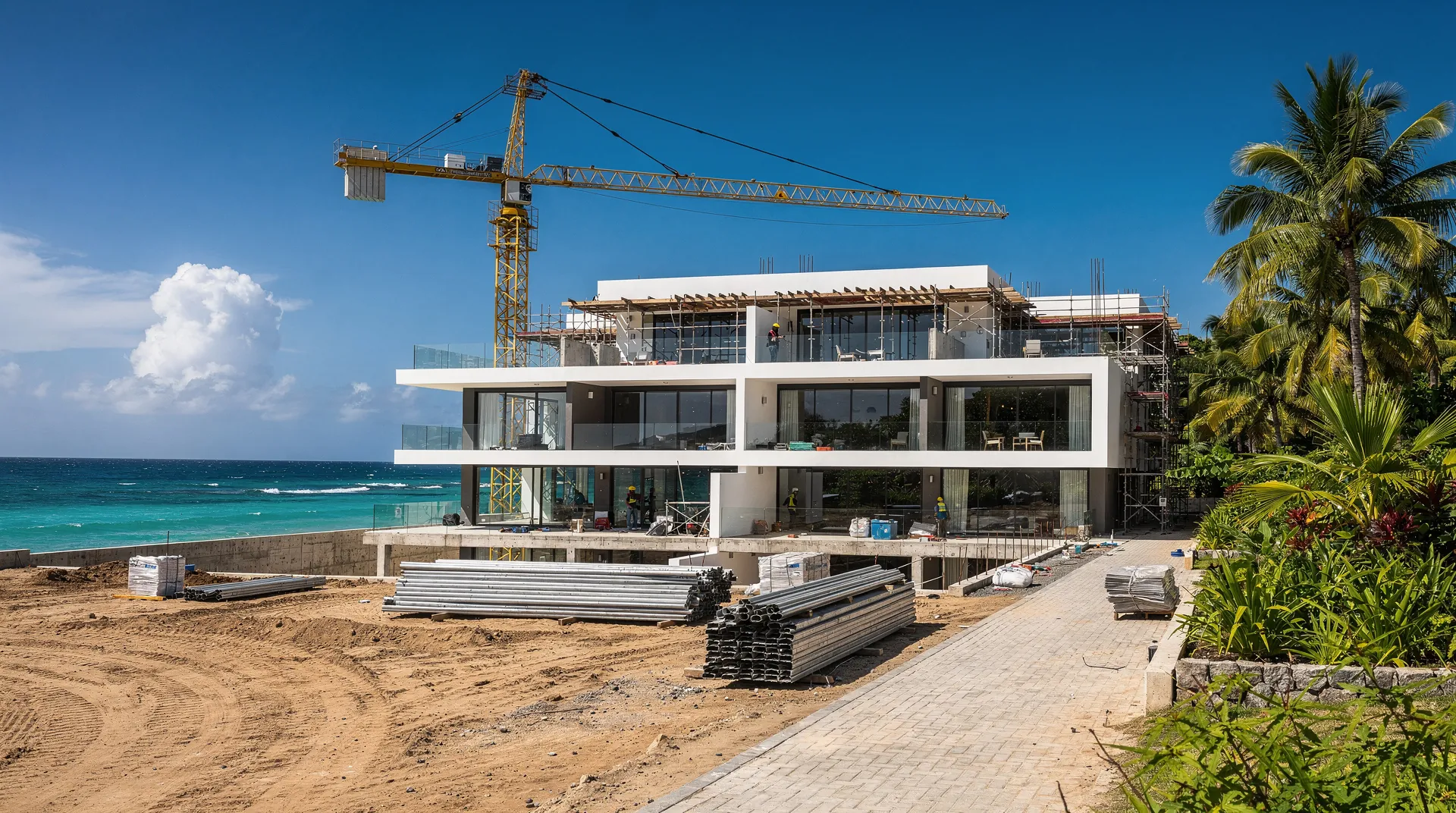
Mauritius continues to attract major global hotel chains in the ultra-luxury segment. Several projects in development during 2024-2025 are expected to open in 2026, mainly on the north coast (towards Trou aux Biches and Cap Malheureux) and in the Bel Ombre area in the southwest.
Without naming projects that haven’t officially opened yet, the general trend is towards small-scale properties (20 to 40 villas), heavily focused on the “slow luxury” concept — wellness, local cuisine, authentic experiences rather than mass entertainment. For honeymooners, our honeymoon itinerary incorporates these new addresses into a romantic route.
The boutique and eco-lodge segment
The real interesting movement in 2026 is the growing number of boutique and eco-lodge accommodations in the island’s rural areas — particularly in the highlands, around Chamarel, and in the less touristy south such as Souillac and Mahebourg.
These properties (often 5 to 15 rooms) target a different traveller from the classic resort guest: someone looking for contact with nature, seasonal local cuisine, guided hikes, and a smaller carbon footprint.
This trend responds to growing demand for responsible tourism and offers travellers real alternatives to large resorts, often at lower prices. Our guide to where to stay in Mauritius is regularly updated with these new addresses.
The north coast: controlled development?
The Grand Baie area and its surroundings continue to attract hotel investment. While several quality projects are underway, pressure on the north coast’s natural resources (coral reefs, wetlands) remains a concern closely watched by local associations and authorities.
Travellers who want to stay in the north while keeping their impact minimal can opt for accommodation with responsible certifications in Trou aux Biches or Pereybere. Our guide to Mauritius hotels highlights properties genuinely committed to environmental practices.
Developments in activities and experiences
Diving and reef protection
In 2025-2026, Mauritian authorities strengthened their commitment to protecting coral reefs. The marine park at Blue Bay and the protected zones around Le Morne have had their regulations updated to better manage water-based activities.
For divers, this means new requirements: some sites can now only be reached with certified local guides, and anchoring on reefs is gradually being replaced with permanent mooring buoys. These measures, sometimes seen as restrictive, are essential to preserving the ecosystems that make the island beautiful and appealing to tourists. Our snorkelling and diving guide to Mauritius reflects these new rules.
The good news: reefs at Blue Bay are showing signs of recovery following years of intensified protection efforts. Fish density and coral health are improving in certain areas. A guided snorkelling trip in Blue Bay lets you witness these improvements firsthand.
Ecotourism in the endemic forests
The Mauritius Wildlife Foundation (MWF) has developed several new ecotourism offerings in 2025-2026 within the island’s nature reserves. These guided experiences let visitors immerse themselves in the endemic forests, observe rare birds (Mauritius parakeet, Mauritius fody, Mauritius kestrel) and understand conservation challenges.
These tours are an exciting alternative to classic tourist excursions and directly fund conservation programmes. A visit to Ile aux Aigrettes from Mahebourg remains one of the most unique natural experiences on the island.
Cultural tourism in Port Louis
The Mauritian capital has invested in showcasing its historic heritage. The historic quarter of Port Louis — with the Aapravasi Ghat, old colonial buildings, the bygone shopping streets — has benefited from renovations and improved signage to welcome more developed cultural tourism.
Marked walking routes now allow visitors to explore central Port Louis independently, smartphone in hand, with multimedia content available in several languages at major points of interest. These routes take in the central market, the Caudan Waterfront, the Company Garden and the historic districts.
New marine experiences in 2026
Marine excursions are improving and diversifying. In 2026, several operators are offering new catamaran outings with marine education elements, upgraded snorkelling gear and briefings on observable species.
A catamaran cruise to the northern islets from Grand Baie remains one of the island’s most popular outings. The new formats now include onboard naturalist guides and information about the marine wildlife and coral reefs observed.
Whale watching: an offering taking shape
Watching humpback whales, which pass through Mauritian waters from June to October, is starting to become a structured tourist offering. Several operators on the southwest coast now run dedicated trips with marine biologists on board. Our guide to whale watching in Mauritius presents all the options available.
Practical developments for travellers
Digital connectivity
Mauritius has continued to improve its 4G and 5G coverage. In 2026, 5G coverage is progressively expanding beyond urban areas into coastal tourist zones. For travellers who work remotely or need a reliable connection, this is a notable improvement.
Some accommodations on the north and west coasts now offer “digital nomad” packages including guaranteed high-speed internet, a coworking space and a setup suited to remote work. Grand Baie and Flic-en-Flac are the best-equipped areas for this type of stay.
Digital payments
Contactless and QR code payments are gaining ground in Mauritian businesses. In 2026, tourist areas widely accept contactless European bank cards, and a few advanced local markets offer QR code terminals. That said, cash remains essential at small eateries, the traditional markets of Port Louis or Mahebourg, and small inland shops.
Entry requirements
Since 2022, Mauritius no longer imposes any special health restrictions on travellers. Nationals of the EU, the UK, Canada and Australia can enter visa-free for stays of up to 90 days with a valid passport. This situation remains stable in 2026.
Car rental: new options
The car rental market in Mauritius keeps evolving. Electric vehicle operators are appearing in major towns and tourist areas, an interesting option for travellers mindful of their carbon footprint. Electric vehicles are particularly well suited to coastal routes — charging stations are expanding in the main hotel zones.
What we’re curious to watch in 2026
A few projects are underway and worth following for anyone planning a trip to Mauritius in 2026:
SSR Airport expansion: discussions are underway on modernising the international terminal to better absorb growing traffic. If work begins in 2026, it could slightly disrupt some access points for a few months.
Rodrigues development: the satellite island of Rodrigues is drawing growing attention from travellers seeking a destination even more unspoiled than Mauritius. Investments in the ferry link and local tourism infrastructure are expected.
“Sustainable tourism” certification: Mauritius is working towards international certifications in sustainable tourism. Stricter criteria for hotels (waste management, renewable energy, local employment) should gradually be introduced.
Kitesurfing on the rise: the southwest coast around La Gaulette is seeing a multiplication of watersports centres and infrastructure for kitesurfers. Our kitesurfing and surfing guide to Mauritius has been updated with the new schools and 2026 conditions.
Our take
Mauritius in 2026 is an island that has well digested the post-Covid turbulence and confirms its place among premium Indian Ocean destinations. This year’s developments — expanded flight routes, growing boutique accommodation, more structured ecotourism — are heading in the right direction.
The temptation of mass tourism still exists, and some developments on the north coast in particular raise legitimate questions about the island’s carrying capacity and environmental impact. But the shift towards more qualitative, more responsible tourism is real and deserves to be encouraged through the choices we make as travellers.
In 2026, choosing Mauritius still means choosing a destination that rewards curiosity and holds surprises for those who look beyond the beaten path. Our 7-day Mauritius itinerary incorporates the best of 2026’s developments into a balanced programme of beaches, culture and nature.
Experiences not to miss in 2026
Beyond infrastructure news, 2026 is a great year to rediscover Mauritius classics from a new angle.
The revival of craft markets
Several local initiatives have reinvigorated the island’s craft markets in recent years. The craft market of Port Louis has been partly reorganised to spotlight authentic local producers — potters, straw weavers, filao wood carvers. The Flacq market, on Wednesday mornings, remains one of the finest open-air markets on the island.
In Mahebourg, the Monday market has regained real vitality after a few difficult years. It’s one of the best places to buy local spices, homemade pickles and medicinal herbal teas directly from the producers.
Cultural tourism takes shape
Since 2024, guided cultural discovery tours have developed in several towns across the island. Port Louis now offers guided tours of the historic quarter that include temples, mosques, cathedrals and a synagogue — an interfaith route that perfectly illustrates Mauritian cultural syncretism. Passionate guides tell the story of immigration, slavery and the building of the Mauritian nation.
These cultural tours nicely complement a stay focused on beaches and nature. Our culinary guide to Mauritius also mentions several producer visits (vanilla, coffee, rum) that help you understand the island’s agricultural production chains.
Diving and snorkelling: conservation initiatives
In 2026, several marine conservation initiatives have improved the quality of coral reefs around Blue Bay and Trou aux Biches. Coral restoration programmes are underway, and environmentally conscious diving operators stand out from the rest. When booking your snorkelling trip in Blue Bay, choose operators certified by the Mauritius Wildlife Foundation.
New hiking infrastructure
Mauritius’s network of marked trails has improved considerably since 2023. The Black River Gorges, the Petrin highlands and the area around Le Morne now have signage and printed maps available at tourist information offices. Our hiking guide to Mauritius has been updated with these new trails and 2026 conditions.
Planning your 2026 trip: the essentials
For a successful trip to Mauritius in 2026, here are the points you shouldn’t overlook in your planning.
Book early: in 2026, demand for Mauritius is strong, and quality accommodation fills up quickly for the July-August and December-January periods. Our guide to Mauritius hotels helps you identify the best options for your budget and preferred area.
Plan your car rental in Mauritius: it’s still the best way to explore the island freely. The new electric rental cars let you discover the island quietly and eco-responsibly.
Combine beaches and cultural experiences: a catamaran cruise to the northern islets remains a must-do excursion, but don’t spend your whole stay on a sun lounger. The market of Port Louis, the lands of Chamarel, the fishing villages of the east coast — that’s where the island reveals its true richness.
What these developments mean depending on your traveller profile
Not all these changes matter equally depending on the type of trip you’re planning. Here’s how to read them practically.
| Profile | What’s changing in 2026 | What to do |
|---|---|---|
| First trip to Mauritius | More direct flights, entry requirements unchanged | See our guide to your first trip to Mauritius before booking |
| Family trip | New digital nomad options and more boutique choice inland | Compare with our guide to Mauritius with family |
| Nature and diving trip | Stricter reef regulations, coral restoration underway | Read our snorkelling and diving guide to learn the new rules before booking a centre |
| Eco-responsible trip | Growing number of eco-lodges and environmental labels | Target accommodations in the south and highlands via our guide to where to stay in Mauritius |
What doesn’t change (and that’s a good thing)
All the 2026 developments shouldn’t make you forget what gives Mauritius its lasting value: beaches remain public and free by law, even in front of the largest hotels — see our ranking of the most beautiful beaches. The climate keeps its usual rhythm, with the best period running from May to December while avoiding the January-February lull detailed in our guide to the best time to visit. And the budget for a well-organised trip remains comparable to previous years, as shown in our guide to the real cost of a trip to Mauritius.