
Roches Noires
Roches Noires, Mauritius east coast: spectacular basalt, surf waves, secluded beach and a wild atmosphere far from the resorts. 2026 guide.
- Area
- East coast
- Atmosphere
- Wild, windswept, secluded
- Beaches
- Basalt and sand beach, waves
- Access
- 40 min from the airport
Roches Noires: the wild, dramatic east
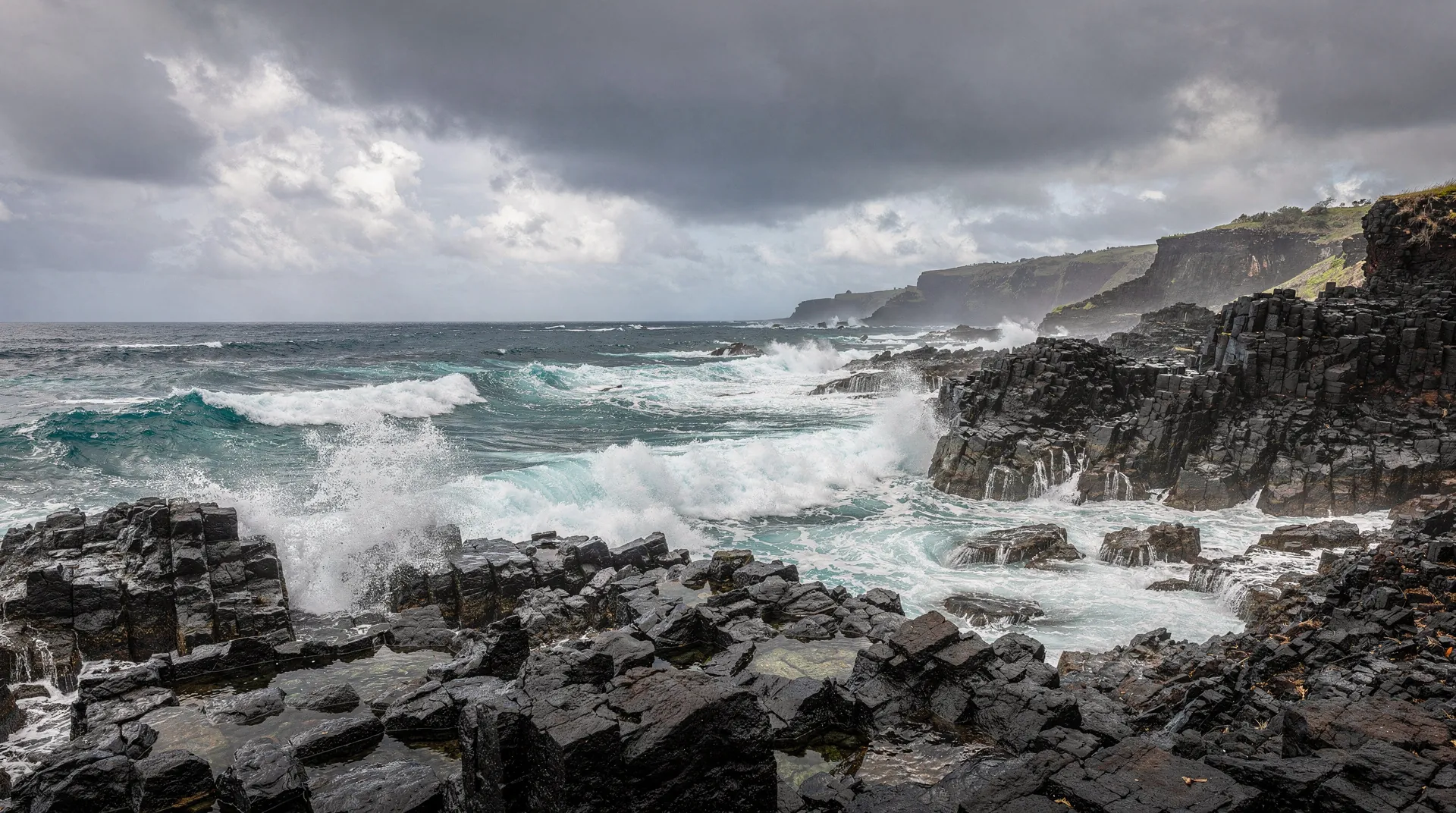
The east coast of Mauritius is the least developed for tourism, the windiest, the most temperamental. Roches Noires is its rawest and most authentic expression. This coastal village on the northern stretch of the east coast, whose name leaves little to the imagination, owes its identity to the huge black volcanic rock formations that rise out of the ocean at irregular intervals, creating a dramatic and fascinating stretch of coastline.
Here, the waters aren’t the calm turquoise lagoon that tourist brochures associate with Mauritius. At Roches Noires, the ocean is alive, changeable and at times violent. Indian Ocean swells, funneled in by the trade winds, crash against the basalt formations with spectacular energy. It’s this raw character that draws surfers, photographers hunting for off-the-beaten-track images, and any traveller tired of the perfectly polished resorts of the west coast.
Roches Noires is also a living village. Its residents, mostly fishermen, head out each morning in their colourful pirogues to bring back the day’s catch. Nets dry on the black rocks. Children play in the main street. The absence of mass tourism has preserved a local way of life here with a rare authenticity that even the more remote corners of Belle Mare or Mahebourg no longer quite offer.
At a glance
| Detail | Info |
|---|---|
| Where | East coast, north of Belle Mare, about 35-40 minutes from the airport |
| Price | Free to visit; airport taxi around 800 to 1,000 rupees |
| Time needed | 1 to 2 days, or a day trip from Belle Mare |
| Getting there | A car is strongly recommended; bus possible via Centre de Flacq |
| Best time | May to November for surf and dry days |
What to do in Roches Noires
Surfing and bodyboarding
Roches Noires is the most renowned surf spot on the east coast of Mauritius. The waves breaking over the basalt reefs create conditions that are sometimes excellent for intermediate to advanced surfers. The swell is generally stronger from May to October, driven by the easterly trade winds that blow hard on this exposed stretch of coast.
The waves at Roches Noires are reef breaks, forming over coral reef and rock formations. They call for some experience surfing over reef and a good read of conditions. Beginner surfers are better off learning on the island’s sandy beaches elsewhere. Our surfing and kitesurfing guide to Mauritius ranks Roches Noires among the east coast’s advanced spots, with detailed information on seasonal conditions.
Bodyboarding is also popular at Roches Noires and in the neighbouring shore break zones. A few locals ride simple traditional boards, and watching these young Mauritians surf their daily waves is a genuinely authentic sight.
Photographing the black basalt rocks
The black basalt formations at Roches Noires are among the most distinctive landscapes for photography on the island. These volcanic rocks, shaped over thousands of years by wind and wave action, take on surprising forms: natural arches, columns, rock pools trapped in the stone, fissures where water shoots up under pressure during heavy swells.
The late-day light is particularly flattering on these rocks, when the setting sun tints the basalt with orange hues and the waves throw up glowing bursts of spray. Landscape photographers will find an outstanding playground here, provided they stay wary of waves that can surge without warning across the rocky areas.
Blue hour, right after sunset, produces dramatic long-exposure effects on the waves crashing against the basalt. A tripod is essential for this kind of photography.
Watching village life
Roches Noires is, above all, a living fishing village. Getting up early to watch the fishermen return, the pirogues pulled up onto the sand or rocks, the animated haggling over the catch: these everyday scenes have an authenticity rarely found elsewhere in Mauritius.
The village has a few small grocery stores, a local bakery and one or two snack stands. Locals are generally welcoming to travellers who show genuine respect for their daily lives. A few words of Mauritian Creole are enough to spark a warm connection.
If you’re staying a few days in Roches Noires, consider buying fresh fish straight from the fishermen in the morning. They often sell it at very low prices and the quality is unbeatable. A kitchen in a rental villa turns this purchase into a memorable meal.
Exploring the northeast coast
The coastline between Roches Noires and Poste Lafayette to the north is one of the least visited on the whole island. Rocky stretches alternate with small sandy beaches, shallow lagoons sheltered by basalt blocks, and dense coastal vegetation. This coast is best discovered by car along the coastal road that hugs the ocean, with spontaneous stops to watch the waves or walk along deserted beaches.
Hiking enthusiasts will find lightly marked but accessible coastal trails in this area, allowing for walks of several hours among the rocks and breakers. Our hiking guide to Mauritius lists the east coast as an option for walkers looking for routes off the beaten track.
Excursions to Ile aux Cerfs
Although Roches Noires isn’t the classic starting point for trips to Ile aux Cerfs, Trou d’Eau Douce (about twenty kilometres to the south) runs boat transfers to this island paradise. Ile aux Cerfs, with its crystal-clear waters and white sand beaches, offers a striking contrast to the wild coastline of Roches Noires.
Our Ile aux Cerfs guide covers all the options for organising this excursion. For a memorable day out, you can book directly a catamaran excursion to Ile aux Cerfs with a Creole lunch on board from the village of Trou d’Eau Douce, about twenty kilometres south of Roches Noires.
Coastal birdwatching
The east coast of Mauritius, and the Roches Noires area in particular, is good habitat for several species of coastal and marine birds. Great frigatebirds regularly glide above the rocky cliffs, riding the thermals. Red-tailed tropicbirds, emblematic of the Indian Ocean, can be spotted at a distance from the rocky headlands.
Early morning, before the wind picks up, is a particularly good time for birdwatching along the Roches Noires coast. Grey herons and white egrets hunt in the exposed rocky areas at low tide. With a little patience and binoculars, these sightings can be very rewarding.
Belle Mare: the big beach nearby
About 15 kilometres to the south, Belle Mare offers one of the finest white sand beaches on the whole island, with deep turquoise waters and large resorts. From Roches Noires, Belle Mare is an easy drive for a classic beach day, complementing the wilder landscapes of the north.
The beaches and coastline of Roches Noires
The main Roches Noires beach
The beach at Roches Noires is unlike anything found on the north or west coasts of the island. The sand here is darker, coarser in places, dotted with fragments of basalt and coral. The waters aren’t the calm, shallow lagoon found at Trou aux Biches or Belle Mare: here the waves have real energy and the sea can be rough depending on conditions.
This beach isn’t ideal for a relaxed family swim, but it’s beautiful in its raw, wild character. The rocks rising out of the water at irregular intervals create temporary natural pools that are sometimes safe to swim in during calm high tides.
The natural rock pools
The basalt formations create natural pools all along the coast, filled at high tide and sheltered from the swell by rocky barriers. These natural basins can reach 1 to 2 metres deep and make for original, sheltered swimming spots. Access them with caution, checking swell conditions before entering the water.
These natural pools are especially beautiful in the morning light, when the still-cool water reflects the blue of the sky. They sometimes shelter small fish, sea urchins and starfish stranded by the outgoing tide.
Poste Lafayette beach
A few kilometres north of Roches Noires, the village of Poste Lafayette has a small, more typical sandy beach with a partially sheltered lagoon. Swimming conditions here are better than at Roches Noires proper. This beach is little known and practically never mentioned in guidebooks, which guarantees near-total peace and quiet.
Our guide to the best beaches in Mauritius includes some of these secret east coast beaches that travellers rarely discover.
Where to stay in Roches Noires
Accommodation options in Roches Noires are deliberately limited, which preserves the village’s atmosphere. This is not a resort destination. Our guide to where to stay in Mauritius will help you find the best options for your budget.
Villa and house rentals
Several villas and privately owned houses are available to rent in Roches Noires and neighbouring villages. These properties are often right on the seafront or just minutes from the beach. They offer total immersion in coastal life on the east side of Mauritius. Cooking for yourself with produce from the local market and fresh fish bought from the morning fishermen is an experience in itself.
Short-term rental platforms list a selection of houses in Roches Noires, some with direct views over the sea and the black basalt rocks. These rentals are often very well equipped despite their modest appearance from the outside.
Simple guesthouses
A few family-run guesthouses in Roches Noires and the surrounding area (Poste Lafayette, central Roches Noires) offer basic rooms at very affordable rates. These accommodations suit travellers looking for the essentials without frills. The welcome here is typically warm.
Belle Mare as a comfortable base
Belle Mare, about 15 kilometres to the south, offers the widest range of accommodation on the east coast, including some of the island’s most celebrated large resorts. From Belle Mare, Roches Noires is a 20-minute drive away. This setup lets you enjoy the comfort of good accommodation while exploring the wild northeast coast for the day.
Our guide to hotels in Mauritius lists the best establishments in Belle Mare and along the east coast.
Getting to Roches Noires
Roches Noires is about 35 to 40 minutes by car from the international airport, taking the east coast road from Mahebourg or the central road via Curepipe and Flacq. A taxi from the airport costs around 800 to 1,000 rupees.
The bus from Port Louis serves the east coast via Centre de Flacq. From Centre de Flacq, connections exist to the east coast villages, including Roches Noires. The full trip from Port Louis takes about an hour and a half by bus. The bus is impractical for flexible schedules and for carrying surf equipment.
Renting a car in Mauritius is strongly recommended for exploring the east coast. Roads are generally in good condition, but local bus coverage is patchy. A car lets you stop on a whim along the coast and discover hidden beaches and villages at your own pace.
Practical tips
The east coast of Mauritius is exposed to the easterly trade winds and can be windy, especially from July to September. This wind is refreshing and produces the surf waves, but it can make beach days less comfortable for anyone looking for quiet relaxation. On the plus side, the same wind keeps mosquitoes away and maintains a pleasant coolness.
The sea at Roches Noires can be treacherous. Even on apparently calm days, waves can suddenly surge across the exposed rocky areas. Never turn your back to the sea while walking on the basalt rocks. Extra caution is needed during spring tides or after a distant storm system has passed.
The village offers few services: a grocery store, a couple of snack stands and no ATM. Bring enough cash before you arrive. The nearest ATM is in Centre de Flacq or Belle Mare.
Spearfishing is regulated in certain areas of the east coast. Check with local fishermen before diving with a speargun. Respecting local practices and protected areas matters here.
For travellers looking to escape the crowds entirely, Roches Noires is an ideal destination. Our budget guide to Mauritius notes that the east coast in general, and Roches Noires in particular, offer accommodation and meals at prices noticeably lower than the tourist resorts of the north and west coasts.
Best time to visit
The east coast of Mauritius has a climate that differs from the rest of the island. The dry season (May to November) brings strong winds but clear skies and pleasant temperatures. This is the best time for surfing and seaside walks. Our weather guide to Mauritius breaks down conditions on the east coast month by month.
The rainy season (December to April) brings more heat, tropical showers, and a sea that’s sometimes calmer between storm systems. This period suits travellers looking for warmth and milder waters better than it suits surfers waiting for regular swell.
Avoid the cyclone season (January to March) for a stay on the east coast, which is particularly exposed. Conditions can change quickly and some coastal roads become impassable when intense storm systems pass through.
Roches Noires month by month
| Period | Conditions | Best for |
|---|---|---|
| May to October (austral winter) | Steady wind, regular swell, often clear skies | Surfers and landscape photographers |
| November | Transition period, wind easing, sea sometimes calmer | Travellers seeking a swell/comfort balance |
| December to April (austral summer) | Humid heat, showers, sea occasionally flatter | Swimming in the natural pools, less for surf |
| January to March | Cyclone risk, unpredictable conditions | Best avoided for a stay on this exposed coast |
Roches Noires or Belle Mare: which to choose?
These two neighbouring east coast destinations suit very different desires. Belle Mare wins over visitors with its large resorts, long white sand beach and calm lagoon perfect for family swimming — see our guide to Belle Mare beach. Roches Noires, on the other hand, appeals to travellers seeking waves, dramatic rocks and a village still untouched by mass tourism.
Many visitors combine both: staying in comfort at Belle Mare and making a day trip to Roches Noires for a change of scenery. Our guide to the best beaches for snorkelling will help point you the right way if calm swimming remains your priority over surf.