
Best Snorkeling Beaches in Mauritius: Complete Ranking
Updated: August 2026
Which is the best beach for snorkeling in Mauritius?
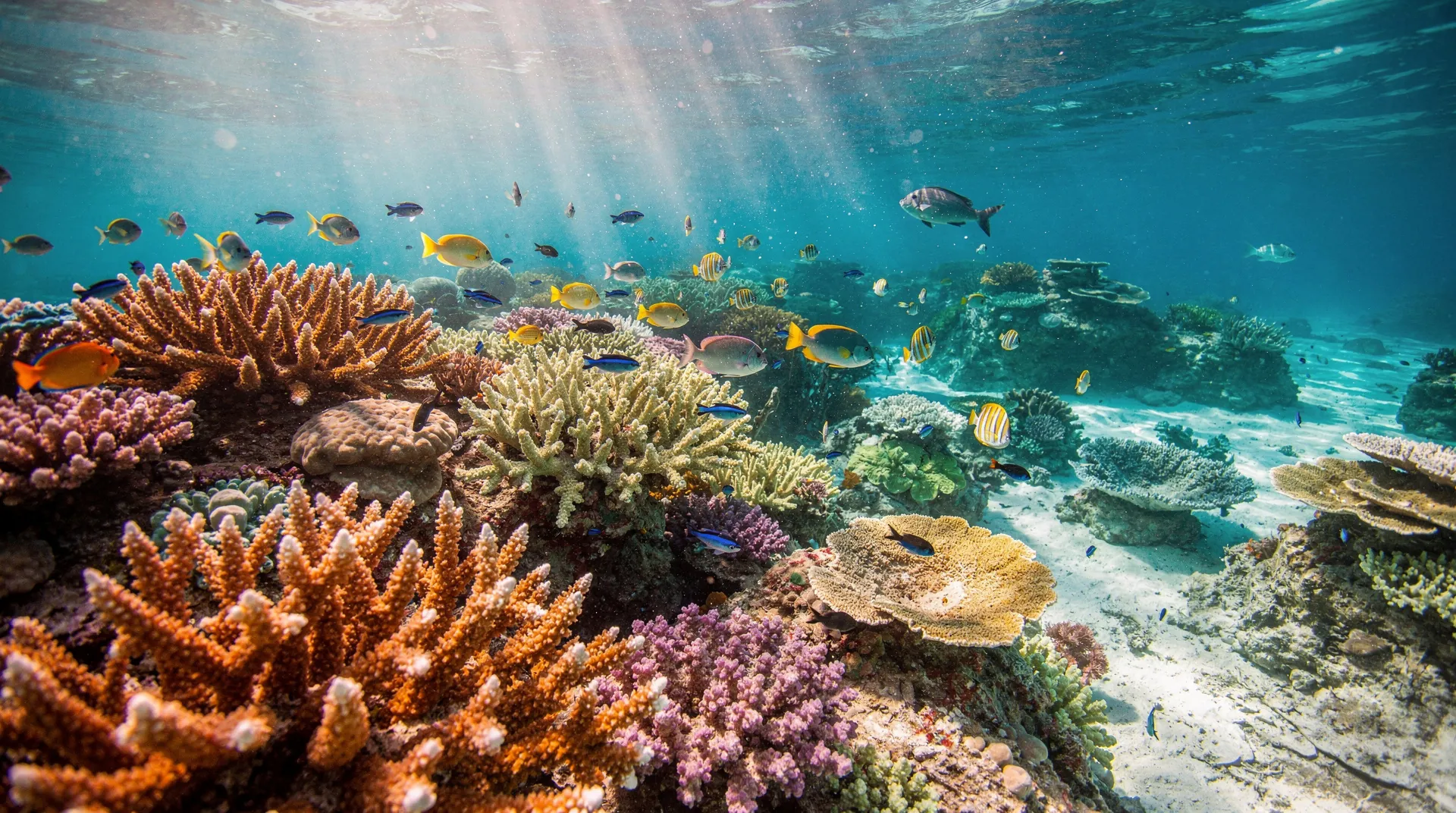
Blue Bay is the absolute benchmark: a protected marine park, branching coral in excellent condition, visibility up to 15 metres, and abundant tropical fish. Trou aux Biches and Pereybere are excellent alternatives in the north, more accessible from popular accommodation.
At a glance
| Where | Blue Bay (south-east), Trou aux Biches and Pereybere (north), Flic-en-Flac (west), Pointe d’Esny (south-east) |
| Price | Free from the public beach; mask-and-snorkel rental around 5 to 10 € for half a day if needed |
| Time needed | 1h30 to 2 hours for a snorkeling session from the shore |
| Getting there | A car is recommended for Blue Bay and Pointe d’Esny; bus is possible for the north |
| Best time | April to November, with peak conditions in July-August |
Snorkeling in Mauritius: why the spots vary so much
Mauritius is surrounded by a continuous lagoon protected by a barrier reef, but not every corner of that lagoon is equal. The quality of the snorkeling depends on several factors that change from one coast to another: the health of the coral, the density of marine life, water clarity, the depth accessible from shore, and human disturbance. Some areas have suffered from climate change, while others remain preserved sanctuaries. This ranking compares the five best spots on four criteria scored from 1 to 5: coral quality, fish diversity, visibility, and ease of access from the shore.
For everything about technique and equipment, our complete guide to snorkeling and diving is a good starting point before choosing your spot. If you’re planning your stay around these activities, our guide to the best beaches in Mauritius gives an overview of every coast.
1. Blue Bay — the absolute benchmark for Mauritian snorkeling
Overall score: 5/5
- Coral: 5/5 — Protected marine park, branching, table and massive coral in excellent condition
- Fish: 5/5 — Stingrays, barracudas, parrotfish, schools of surgeonfish, moray eels
- Visibility: 5/5 — Up to 15 metres in good weather
- Access from shore: 4/5 — Direct entry from the beach, sandy bottom, a few sea urchins to avoid
Blue Bay is unanimously recognised as the best snorkeling beach in Mauritius, and one of the best in the entire Indian Ocean. The Blue Bay Marine Park, created in 2000, covers around 353 hectares of lagoon and protects one of the best-preserved coral reefs in the region. The area is actively managed: motorboats are banned from parts of the lagoon, which protects both the coral and the quiet of the experience.
From the public beach at Blue Bay — freely accessible and with no entry fee — you only need to swim a hundred metres or so to the marker buoys to find yourself above a spectacular coral garden. You’ll regularly encounter stingrays gliding lazily across the sandy bottom, schools of blue-and-yellow surgeonfish, parrotfish nibbling at the coral, and occasionally a green turtle coming up for air.
Visibility in the Blue Bay lagoon is exceptional: between 10 and 15 metres in good weather, which lets you see the bottom at 4 or 5 metres deep as though you were looking through glass. The water is generally between 25 and 29°C, so all you need is swim shorts and a mask. The beach itself is lined with filao trees and palms that provide shade — a welcome comfort once you’re out of the water.
The only downside: Blue Bay is in the south-east of the island, quite far from the main accommodation areas in the north. From Grand Baie, allow about an hour and a half on the road. The Mahebourg area is the closest base for enjoying Blue Bay without having to get up at dawn. Our Blue Bay area section has the details on nearby accommodation options.
For an even more complete experience, a boat trip with mask and fins included lets you reach parts of the reef that can’t be accessed from shore.
Book a guided snorkeling session in Blue Bay2. Trou aux Biches — the best spot in the north
Overall score: 4/5
- Coral: 3/5 — Less dense than Blue Bay, but attractive coral formations towards the ends
- Fish: 4/5 — Clownfish, scorpionfish, many species of reef fish
- Visibility: 4/5 — 8 to 12 metres in optimal conditions
- Access from shore: 5/5 — Easy entry, gradual depth, ideal for beginners
Trou aux Biches is the best snorkeling option in the north of Mauritius, which explains its lasting popularity. Located around ten kilometres north of Grand Baie, the village of Trou aux Biches has a beach that’s regularly ranked among the most beautiful on the island, with a lagoon whose white sandy bottom reflects the light in an almost surreal way.
Snorkeling is mostly done to the right of the beach when facing the sea, where the seabed becomes more uneven and coral formations start to appear. The depth stays reasonable (2 to 5 metres depending on the area), which makes it accessible to swimmers of all levels, including children aged 8 and up who can swim.
The concentration of fish is good: you’ll find clownfish in their anemones, scorpionfish among the rocks, schools of blue damselfish, and butterflyfish darting between the coral. The coral formations are less impressive than at Blue Bay, but the ease of access and water quality make it a must for stays in the north.
It’s also an excellent spot for families looking for hassle-free snorkeling: the bay is sheltered, the sea is calm, and safety conditions are good. Our guide to the north of the island has all the nearby accommodation details in our where to stay in the north section.
3. Pereybere — intimacy and marine diversity
Overall score: 3.5/5
- Coral: 4/5 — Well-formed reefs with areas of branching coral in good condition
- Fish: 4/5 — Great variety of species, a few bottom-dwelling rays
- Visibility: 3/5 — Variable depending on weather, averaging 6 to 10 metres
- Access from shore: 3/5 — A few rocks at the entry point; water shoes recommended
Pereybere is a small, lively beach north of Grand Baie, popular with locals at the weekend and with travellers looking for a less touristy vibe than its neighbour. Its lagoon hides some surprises: the reefs bordering the beach on either side shelter more marine life than you’d expect at first glance.
The best snorkeling is along the rocky edges of the bay. The coral there is in better condition than in the middle of the beach, and you’ll regularly spot bottom-dwelling rays, octopuses camouflaged among the rocks, and several species of colourful reef fish. The beach itself has good parking, a choice of affordable restaurants, and a local, popular atmosphere that gives Pereybere a rare authenticity for this part of the island.
Visibility depends heavily on wind and swell: after a windy night, the water can be slightly cloudy in the morning but usually clears by late morning. It’s best to snorkel between 9am and noon for the best light conditions. Pereybere works just as well for a half-day of snorkeling as for a full day of relaxing on the beach.
4. Flic-en-Flac — the west coast reveals its secrets
Overall score: 3.5/5
- Coral: 3/5 — Some coral areas around the rocks, fewer formations than on the east coast
- Fish: 4/5 — Rays, occasional turtles, abundant small reef fish
- Visibility: 4/5 — Often very clear water, between 10 and 15 metres
- Access from shore: 4/5 — Easy entry on sand, the bottom gradually deepens
Flic-en-Flac is best known for its sunsets and lively atmosphere, but its beach hides a well-kept secret: particularly clear waters that allow for quality snorkeling, especially at the northern and southern ends of the main beach. Mauritius’s west coast is leeward, meaning generally calmer seas and better visibility than beaches exposed to the trade winds.
The best spot is towards the south of the main beach, near the reefs that bound the lagoon. You’ll regularly spot stingrays foraging on the sandy bottom, as well as green turtles coming up for air in this area. The coral diversity is lower than at Blue Bay or Trou aux Biches, but the water quality is often superior.
A catamaran trip from Flic-en-Flac also gives access to reef areas further offshore, with snorkeling spots that few tourists know about. Our guide to activities for couples includes several recommendations for sea outings on the west coast.
5. Pointe d’Esny — calm and authenticity in the south-east
Overall score: 3/5
- Coral: 3/5 — Reefs in good condition but less dense, more scattered formations
- Fish: 3/5 — Varied species, a few rays, turtles regularly reported
- Visibility: 4/5 — Crystal-clear water in this preserved corner
- Access from shore: 4/5 — Fine sandy beach, easy and pleasant water entry
Pointe d’Esny, a small coastal village next to Blue Bay, is one of the least crowded beaches in Mauritius. It doesn’t have its neighbour’s fame, but its preserved lagoon offers peaceful snorkeling in an atmosphere of rare tranquillity. The area is very popular with travellers looking to avoid the crowds while still enjoying a beautiful underwater experience.
Green turtles regularly visit this lagoon — an encounter that many travellers cite as one of their strongest memories of Mauritius. The coral isn’t as spectacular as at Blue Bay, but the beach itself, lined with filao trees and mangroves in the background, has a quiet, endearing beauty.
Pointe d’Esny is perfect for a calm stay, ideal for travellers who prioritise authenticity over mass tourism. It’s also an ideal base for exploring Mahebourg and the south-east region. Our where to stay in the south guide presents accommodation options in this preserved corner.
Ranking summary table
| Beach | Coral | Fish | Visibility | Access | Total |
|---|---|---|---|---|---|
| Blue Bay | 5/5 | 5/5 | 5/5 | 4/5 | 4.75/5 |
| Trou aux Biches | 3/5 | 4/5 | 4/5 | 5/5 | 4/5 |
| Pereybere | 4/5 | 4/5 | 3/5 | 3/5 | 3.5/5 |
| Flic-en-Flac | 3/5 | 4/5 | 4/5 | 4/5 | 3.75/5 |
| Pointe d’Esny | 3/5 | 3/5 | 4/5 | 4/5 | 3.5/5 |
When to go snorkeling in Mauritius
The best time for snorkeling in Mauritius runs from April to November, when the sea is generally calm and visibility is at its best. July and August are especially renowned: the water is clear, the winds have eased compared to June, and safety conditions are excellent on every coast.
Between November and March (rainy and cyclone season), snorkeling is still possible but conditions can be less consistent: rain loads the water with particles, temporarily reducing visibility. The most sheltered spots, such as Blue Bay on the east side, cope better with weather swings than exposed coasts. Our complete weather guide breaks down month by month the ideal conditions for each activity.
Organised or self-guided snorkeling?
Both options are available in Mauritius, but they suit different types of traveller.
Self-guided, all you need is to bring a mask, snorkel and fins (or rent them on site for 5 to 10 euros a half-day) and swim out from any of the beaches on this list. It’s the cheapest and most flexible option. Signage in the protected lagoons (Blue Bay in particular) helps you stay on track.
On an organised excursion, you get boat transport to more distant spots, a guide who knows which areas to avoid and which not to miss, and often a meal on board. Catamaran trips are very popular and let you combine several spots in a single day.
Discover catamaran cruises in the north with snorkeling includedWhere to stay to be close to the best spots
The choice of accommodation makes a big difference to the snorkeling experience: it’s better to sleep right next to a good spot than to drive an hour every morning with your gear. For Blue Bay, our where to stay in Blue Bay guide lists the closest options to the marine park, and our Mahebourg section widens the choice to a few minutes away.
For Trou aux Biches and Pereybere, see where to stay in the north. For Flic-en-Flac, our where to stay in Flic-en-Flac guide details hotels and villas right on the lagoon. If snorkeling is the number one priority for your trip, our where to stay near the beaches guide compares the best addresses across every area.
Practical tips for snorkeling in Mauritius
A few simple rules will help you make the most of the experience while protecting the reefs.
Never put your feet or hands on the coral: it’s extremely fragile, and a single touch can destroy years of growth. In some areas of the Blue Bay marine park, wardens actively monitor swimmers’ behaviour.
Use a “reef safe” sunscreen (free of oxybenzone and octinoxate), or better still, wear a rash guard to protect yourself from the sun. Regular sunscreens pollute the reefs and are strongly discouraged in protected areas.
Snorkel preferably in the morning, before the wind picks up and tour boats start circulating. Morning light is also more flattering for observing the colours of coral and fish.
For children, an inflatable safety vest (available for rent on every beach) is recommended for weaker swimmers. Most of the spots on this list are perfectly suited to families. Our family activities guide has more ideas for keeping younger children entertained by the sea.
Finally, if you’re considering scuba diving, Mauritius has remarkable sites, notably around Flic-en-Flac, where the famous “Trou aux Coqs” is among the most spectacular dives in the Indian Ocean. Our snorkeling and diving guide covers all the options.