
Belle Mare Beach: complete guide to white sand and luxury on the east coast
Updated: August 2026
Is Belle Mare a luxury beach that's accessible to everyone?
Belle Mare beach is public and free despite the presence of large hotels. The exceptional white sand and turquoise waters are open to all travelers.
Belle Mare Beach: the east coast’s white-sand showpiece
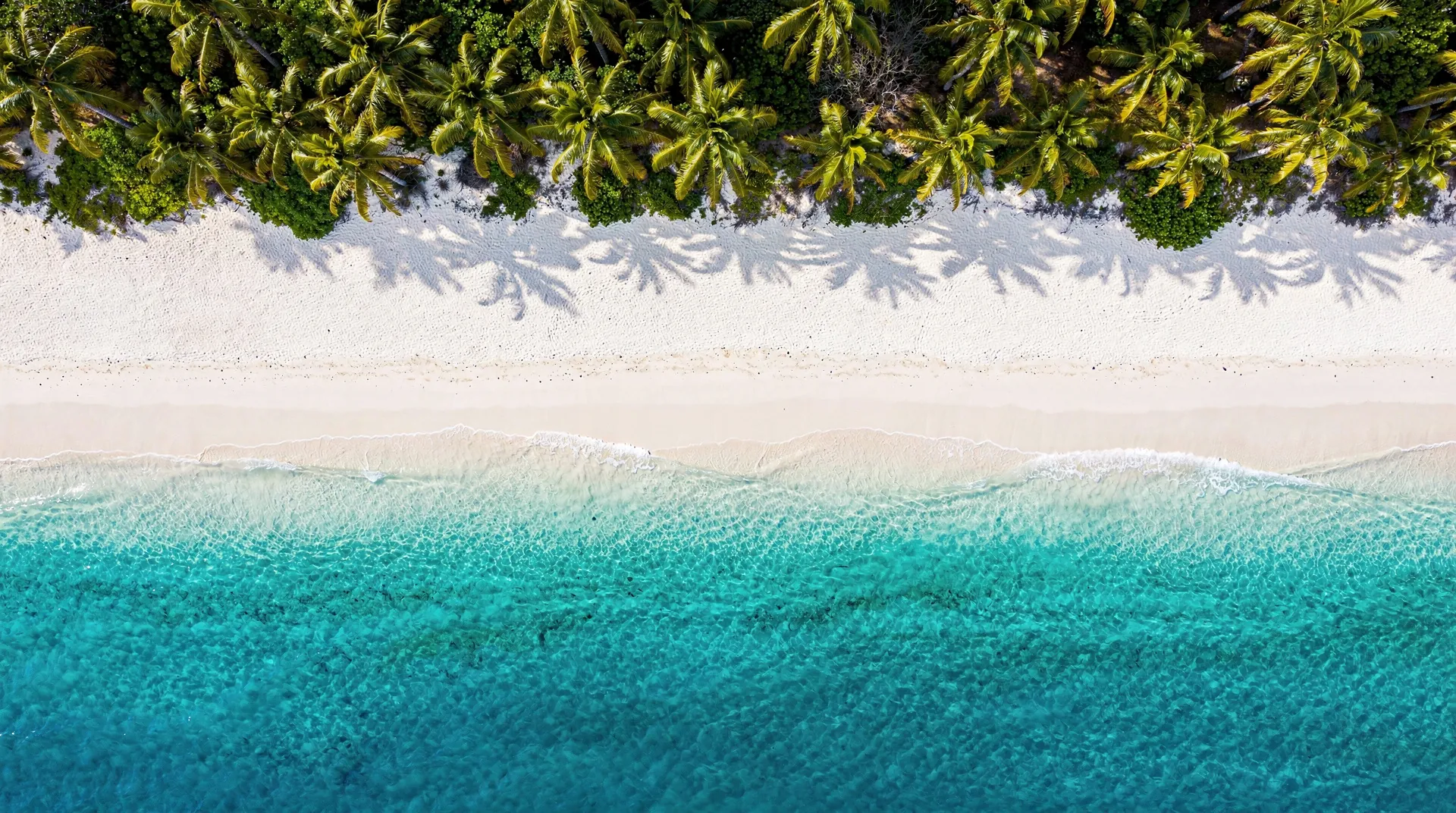
Belle Mare beach is often called the most beautiful beach on Mauritius’s east coast, and it’s hard to argue otherwise. Stretching around 9 kilometers from Palmar in the south to Roches Noires in the north, it’s one of the longest and most spectacular beaches on the island. Its remarkably fine, pure white sand contrasts beautifully with the turquoise and blue waters of the lagoon, sheltered by the coral reef.
Mauritius’s east coast has a distinct character. It’s less touristically developed than the north or west coasts, which gives it a more unspoiled, less commercial feel. Several luxury hotels (Constance Belle Mare Plage, One&Only Le Saint Géran, Residence Mauritius) have chosen this exceptional setting, but they don’t occupy the whole beach and don’t block public access.
The Belle Mare region is also the ideal starting point for visiting the famous Ile aux Cerfs, reachable in 15 minutes from Trou d’Eau Douce, a little further south. Check out our complete guide to the beaches of Mauritius to compare Belle Mare with the other options.
| At a glance | |
|---|---|
| Where | East coast, between Palmar and Roches Noires, about 50 km from Port-Louis and 35 km from the airport |
| Price | Free (public beach); day access to hotels roughly 2,000-5,000 MUR/person |
| Time needed | Half a day, or several days as a stay |
| Getting there | Car recommended (35-45 min from the airport); bus possible but slow |
| Best time | May to November for sunshine and calm seas |
How to get to Belle Mare
By car
Belle Mare sits on Mauritius’s east coast, about 50 kilometers from Port-Louis and 35 kilometers from SSR airport. From the airport, take the A6 road north along the east coast. The drive from the airport takes about 35 to 45 minutes. From Port-Louis, allow around 50 to 60 minutes via the M2 and coastal roads.
A car is strongly recommended for exploring the east coast. Our guide to car rental in Mauritius will help you find the best rate.
By bus
Buses connect Belle Mare from Mahebourg (to the south) and from Flacq (inland). Connections are less frequent than in the north. Allow about 2 hours from Port-Louis with transfers.
Parking at Belle Mare
Free parking areas are available along the public access points to the beach. Several access points are spread across the 9 kilometers of beach. On weekdays, finding a spot is easy. On weekends, competition is tougher — arrive early.
Swimming at Belle Mare
Lagoon quality
Belle Mare’s lagoon is protected by the east coast’s coral reef, which provides natural shelter from the Indian Ocean’s swells. The waters are generally calm and clear, with a depth ranging from very shallow near the shore to 2-3 meters toward the reef.
Water quality is excellent — Belle Mare is known for having some of the cleanest water on the island, thanks to the low density of human activity compared with some northern beaches.
Currents and conditions
Currents inside the lagoon are weak, making swimming safe for everyone. However, the east coast can be exposed to swells from cyclones that form in the Indian Ocean, mainly between November and April. Heed weather warnings and avoid swimming in bad weather.
Visibility in the water is generally very good, often reaching 10 to 15 meters in fine weather, among the best conditions anywhere on the island.
Snorkeling at Belle Mare
Belle Mare offers good-quality snorkeling. The coral zones are found mainly toward the ends of the beach and along the rocky areas where the reefs are well developed. Marine life includes a variety of tropical fish, starfish, sea urchins and, occasionally, green turtles that frequent this area.
For the best snorkeling on the east coast, the edges of the coral reef offer healthier corals and denser marine life, accessible by boat or kayak. Ask at the hotel water sports centers or with local operators.
Advanced snorkelers will find more to love at Blue Bay, the protected marine park, or on an excursion to Ile aux Cerfs, whose surrounding waters shelter well-preserved coral reefs.
Sand and shade
Belle Mare’s sand is one of its absolute highlights. Very fine, very white and very soft, it’s remarkably clean and pleasant underfoot. Few shells or natural debris clutter it.
Natural shade, on the other hand, is limited. A few palm trees and beach shrubs exist, but the beach is largely exposed to the sun. Bring a parasol or use the sun loungers with umbrellas offered by the hotels (paid for non-guests). During the hottest hours (11am-3pm), shade is scarce.
Facilities and services
Hotels and services
Belle Mare beach is lined with several luxury hotels that offer their services to guests: beach restaurants, bars, water sports centers, spas. For outside visitors, some hotels offer day access to their facilities for a fee (generally between 2,000 and 5,000 rupees per person, depending on the property).
Restaurants and supplies
Outside the hotels, dining options are more limited than in the north of the island. Belle Mare village has a few grocery stores and small local restaurants. For a wider dining selection, Trou d’Eau Douce is 5 kilometers to the south.
Vendors and rentals
Roaming vendors sometimes sell drinks and snacks on the beach at weekends. Water sports equipment rental (kayaks, paddleboards, masks and snorkels) is available from the operators present on the beach.
Crowds and atmosphere
Belle Mare beach is noticeably less crowded than the island’s major northern beaches. Its length (9 km) guarantees plenty of space even during busier periods. The atmosphere is calm, almost contemplative — this is a beach for those seeking peace and beauty without the tourist bustle.
At weekends, a few local Mauritian families come to picnic on the beach, but they remain few in number. Visitors are mainly guests of the luxury hotels and a handful of independent travelers who’ve discovered this slightly secret gem.
The best season for Belle Mare is the dry season (May to November), with sunny weather, calm waters and excellent visibility. The southern hemisphere summer (November-April) can bring showers and occasionally cyclones that affect the east coast.
Who Belle Mare is for
Couples looking for luxury and beauty: The setting is ideal for a romantic stay at one of the beach’s luxury hotels. The beautiful landscape and tranquil atmosphere create a perfect backdrop.
Travelers seeking tranquility: Belle Mare is the opposite of a lively beach. You come here for peace, sand and sea — not entertainment.
Families with older children: The calm lagoon and clear waters suit families well, even though affordable dining options are more limited than in the north. For beaches better suited to families with young children, our guide to the best beaches for families can help guide your choice.
Photographers: The east coast’s light (sunrise) is magnificent in the morning. The white sand, turquoise waters and coconut palms make for perfect shots.
Where to stay nearby
Belle Mare is home to several of the most luxurious hotels in Mauritius:
Constance Belle Mare Plage is the local institution, a 5-star hotel that’s been a benchmark for prestigious family stays for decades. The One&Only Le Saint Géran (just to the north, in Poste de Flacq) is one of the island’s most exclusive hotels. Residence Mauritius offers a very high-end boutique experience.
For more affordable options, guesthouses and rental villas exist in Belle Mare village and the surrounding villages. Our guide to where to stay in Mauritius covers every region of the island with recommendations by budget.
Nearby activities
Ile aux Cerfs
The famous Ile aux Cerfs is accessible from the Trou d’Eau Douce jetty, 5 kilometers south of Belle Mare. A catamaran excursion to Ile aux Cerfs with lunch is the ideal outing from the east coast. Our guide to Ile aux Cerfs gives you all the practical details.
Trou d’Eau Douce
The charming fishing village of Trou d’Eau Douce is 5 kilometers away. Its fresh fish restaurants, market and jetty make it a must-visit spot on the east coast.
Golf
Mauritius’s east coast is known for its exceptional golf courses. Belle Mare Plage Golf Club offers two 18-hole courses with ocean views — a unique experience for golfers.
Mahebourg and the waterfront
25 kilometers to the south, Mahebourg offers a colorful Monday morning market and a lively waterfront. The National History Museum has an interesting collection on the island’s naval history.
Practical tips
Visiting hours: Arrive early (before 9am) for the best photographic light, an empty beach and the best snorkeling conditions.
Sun protection: Belle Mare’s white sand strongly reflects UV rays. SPF 50+ protection is essential, even in partly cloudy weather.
Hotel water access: If you want to enjoy the restaurants and bars of the large hotels, check their conditions for outside visitors in advance. Some enforce a strict “guests only” policy.
Water bottles: Drinking water supply points are limited on the beach. Bring your own bottles, especially on sunny days.
Belle Mare beach FAQ
Is Belle Mare the same beach as Palmar? Belle Mare and Palmar are two sections of the same continuous beach on the east coast. Palmar is the southern part, Belle Mare the central and northern part. Together they form one of the longest beaches on the island.
Can you access the beach in front of the hotels? Yes, all beaches in Mauritius are public by law, including those in front of private hotels. Public access points exist along the coastal road. However, the hotels’ sun loungers and equipment are reserved for their guests.
Is the east coast windier than the west coast? Yes, the east coast is exposed to the prevailing trade winds (blowing from east to west), which can create a pleasant cool breeze in summer but sometimes a rather strong one in winter (June-August). The waters remain calm thanks to the coral reef.
Is there public transport to Belle Mare? Public transport exists but is infrequent. A rental car is strongly recommended for exploring the east coast freely. Our guide to car rental in Mauritius details all the options.
Is Belle Mare a good base for the whole trip? Yes for couples and families looking for calm and beach time, less so if you want to explore the north and west of the island intensively. Our east-west comparison helps you choose based on your travel style.
Do you need to book a hotel in advance at Belle Mare? In high season (July-August, December-January), yes — the luxury hotels are fully booked weeks in advance. In low season, last-minute bookings remain possible.
Belle Mare’s sand: a natural phenomenon
Belle Mare’s sand is renowned as the finest and whitest anywhere in Mauritius. This reputation is well earned — walking barefoot on this sand is a remarkable sensory experience: it’s almost powder-fine, brilliantly white and pleasantly cool even in full sun.
The nature of this exceptional sand is explained by the geology and geography of the east coast. Dead corals from the reef are gradually ground down by waves and currents into increasingly fine particles. The configuration of Belle Mare’s lagoon — with its relative depth and moderate currents — allows the finest particles to settle and form this remarkable sand.
This fineness has a practical downside: Belle Mare’s sand gets into everything — shoes, bags, cameras, clothing. Bring a waterproof bag to protect your electronic devices, and accept that you’ll leave with a bit of Belle Mare in your luggage. Many travelers keep a small bottle of this sand as a souvenir — one of the most beautiful, and cheapest, in Mauritius.
Mauritius’s east coast: a microclimate apart
Mauritius’s east coast enjoys a distinct microclimate that shapes your stay at Belle Mare. Exposed to the prevailing trade winds blowing from east to west, this coast receives slightly more rainfall than the north and west coasts. This results in lusher vegetation and water that stays clean and nutrient-rich, but also in days that can be punctuated by brief showers, especially during the southern summer.
During the southern winter (June-August), the trade winds can blow strongly on the east coast, occasionally creating small waves in the lagoon. These conditions are especially popular with windsurfers and kitesurfers but can make swimming less calm than on the west coast.
The east coast’s light is distinctive. The sun rises here directly over the sea — mornings at Belle Mare are therefore among the most spectacular on the island, with colors shifting from mauve to pink, gold and white. For photographers, that’s the deciding argument in favor of the east coast.
Belle Mare and the coral reef ecosystem
The coral reef running along Mauritius’s east coast off Belle Mare plays a fundamental role in the quality of the beach and swimming conditions. This living coral structure — built up over millennia — shields the lagoon from the Indian Ocean’s powerful waves, filters the water and sustains the marine habitat in which fish and other species thrive.
The health of the coral reef is a matter of concern in Mauritius, as it is across the Indian Ocean. Climate warming causes coral bleaching events during years of high sea temperatures. Divers and snorkelers visiting Belle Mare’s coral areas can observe both thriving coral zones and more degraded ones.
Several coral restoration initiatives are underway in Mauritius, including coral transplant programs raised in nurseries. Some Belle Mare hotels take part in these conservation efforts. Learning about these initiatives and supporting them (by avoiding harmful sunscreens and never touching corals) is a concrete way to help preserve the east coast’s marine heritage.
Tours and excursions from Belle Mare
Belle Mare is an excellent base for exploring the whole of Mauritius’s east coast, often overlooked by tourists who focus on the north or west.
Heading north: Palmar and Poste de Flacq are less than 10 km away. Further north, the coastal villages between Flacq and Roches Noires offer landscapes of sugarcane fields and less crowded beaches.
Heading south: Trou d’Eau Douce (5 km) and Ile aux Cerfs are must-sees. A catamaran excursion to Ile aux Cerfs with lunch is the perfect sea outing from this base.
Heading inland: Mahebourg (30 km), the botanical gardens of Curepipe, the Black River Gorges nature park — the east coast is a good starting point for inland excursions.
Family time at Belle Mare: what to know
Belle Mare is an excellent family destination provided you come prepared. Our guide to the best beaches for families includes Belle Mare among its picks, particularly for families with older children (6-15 years).
For families with very young children, the lack of affordable restaurants right on the beach can complicate days out. Bringing a full picnic and plenty of water is essential. The limited shade also calls for careful sun protection management for children.
On the other hand, older kids will love the snorkeling in the clear waters, building sandcastles on this exceptional sand, and being able to explore the different sections of the long beach on foot. Belle Mare’s luxury hotels offer very comprehensive kids’ clubs for their guests.
For families wanting to combine Belle Mare’s tranquility with a sportier experience, our guide to family activities in Mauritius offers plenty of options suited to all ages in the eastern region.
Belle Mare compared with the island’s other major beaches
| Beach | Vibe | Shade | Highlights |
|---|---|---|---|
| Belle Mare | Chic, calm, luxury hotels | Limited, bring a parasol | Exceptional sand, sunrise |
| Flic en Flac | Lively, very long beach | Good (filao trees) | Sunsets, varied restaurants |
| Trou aux Biches | Touristy, family-friendly | Moderate | Easy snorkeling, busy |
| Blue Bay | Protected marine park | Good | Best snorkeling on the island |
This comparison helps place Belle Mare: it’s the beach to choose for the beauty of the sand and calm, less so for entertainment or accessible snorkeling. The complete guide to the beaches of Mauritius details all the options based on your priorities.
Should you stay right there, or just visit Belle Mare?
Staying directly at Belle Mare makes sense for couples and families who want above all the beach and calm, without relying on transfers. However, if you want to explore several regions of the island (north, west, interior), it may make more sense to stay elsewhere — in Grand Baie, for example — and come spend a day at Belle Mare, combining it with the nearby Ile aux Cerfs. The east-west comparison guide helps you decide based on your travel style.