
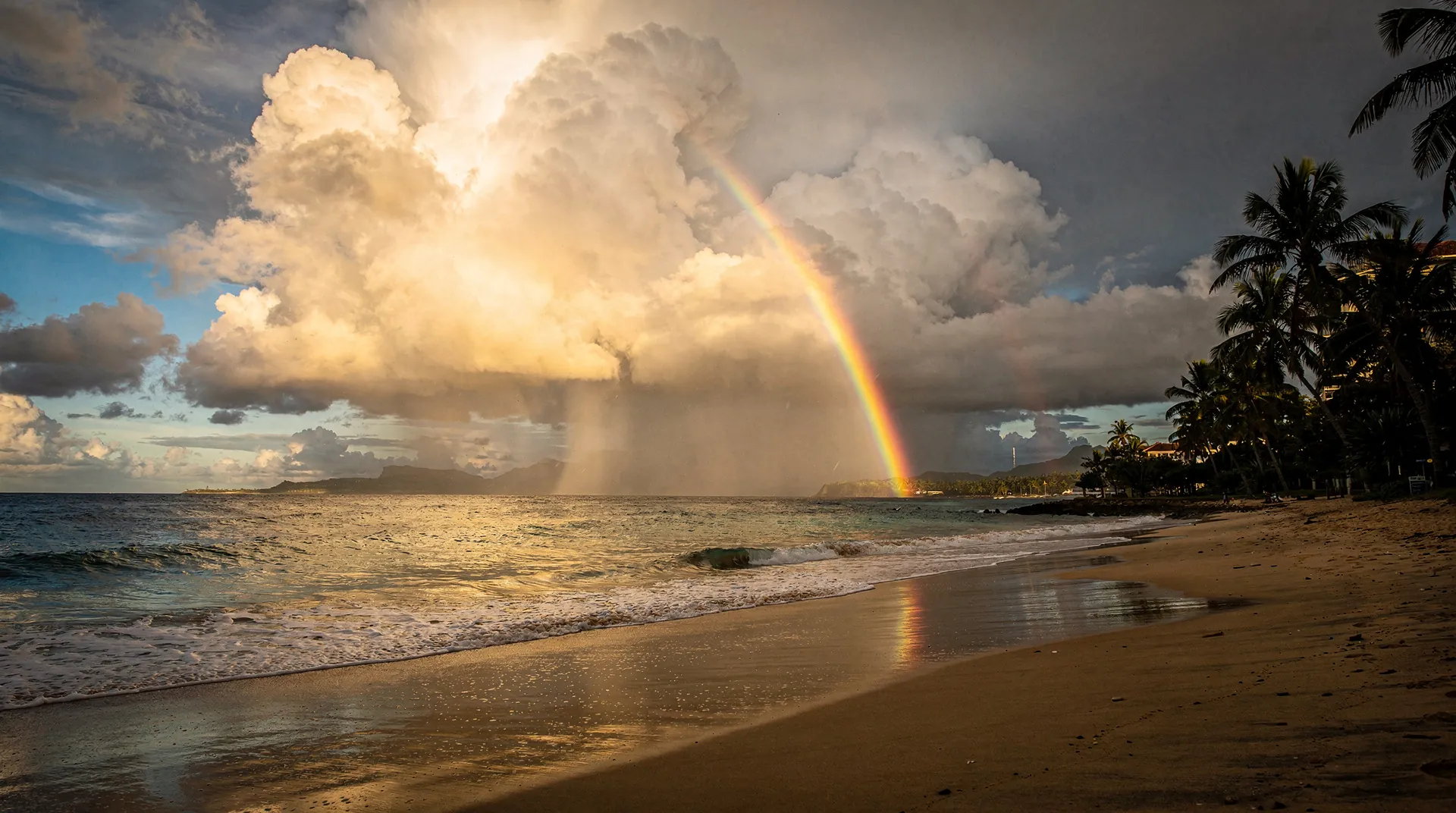
Mauritius in September: the bargain-hunter's month
Updated: August 2026
Is September a good month to visit Mauritius?
Yes, September is excellent: few crowds, the lowest prices of the year, very pleasant weather conditions, and whales still around to spot. A very underrated month.
Mauritius in September: savvy travellers’ best-kept secret
September might just be the most underrated month on the Mauritian calendar. Wedged between the busy August holidays and the mid-high season of October (the Toussaint school break), it enjoys remarkably low visitor numbers while weather conditions keep improving by the day. Travellers who are in on the September secret often come back at this exact time of year, sometimes abandoning their old high-season habits for good.
September stacks up advantages that few other months can claim all at once: rock-bottom prices, whales still around, exceptional diving visibility, wind that keeps easing off, an east coast that turns pleasant again, and an island that gets back to its authentic rhythm without the tourist pressure. Our guide to the best time to visit Mauritius ranks September among the very best months — a fact few travellers know before their first trip.
At a glance
| Criterion | Detail |
|---|---|
| Weather | Southern spring, 23-28°C by day, sea at 23-25°C, light rain |
| Prices | Among the lowest of the year, 40 to 60% discounts at 4-5 star hotels |
| Crowds | Very low, the quietest month of the year |
| Whales | Still visible in the first half of the month, success rate declining after that |
| Best time within the month | The second half for mild weather, the first for whales |
| Flights from France | Book early despite the local low tourist season; see our guide to flights to Mauritius |
Weather and temperatures in September
Southern spring settling in
September marks the start of southern spring in Mauritius. Temperatures start climbing gently again after the July-August dip. Daytime highs settle between 23 and 27°C by mid-month, with an upward trend towards late September (25 to 28°C). Nights gradually warm up too: 18 to 21°C along the coast.
This transition is a particularly pleasant one to experience. The heat of summer hasn’t arrived yet — no oppressive humidity, no cyclone risk — but the sharp chill of August nights has faded. Days are bright and evenings are pleasant without needing a heavy jacket. Travellers who have experienced September’s thermal comfort often describe it as “perfect”.
On the central plateau (Chamarel, Vacoas), nights stay cool (14-17°C) but days are sunny and mild. A light jacket is enough for inland excursions.
Wind: a gradual, welcome drop
The south-east trade winds start to lose strength in September. Winds of 20 to 30 knots typical of mid-winter drop to an average of 10 to 20 knots, with increasingly frequent calm days towards the end of the month. The east coast, choppy in July-August, gradually settles into gentler conditions.
This drop in wind is one of the great pieces of good news for beach holidaymakers in September. Parasols stay put without a fight, towels stop flying off, and open-air evenings on restaurant terraces are pleasant again. Belle Mare and the east coast return to their usual peaceful character.
Rainfall still low
September remains a dry month. Rainfall on the north-west coast is 35 to 50 mm spread over 4 to 6 days — among the lowest of the year, almost identical to August’s. Whole days of sunshine are the norm. September skies have a particular clarity and brightness, with golden tones at sunrise and sunset that photographers love.
The west coast stays the driest part of the island thanks to the foehn effect. But in September, even the east coast gets mostly sunny days — a rarity compared to winter.
Sea: gradual warming, still-excellent visibility
The sea warms up gradually in September: 23 to 25°C. Underwater visibility stays excellent (30 to 40 m) — a holdover from optimal winter conditions. Lagoons start recovering summer’s warmth and life. The corals, which spent winter in relative dormancy, start becoming active again as southern spring arrives. Our snorkelling and diving guide covers the best spots to make the most of this exceptional window between winter’s peak visibility and spring’s warming waters.
Crowds and prices: a savvy traveller’s paradise
Visitor numbers at their yearly low
September is clearly the quietest month of the year in Mauritius by far. The summer holidaymakers (July-August) have gone home. The Toussaint travellers won’t arrive until late October. The island returns to a local, authentic, relaxed rhythm that Mauritians themselves enjoy.
Beaches are empty or nearly so — some stretches of Belle Mare or Trou aux Biches on a September weekday offer near-total solitude. Restaurants welcome guests with a more relaxed smile. Excursions leave with half the usual number of participants. Taxi drivers are available immediately, no waiting around. This is Mauritius as Mauritians themselves experience it.
Prices at their annual low: real bargains to be had
September, along with the second half of February, is the month when hotel prices hit their lowest. Discounts of 40 to 60% off high-season rates are possible at 4 and 5-star hotels. Properties that cost 400 euros a night in July can drop to 180 or 200 euros — sometimes less with last-minute deals.
Flights are also cheaper in September. Flight-and-hotel packages can add up to considerable savings. For a couple or family with flexible dates, September can mean staying at a 5-star palace for the price of a 3-star in high season. Our Mauritius budget guide gives precise benchmarks for comparing savings across the months.
Recommended activities in September
Whale watching: the last window
Humpback whales are still present off Mauritius in early September, before gradually heading back towards southern waters as the month progresses. The first half of September still offers good spotting opportunities, with a trip success rate of 60 to 70%. That rate drops towards the end of the month.
If seeing whales is an absolute priority for your trip, don’t wait: book an outing as soon as you arrive in early September. Our complete guide to whale watching in Mauritius features reputable operators who offer refunds or a second outing if the first one comes up empty. Choose operators who respect the regulations (minimum distance of 100 m from the animals, no swimming with them).
Diving: the best conditions-to-price ratio of the year
The September transition offers a rare and valuable combination: winter’s high visibility (30 to 40 m) still holding, and water that’s gradually warming up. Divers and snorkellers get the best of both seasons. Marine life starts its spring transition, with growing activity from sea turtles, manta rays and small pelagics. And dive centres, less busy than in July, sometimes offer reduced rates or attractive group packages.
Snorkelling in the lagoons of Blue Bay and Trou aux Biches is exceptional in September. The clarity of the water lets you watch the corals and fish even without professional mask and fins — even basic snorkelling is remarkable here.
Exploring the whole island
With pleasant weather across the island and almost no crowds, September is the ideal month to explore Mauritius from end to end without compromise. Our 7-day Mauritius itinerary can be followed in full during September under optimal conditions — and without the queues or fully booked hotels of high season.
Our car rental guide to Mauritius helps you plan your road trip. In September, the mountain roads are dry, traffic is light, and the views from the central plateau’s passes are clear and striking.
Locals are naturally more available for genuine exchanges when the island isn’t overwhelmed by tourists. Local guides, small family restaurants without high-season prices, and off-the-beaten-track activities are more accessible.
Gentle kitesurfing: ideal for beginners
Beginner and intermediate kitesurfers appreciate September for its steadier, less violent winds compared to the depths of the July-August winter. Conditions in the Le Morne lagoon are still good for practising, but less intimidating than during peak-wind periods. Ideal for progressing calmly in a less daunting environment. Our guide to kitesurfing in Mauritius details the schools and spots by level.
Hiking before the heat returns
September’s cool temperatures (22 to 27°C during the day) are excellent for longer hikes. It’s the last comfortable month for climbs before the summer heat gradually returns in November. Make the most of this window: Piton de la Petite Rivière Noire, Corps de Garde and the Black River gorges are magnificent in September, with vegetation starting to turn green under the first spring rains.
Catamaran trips and Île aux Cerfs
Catamaran outings are excellent in September: calm sea on the west coast, reasonable wind, guaranteed sunshine. Île aux Cerfs is back to its best conditions with the drop in trade winds — the island’s turquoise lagoon and white sand beaches are spectacular under the southern spring sun.
Excursions leave with fewer people, which considerably improves the experience. The full-day catamaran trip to Île aux Cerfs with lunch on board is one of the best excursions on the island in September.
Île aux Bénitiers in the south-west lagoon is also excellent in September, with Crystal Rock sitting in crystal-clear waters. A dolphin stop in the bay of Tamarin rounds off a memorable day.
Swimming with dolphins
Spinner dolphins in Tamarin bay are present every morning, year-round. In September, sea conditions are particularly pleasant for swimming with dolphins — water still cool and clear, calm sea on the west coast, dolphin pods present. The lack of tourists in September means you’ll share the experience with fewer participants — a noticeable difference from high season.
The swim with dolphins in Tamarin excursion in September often offers a more intimate encounter thanks to smaller groups.
Couple activities and a romantic stay
For couples looking for a romantic getaway without the crowds or the Christmas prices, September is a remarkable option. Our guide to couple activities in Mauritius offers plenty of ideas for an unforgettable stay — dinners with your feet in the sand, sunrise paddleboard outings, diving as a duo at deserted sites. Our honeymoon itinerary in Mauritius also works well in September for those who want to save money without sacrificing quality.
September versus the neighbouring months: comparison table
| Month | Wind | Rain | Hotel prices | Whales |
|---|---|---|---|---|
| July | Strong (winter) | Low | Moderate to high | Good chances |
| August | Strong (winter) | Low | High (school holidays) | Very good chances |
| September | Moderate, easing | Very low | Lowest of the year | Good in first half |
| October | Low | Low to moderate | Slightly rising | Rare, end of season |
This table confirms what our guide to Mauritius weather reveals: September combines the best of the yearly calendar without the downsides (August’s strong wind, October’s crowds).
Travelling as a family or as a couple in September
As a family
September is an underused period for families, often held back by the French school calendar. For those lucky enough to have flexibility (school zones, homeschooling, young children), it’s one of the best months: gentle sea, empty beaches for kids to run around on, attractive family rates. Our guide to Mauritius with family and our family-focused itinerary remain perfectly valid in September, with the added bonus of fewer crowds around pools and kids’ clubs.
As a couple
See the dedicated section above: between the restored calm and the gentle prices, September is one of the best months of the year for a trip for two.
Packing for September
September’s transitional climate calls for a slightly more thoughtful packing list than for a peak summer month. Bring a light jumper or windbreaker for evenings and for excursions into the highlands (Chamarel, central plateau), on top of the usual beach essentials. Our complete Mauritius packing guide covers the full list by season.
Events in September
Père Laval Day (9 September): an annual pilgrimage to the tomb of Blessed Father Laval in Sainte-Croix, Port-Louis. Thousands of people of all faiths — Catholics, Hindus, Muslims, Buddhists — converge on this sacred site during the night of 8-9 September. A moment of spiritual fervour and interfaith fellowship unique in the world, open to respectful visitors.
Ganesh Chaturthi (sometimes in August-September depending on the lunar calendar): a Hindu festival celebrating the god Ganesh, lord of beginnings and wisdom. Beautifully decorated clay statues are immersed in the sea or rivers to close the celebrations. A colourful, symbolic and moving spectacle.
Festival de la Créolité (prelude): artistic and cultural Creole events animate certain towns in preparation for the big Festival Kreol in October-November. Sega music, Creole cuisine, storytelling and local crafts.
Recommended areas in September
East coast (Belle Mare, Trou d’Eau Douce): September marks the east coast’s gradual return to its best conditions. The waters calm down, and the immaculate white sand beaches regain their unmatched beauty. Belle Mare in September, nearly deserted, is one of the finest beaches in the entire Indian Ocean. Enjoy it before October brings visitors back.
South coast (Blue Bay, Mahébourg): the Blue Bay marine park is at its best, with exceptional underwater visibility and a sea that’s calming down. Mahébourg and its Monday market offer an authentic immersion into Mauritian life — spices, tropical fruit, fresh fish and local crafts.
West coast (Flic-en-Flac, Tamarin, Le Morne): always excellent, with calm seas and sunshine. In September, sunsets on the west coast take on particularly warm tones under the southern spring light.
North coast (Grand Baie, Trou aux Biches): the northern beaches are pleasant and quiet in September. Grand Baie’s buzz is there without the peak-summer overcrowding — restaurants have room, shops are accessible, the vibe is relaxed.
Accommodation and transport in September
September is the month when the best accommodation deals are found. Book a week or two ahead rather than months in advance — you’ll find rooms available at excellent properties at unbeatable prices. Check our complete accommodation guide to Mauritius to compare all the options and areas available.
For getting around, renting a car in September is particularly pleasant: little traffic on the roads, parking available at every tourist site, dry, drivable roads. Our car rental guide to Mauritius gives reference rates — in September, daily rates are often 20 to 30% lower than in July.
Verdict: should you go to Mauritius in September?
September is one of the best possible choices for a free and flexible traveller. Pleasant, steadily improving weather, the lowest prices of the year, near non-existent crowds, whales still present, diving with maximum visibility, an east coast that becomes accessible and pleasant again. There’s virtually no argument against September.
The only minor downside: it’s not yet October’s full, warm spring. Nights are still cool and the sea is still a touch cold for those who feel the chill easily. But for the vast majority of European travellers, September in Mauritius is a revelation that often leaves them wishing they hadn’t spent all those previous years going in July instead.
Overall rating for September: 9/10 — Exceptionally good value for money, the secret of experienced and savvy travellers.