
Mauritius in January: weather, tips and activities
Updated: August 2026
Is the weather good in Mauritius in January?
January is hot and humid, with cyclone risk. It's peak tourist season despite weather conditions that are less ideal than during the austral winter.
Mauritius in January: the heart of the austral summer
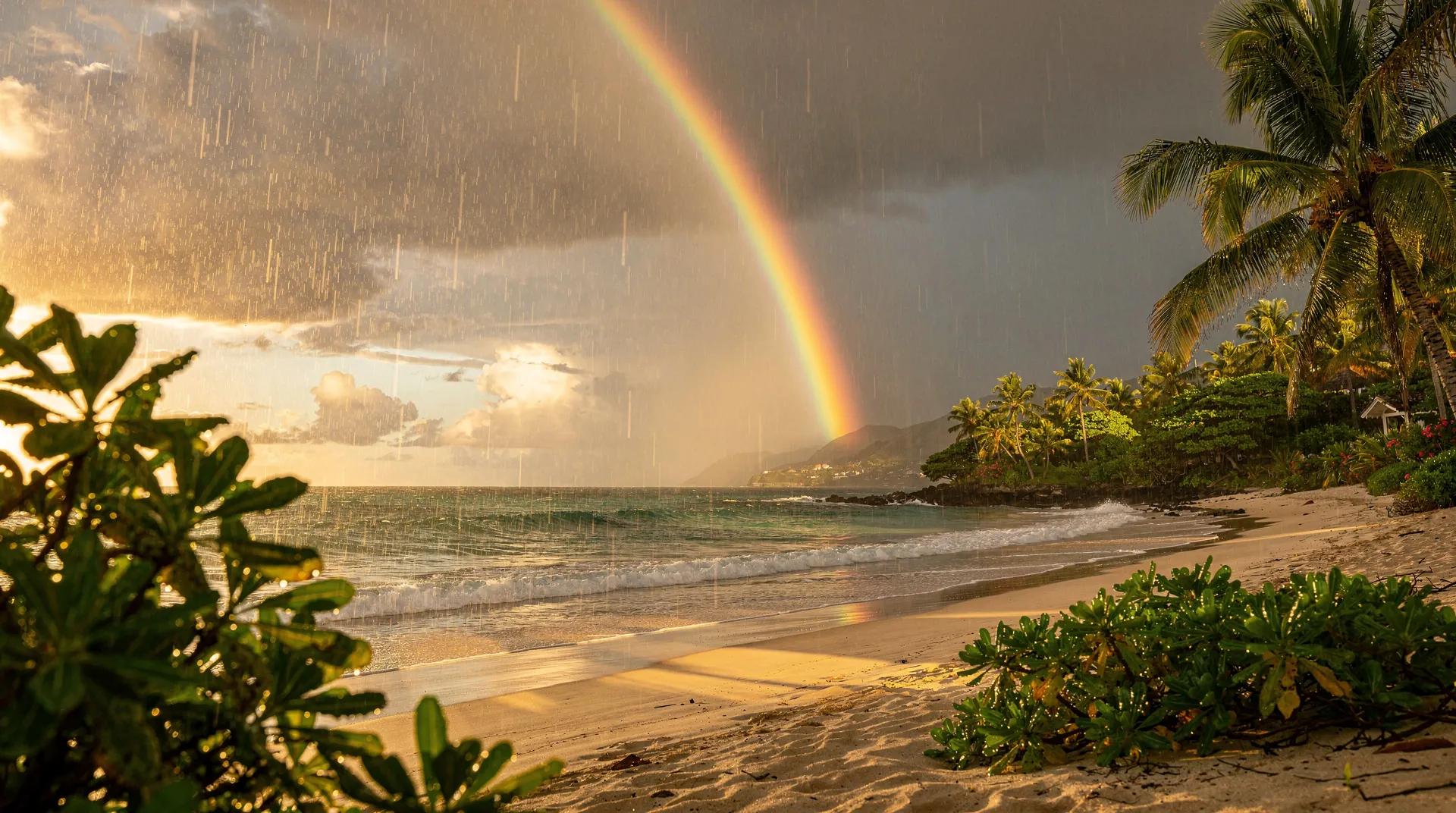
January marks the height of summer in Mauritius. It’s a paradoxical month: heavily visited by tourists extending their Christmas break or taking advantage of New Year holidays, yet its weather conditions are not the most favourable of the year. Intense heat, high humidity and non-negligible cyclone risk make up the climate picture for this first month of the year.
At a glance
| Weather | 28-32°C daytime, 80-85% humidity, lows rarely below 24°C |
| Sea | 27-29°C, very pleasant for swimming and snorkelling |
| Cyclone risk | High (alongside February), 5-10% chance of a class 2+ alert during a week-long stay |
| Prices | Among the highest of the year, 40 to 80% above low season |
| Best base | West coast (Flic-en-Flac, Tamarin, Le Morne), drier microclimate |
| Book in advance | Popular hotels and excursions, 3 to 4 months before departure |
Even so, millions of travellers choose January every year — most due to school holiday constraints — and have wonderful holidays. Understanding January’s specifics will help you make the most of it. For a full overview of Mauritian weather month by month, our complete weather guide is the essential reference.
Weather and temperatures in January
Temperatures
January is one of the two hottest months of the year alongside February. Along the coast, daytime temperatures range between 28 and 32°C, with frequent peaks of 33 or 34°C on the hottest days. Nights offer little relief: lows rarely drop below 24°C on the coast, which can make sleeping difficult without air conditioning.
On the central plateau (Curepipe, Vacoas), temperatures are 3 to 4°C cooler due to the altitude — a notable exception on an island where heat is omnipresent in January.
Humid heat is the month’s defining feature. With relative humidity of 80 to 85%, the heat index is often higher than the actual temperature. A 31°C day can easily feel like 36°C in terms of physical comfort. Air conditioning in the room isn’t a luxury in January — it’s an absolute necessity you should confirm before booking.
Weather coast by coast in January
The Mauritian microclimate varies noticeably from one coast to another, and this difference is particularly pronounced in January.
The west coast — Flic-en-Flac, Tamarin and Le Morne — benefits from the foehn effect generated by the island’s central mountains. When humid winds from the southeast hit the relief and drop their moisture on the east coast, the air descending on the west side is drier and often sunnier. In January, this difference can be dramatic: it’s raining in Grand Baie while Flic-en-Flac enjoys clear skies.
The east coast, particularly the Belle Mare area, gets two to three times more rainfall than the west coast. Afternoons can be regularly rainy and windy. This coast is beautiful but is better visited as a day trip from a west-coast base.
The north coast around Grand Baie sits in an intermediate position: wetter than the west, but less exposed than the east. Its lively atmosphere and density of services make it a practical base even in January.
Rainfall
January is one of the wettest months of the year. The northwest coast records an average of 150 to 170 mm of rainfall over roughly 14 to 16 rainy days. The downpours are typically tropical: sudden, intense, and often followed by quick clear spells. A 30-minute morning shower can give way to a radiant afternoon — that’s the rhythm of the Mauritian austral summer.
On the east coast and central plateau, rainfall is two to three times higher. This is one reason to prefer Flic-en-Flac or Tamarin for a summer stay.
Sea and lagoons
The sea is at its most pleasant temperature of the year: 27 to 29°C along the coast. The lagoons are warm and inviting, perfect for swimming and snorkelling. Underwater visibility is decent (15 to 25 m) though slightly lower than in the winter months, due to more abundant plankton in the warm water. In return, tropical marine life is particularly active: sea turtles, rays, surgeonfish and barracudas are frequently spotted.
Snorkelling and diving in January remain excellent despite the slightly reduced visibility. The 28-29°C water allows for long sessions without a thick wetsuit, and the colours of the corals and tropical fish are stunning under the austral summer sun. To explore the island’s best snorkelling spot with a guide, the snorkelling excursions in the Blue Bay marine park offer a guided experience among the coral and sea turtles.
Cyclone risk
January is one of the two months with maximum cyclone risk (alongside February). On average, one to two tropical disturbances or cyclones can affect the island during this month. The probability of a direct impact on your stay remains relatively limited — around 5 to 10% chance of experiencing a class 2 or higher alert during a week — but it deserves to be factored into your planning.
Our complete guide to cyclones in Mauritius explains the four-level alert system, what to do, and how to protect yourself with good travel insurance. Reading this guide is essential before any stay between January and April.
Crowds and prices in January
Tourist numbers
January is a confirmed peak-season month. The first half still benefits from the flow of year-end holidaymakers extending their stay or flying in after New Year. The second half sees a slight lull, before numbers pick up again at the end of the month for French zone A and B school holidays.
Beaches, restaurants and tourist sites are very busy. Hotel bookings for the most sought-after properties need to be made several months in advance. Popular excursions — catamaran trips to the northern islets, Ile aux Cerfs, swimming with dolphins — are often fully booked several days ahead.
If you haven’t booked in advance, ask directly at your hotel reception or contact a local travel agent. The day-long catamaran trip to Ile aux Cerfs with lunch is often booked a week in advance in January — plan ahead.
Accommodation rates
Prices in January are among the highest of the year, riding the wake of December’s peak. The first week (the New Year period) sees rates at their maximum. From mid-January onward, prices start to come down, but remain above the yearly average.
Mid-range accommodation (3-star) costs on average 120 to 200 EUR per night in January versus 80 to 130 EUR in low season. Luxury hotels can exceed 500 to 1,000 EUR per night during this period. Our Mauritius budget guide gives detailed benchmarks for every accommodation category and helps you plan your total spending.
Where to stay in January
Your choice of accommodation largely shapes the quality of your stay in January. The west coast remains the best choice for maximising your chances of sunshine. Our complete guide to accommodation in Mauritius covers all areas and options available, from small family guesthouses to luxury 5-star resorts. In January, favour properties with a covered or semi-covered pool in case of rain, and be sure to check for air conditioning in the rooms.
Recommended activities in January
The month’s highlights
Scuba diving and snorkelling: despite slightly reduced visibility, January is excellent for diving. The warm waters (28-29°C) attract exceptional marine life. It’s the best time to watch sea turtles at their most active, stingrays gliding over the sandy bottom, and schools of tuna beyond the reef. Night diving reveals octopuses, lobsters and reef sharks. Our snorkelling and diving guide covers the best sites by coast.
Cultural discovery inland: the interior of the island offers activities less dependent on good weather. Port Louis’s central market — with its spices, fabrics and unique atmosphere — is worth a full morning. Pamplemousses Botanical Garden is at its best in summer: the giant Victoria amazonica water lilies are in full bloom. A visit to Chamarel and its Seven Coloured Earths is a remarkable visual experience even under cloudy skies.
Watching reptiles and nocturnal wildlife: the endemic green day geckos are particularly active in summer. Fruit bats (endemic flying foxes) are observable in large numbers at dusk in fruit gardens.
Mauritian gastronomy: the festive atmosphere of the new year is still present in restaurants. Seasonal tropical fruits — mangoes, jackfruit, star fruit, longans — are at their peak in January. It’s also a great month to sample seasonal dishes at the markets.
Family activities: January is very popular with families. Resorts offer well-organised kids’ programmes and the warm sea is ideal for the youngest. Our family activities guide lists the best options for travelling with children in Mauritius.
Couples’ getaways: the warm sea and festive start-of-year atmosphere make it a popular month for couples. A sunset on the west coast followed by a romantic dinner with your feet in the sand remains a magical experience even at the height of summer. Our couples’ activities guide presents the best romantic ideas for a successful stay.
Less recommended activities
Intensive hiking: heat and humidity make mountain climbs exhausting in the middle of the day in January. Stick to morning walks (before 9am) or evening ones (after 5pm) if hiking is on your itinerary. Our hiking guide to Mauritius shows the most manageable trails by season.
Swimming on the south coast: the south coast (Gris-Gris, Souillac) can get rough during atmospheric disturbances. These beaches are stunning but potentially dangerous at the height of summer. Check local conditions before swimming.
Kitesurfing: January winds are insufficient and too irregular for quality riding. Wait for May-June for kitesurfing and surfing in Mauritius.
Recommended itineraries for January
If this is your first January trip to Mauritius, here are a few planning suggestions.
For a 7-day stay, base yourself on the west coast (Flic-en-Flac or Le Morne) to benefit from the most favourable microclimate. Devote mornings to beach activities, snorkelling and diving. Reserve potentially rainy afternoons for cultural excursions (Chamarel, Port Louis, Pamplemousses). Our 7-day Mauritius itinerary is a good planning base to adapt to conditions.
For a honeymoon, the luxury resorts of Le Morne or Belle Mare offer an exceptional setting with high-end amenities. Our honeymoon guide to Mauritius details the best properties and romantic experiences available in January.
For a family stay with children, the north coast around Grand Baie is practical: plenty of services, varied restaurants, and excursions accessible from the harbour. Our family itinerary guide will help you plan days suited to all ages.
Festivals and events in January
Tamil Cavadee (late January or early February depending on the lunar calendar): one of the island’s most spectacular festivals. Hindu devotees carry decorated structures (cavadees) to temples in an impressive procession involving ritual piercings and fire walking. A unique and deeply moving cultural experience for travellers lucky enough to witness it.
Chinese New Year (if the date falls in January): Grand Baie and Port Louis come alive with red-and-gold decorations, fireworks and dragon dances in the streets. The Sino-Mauritian community celebrates with fervour and hospitality.
Beach parties and resort evenings: many hotels and resorts organise beach events, concerts, themed evenings and beach barbecues during peak season. These events are often open to non-guests for a fee.
Sport fishing: January is right in the heart of the big-game fishing season. Blue and black marlin, yellowfin tuna and swordfish are active in the deep waters around the island. Sport fishing clubs in Grand Baie and Rivière Noire offer deep-sea outings at sunrise — a memorable experience even for non-anglers who come along for the spectacle.
Areas to favour in January
West coast (Flic-en-Flac, Le Morne, Tamarin): this is the area to favour above all in January. It benefits from the island’s driest microclimate thanks to the foehn effect off the central mountains. Even on cloudy, rainy days elsewhere on the island, the west coast can stay sunny. Sunsets over the sea here are superb in every season. The Tamarin area also offers the island’s most renowned dolphin excursion — swimming with dolphins in Tamarin bay remains an unforgettable experience even at the height of summer.
North coast (Grand Baie, Trou aux Biches): a good option with a nice balance of tourist attractions and generally acceptable weather conditions. Easy access to excursions to the northern islands (Coin de Mire, Ile Plate) and plenty of restaurants and shops within walking distance.
Avoid the east coast if you’re mainly after good weather and calm waters in January. Belle Mare at the height of the austral summer can see rainy, windy afternoons.
South coast (Blue Bay): the Blue Bay marine park is worth a day excursion from any base. Snorkelling there is exceptional year-round, and the coral and turtles you’ll see in January are particularly active.
Getting around in January
Renting a car remains the best option for exploring the island freely, even in January. Mountain roads can be slippery after rain — adjust your driving accordingly. Our car rental guide to Mauritius gives benchmark rates and practical advice for the peak season.
Checklist for a successful January stay
- Book your accommodation and excursions 3 to 4 months in advance (peak season)
- Take out travel insurance with explicit cyclone cover
- Pack lightweight cotton or linen clothing (synthetic fabrics are stifling in the humidity)
- Bring a light raincoat for sudden tropical downpours
- Your accommodation absolutely must have air conditioning
- Download the Mauritius Meteorological Services app to follow cyclone alerts
- Stay well hydrated — humid heat dehydrates you faster than in Europe
- Schedule physical activities early in the morning, before 9-10am, to avoid the midday heat
- Pack high-protection sunscreen — the tropical sun is intense even under partly cloudy skies
- Keep some Mauritian rupees in cash for small markets and local restaurants
What January does well: the month’s lesser-known strengths
January isn’t just a difficult month. It has its own strengths that travellers who know it well genuinely appreciate.
The vegetation is at its most lush. The tropical forests of the island’s interior — the Black River gorges, the Bel Ombre forests, the Pamplemousses gardens — are an intense, deep green that the dry winter months can’t offer. Waterfalls like those at Chamarel are at full flow, and the sight of water rushing through gorges framed by flowering tropical vegetation is a rare beauty.
The beaches of Mauritius are, meanwhile, the same in January as in July — the white sand, the turquoise lagoon and the warm water are all there. What you lose in weather predictability, you gain in colour intensity and water warmth.
Comparison with neighbouring months
If you have a bit of flexibility, here’s how January compares with the adjacent months:
December is comparable in terms of heat and cyclone risk, but the festive atmosphere of the end-of-year holidays makes it a very popular month. Christmas and New Year period prices are the highest of the year.
February is even hotter and riskier in terms of cyclones, but outside school holidays, prices are often much lower. It’s the month for bold travellers.
October and May are the reference months for those seeking the best weather conditions without paying top price. Our best time to visit Mauritius guide compares every month according to your traveller profile.
Insurance and budget: planning ahead for January
January combines peak season with cyclone risk: two good reasons to book early and get well insured. Travel insurance with an explicit cyclone clause covering cancellation and trip interruption is recommended, in addition to standard repatriation cover. Our travel insurance guide to Mauritius details the coverage to compare.
On the budget side, January isn’t the cheapest month for accommodation, but flights can sometimes be found at reasonable rates if you book early, especially by avoiding the first week of the month. Our Mauritius budget guide lets you compare January precisely with other months of the year by spending category (accommodation, excursions, dining).
January for families with children
January is one of the busiest months for families, largely thanks to the last weeks of school holidays. The warm sea and well-run kids’ clubs make it a popular period despite the heat. If you’re travelling with young children, our family guide to Mauritius details precautions by age (essential air conditioning, activity pacing, extra sun protection) and the best areas for a stress-free stay during the hot season.
Verdict: should you visit Mauritius in January?
January isn’t the best month of the year from a purely meteorological standpoint, but it’s not one to rule out either. Travellers who accept the tropical heat, humidity and moderate cyclone risk will find real rewards: a magnificent sea at 28-29°C, a festive atmosphere, lush green scenery and exceptional diving.
The main argument against January is its value for money: it’s one of the most expensive months of the year — often 40 to 80% pricier than low season — for weather conditions inferior to those of the austral winter. If you’re constrained by French school holidays, January is a viable option with good preparation. Otherwise, October, May or even November offer a much better overall balance.
Our best time to visit Mauritius guide compares every month according to your traveller profile and will help you make the choice best suited to what you’re looking for.
Overall January rating: 6/10 — Beautiful but hot, humid, expensive, and with moderate cyclone risk.