
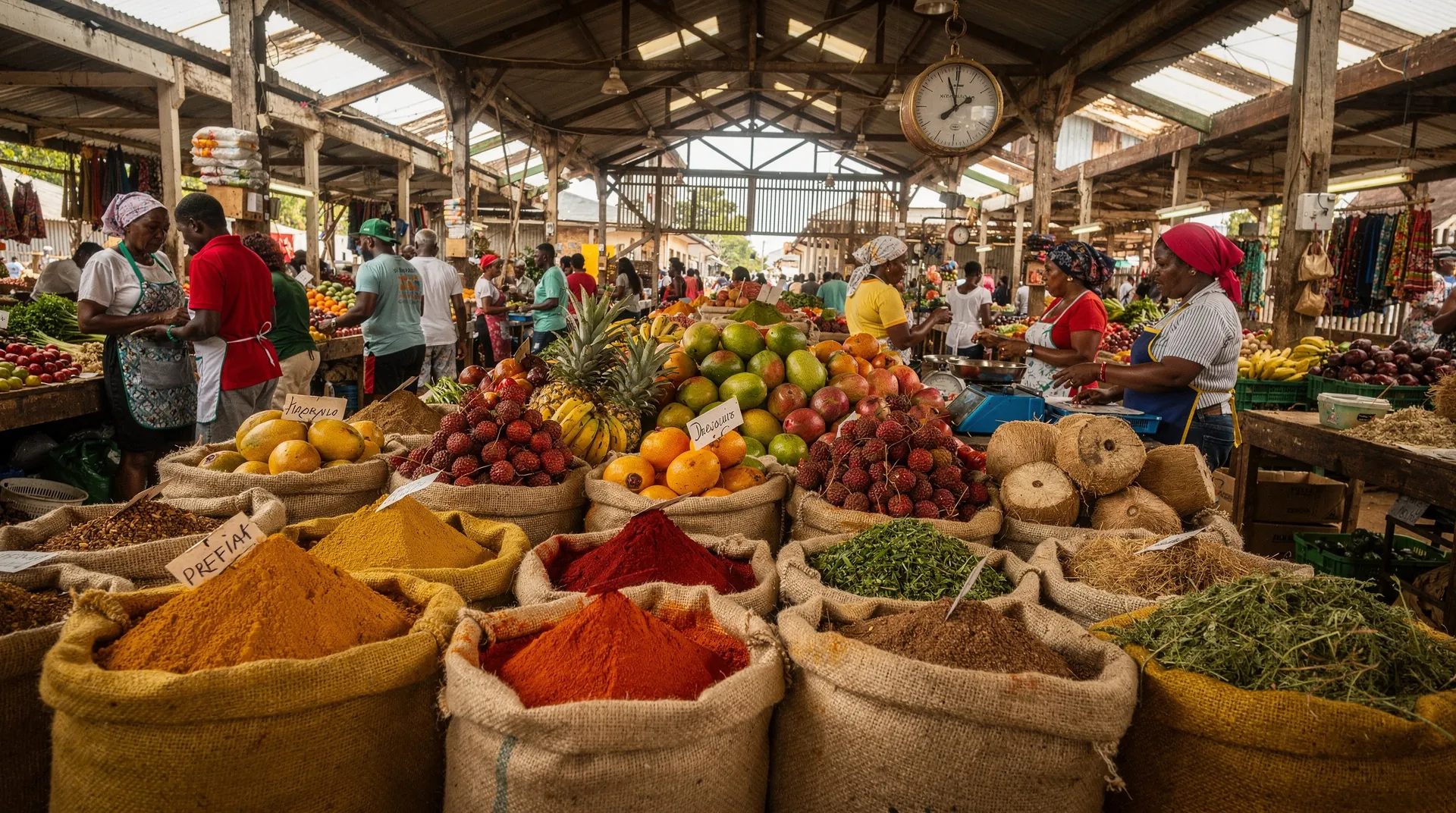
L'Aventure du Sucre: Mauritius's sugar and rum museum
Updated: August 2026
How much time should I set aside to visit L'Aventure du Sucre?
Allow 2 to 3 hours for a full visit including all the rooms, the shop and the rum tasting. Add 1 hour if you have lunch at the museum restaurant.
L’Aventure du Sucre: diving into Mauritius’s sugar history
L’Aventure du Sucre is far more than just a museum. Housed in the restored buildings of the former Beau Plan sugar factory in Pamplemousses — a factory founded in the 19th century and definitively closed in 1999 — this museum tells the complete story of sugar, from the first canes planted on the island through to today’s global sugar economy, taking in slavery, indentured labour from India, the industrial revolution and the birth of the Mauritian nation along the way.
It’s one of the island’s best cultural attractions, recommended equally for families with children and adults passionate about colonial history, economics or gastronomy. And it’s a perfect activity on a rainy day — entirely indoors and covered, it can be visited just as easily on a cyclone day as under a blazing sun. To plan your day in Pamplemousses, also check out our guide to the Pamplemousses Botanical Garden, which you can visit during the same half-day.
At a glance
| Where | Beau Plan, Pamplemousses, ~12 km north of Port Louis |
| Price | around 400 rupees (adult), 200 rupees (ages 6-12), free under 6 |
| Time needed | 2 to 3 hours, up to 4 hours with lunch |
| How to get there | car (M2 or B38, free parking) or taxi from Grand Baie (~600-800 rupees) |
| Best time | year-round — an indoor visit, ideal on rainy days |
Key milestones in the history of sugar in Mauritius
From Dutch origins to French plantations
The first sugarcane plants arrived in Mauritius with the Dutch settlers in the late 17th century, but it was under French rule that sugar cultivation truly developed. Governor Mahé de Labourdonnais, whose name graces many sites across the island and whose towering presence still looms over Port Louis, grasped the enormous economic potential of sugarcane in this ideal tropical climate as early as 1735.
Sugar production required a massive workforce. French planters brought in African slaves in large numbers — at its peak, the enslaved population represented more than 80% of the island’s inhabitants. This dramatic reality is at the heart of the story the museum tells, with remarkable intellectual honesty.
Abolition and the arrival of Indian indentured labourers
The abolition of slavery in 1835, under British administration (which had taken the island from the French in 1810), radically transformed the sugar economy. Former slaves left the plantations en masse to build their own communities. Facing a labour shortage, planters turned to a new system: indentured labour.
Between 1834 and 1924, nearly 500,000 indentured workers came from India, mainly from Bihar and Madras (present-day Tamil Nadu), to work in the Mauritian cane fields. This massive migratory flow explains why the Indo-Mauritian population makes up more than 68% of the island’s population today. The story of these indentured labourers, their living conditions, their gradual integration into Mauritian society and their cultural impact on the island is one of the museum’s most poignant sections.
The 20th-century sugar industry
In the 20th century, the Mauritian sugar industry reached industrial maturity with ultramodern factories, planter cooperatives and a complex export system to Europe. Mauritian sugar benefited from a preferential agreement with the European Union that guaranteed prices above the world market rate — an agreement gradually phased out in the 2000s, accelerating the shift of the Mauritian economy toward tourism and services.
The closure of the last sugar factories, including Beau Plan in 1999, marked the end of a three-century era. Turning the factory into a museum was a way of preserving this collective memory while creating a new economic activity — cultural tourism.
The collections and rooms
The machine room
The visit begins at the industrial heart of the former sugar factory. Steam engines from the 19th and early 20th centuries, restored and displayed in their original setting, illustrate the sugar-extraction process: crushing the cane, extracting the juice, clarification, concentration, crystallisation. The staging incorporates recreations of working conditions, audio testimonies and archival documents projected onto the walls.
For children, this section is especially appealing: the machines are imposing and spectacular, and the guides explain how they work in an accessible way.
The history gallery
A long gallery traces the chronological history of Mauritius and sugar, from the island’s prehistory to the present day. Old maps, colonial paintings, period photographs and authentic artefacts illustrate each era. The section on slavery is handled with rigour and respect: the testimonies, figures and historical documents don’t shy away from the brutality of the system, while avoiding simplistic moralising.
The rise of the Indo-Mauritian community, the emergence of labour unions, independence in 1968 and the transformation of the Mauritian economy are all recounted with the same historical precision.
The shop and tastings
The L’Aventure du Sucre shop is probably the most interesting on the island for buying authentic products to take home. You’ll find:
- Special unrefined sugars produced on the island: muscovado (dark brown sugar with an intense molasses flavour), fine cassonade, vanilla sugar made with real Mauritian vanilla pods, coloured crystal sugar. These artisanal-quality sugars make excellent gifts and can’t be found in French supermarkets.
- Agricole rums made from fresh cane juice rather than molasses, in the Caribbean tradition. These white and aged rums are of remarkable quality.
- Artisanal jams, jellies and cane syrup.
- Mauritian spices and teas.
Rum tasting is included in the adult admission price. A guide will walk you through the different expressions — white rum, rum aged in oak barrels, rum arrangé with tropical fruit — explaining the characteristics of each. It’s a remarkable introduction to Mauritian rum production, far less well known than that of Martinique or Réunion but of very high quality. Our guide to souvenirs to bring back from Mauritius goes into more depth on the best products to buy.
The Château de Beau Plan restaurant
The museum restaurant, set in a beautiful room overlooking the restored machinery, serves quality Mauritian Creole cuisine at reasonable prices for the setting. Lunch here, midway through your visit to the museum and the neighbouring botanical garden, is a pleasant way to extend the cultural and gastronomic immersion. Our guide to Mauritian gastronomy will introduce you to the must-try Creole dishes to order.
Practical information
Prices and opening hours
2026 prices:
- Adults: around 400 rupees
- Children (ages 6-12): around 200 rupees
- Children under 6: free
The museum is open Monday to Saturday from 9am to 5pm, closed on Sundays. Last entry is at 4pm. Allow 2 to 3 hours for a full visit, or more if you have lunch at the restaurant.
Audio guides in French, English and German are available to rent. Group guided tours can be arranged by reservation, with specialist guides who significantly enrich your understanding of the collections.
Getting there from the main areas of Mauritius
The L’Aventure du Sucre museum is located in Beau Plan, in the district of Pamplemousses, about 12 kilometres north of Port Louis and 20 kilometres from Grand Baie.
By car: take the M2 road from Port Louis or the B38 road from Grand Baie. The museum is well signposted. A large free car park is available. Our guide to travel times between areas of Mauritius will help you plan your departure time.
By taxi from Grand Baie or Trou aux Biches: expect to pay 600 to 800 rupees one way. Ask the driver to wait or come back for you after the visit. For a comfortable arrival straight from the airport with a stop in Pamplemousses on the way to your hotel in the north, book a private airport transfer with a driver who can stop wherever you like.
Combining with the botanical garden
A visit to L’Aventure du Sucre pairs naturally with the Sir Seewoosagur Ramgoolam Botanical Garden, less than 2 kilometres away. A classic itinerary is to visit the botanical garden in the morning (from 8am to avoid the heat and the crowds), have lunch at the museum restaurant, then spend the afternoon exploring the museum’s collections and shop. Book a guided excursion combining the botanical garden and sugar museum for a complete cultural day with a French-speaking guide.
If you’re travelling with a rental car, our car rental in Mauritius guide gives you all the tips for getting around this region independently.
With or without children
L’Aventure du Sucre is an excellent family activity for children roughly 8 and up. The industrial machinery, the historical recreations and the fresh cane juice tasting (offered to children as an alternative to the rum tasting) generally captivate young visitors well.
For younger children (under 6), the visit can be hard to sustain over 2-3 hours. In that case, consider a shorter 1.5-hour visit focusing on the most visually striking sections.
The markets of Mauritius and local culture offer other ways to immerse yourself in Mauritian history and identity, complementing this museum visit. From Pamplemousses, an afternoon excursion to Grand Baie lets you combine culture and beach in the same day. For fans of colonial architecture, our guide to the colonial houses of Mauritius features other historic mansions to visit alongside.
After a day of culture, the beaches of Mauritius at Trou aux Biches or Péreybère are within easy driving distance for a refreshing swim. To plan your stay and choose where to sleep, our where to stay in Mauritius guide covers every area and every budget.
Compared to other cultural visits on the island
Pamplemousses isn’t the only option for a day of culture or a rainy-day fallback. Here’s how L’Aventure du Sucre compares to the closest alternatives:
| Site | Type of visit | Duration | Ideal if |
|---|---|---|---|
| L’Aventure du Sucre | Indoor museum, history + tasting | 2-3h | rain, interest in colonial history and rum |
| Pamplemousses Garden | Outdoor, botanical | 1.5-2h | good weather, to combine on the same day |
| Colonial houses | Outdoor/indoor, architecture | variable | colonial history enthusiasts |
| Casela | Wildlife park and thrills | half-day | families with active kids |
| Chamarel | Outdoor, nature | half-day | good weather, road trip to the southwest |
For more ideas for a rainy-day itinerary, our guide to what to do in Mauritius when it rains lists the island’s best indoor options.
Tips for making the most of your visit
Try to arrive first thing in the morning (opening at 9am): organised groups generally arrive in late morning, and the machine room is much more pleasant to visit without the crowds. Photography is allowed in most rooms, without flash to protect the historical documents on display — check at the front desk for the archive section, which is sometimes more restrictive.
If your trip includes a multi-day itinerary around the north of the island, it’s easy to combine this visit with a morning of shopping and sightseeing in Port Louis, less than half an hour’s drive away. For rum enthusiasts, our dedicated guide to Mauritian rum continues the discovery started at the museum shop, with other addresses and distilleries to visit on the island.