
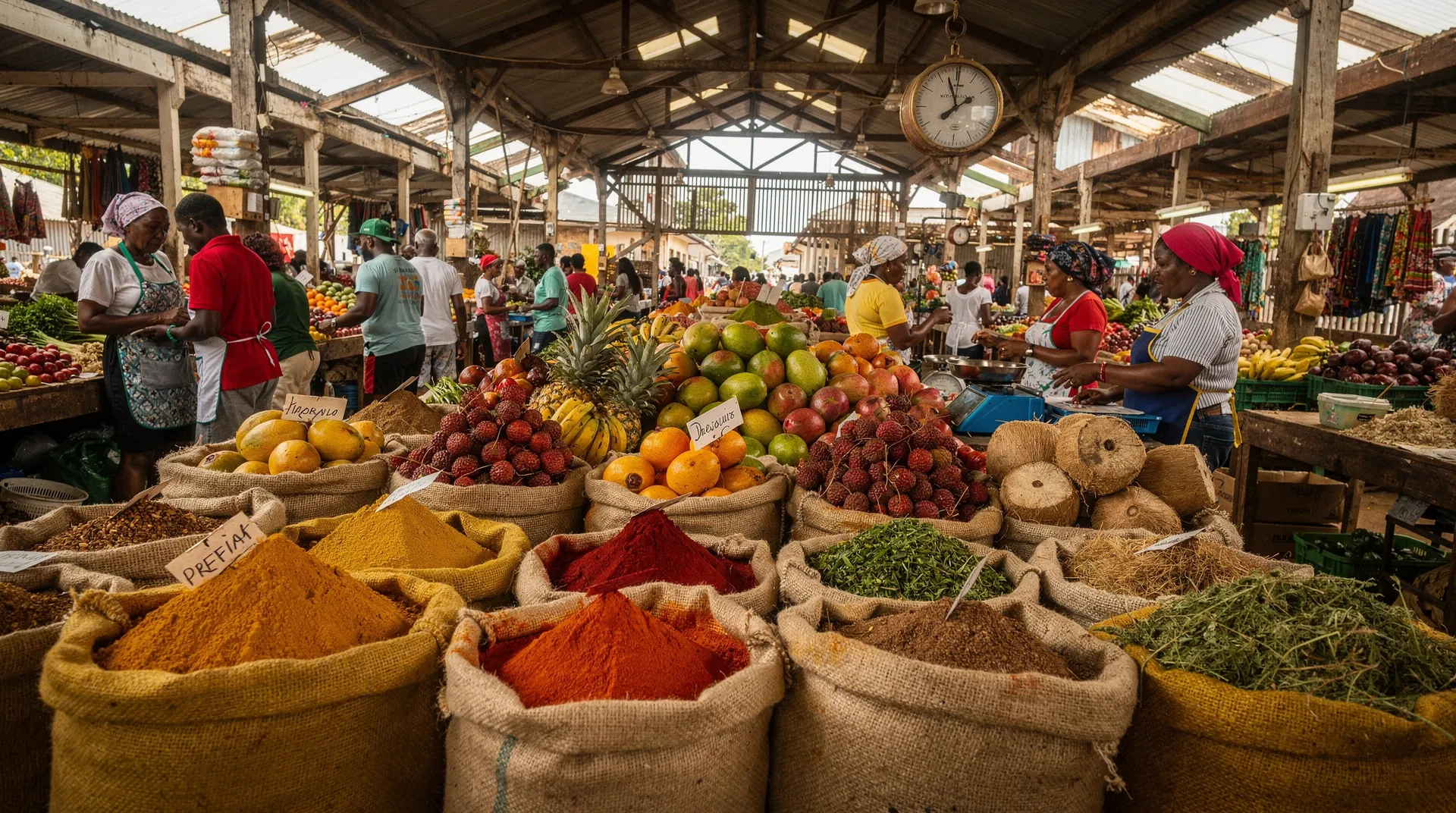
What to bring back from Mauritius: rum, vanilla, tea, textiles and ship models
Updated: August 2026
What are the best authentic souvenirs to bring back from Mauritius?
Aged agricultural rum, Bourbon vanilla pods, Bois Cheri tea, unrefined specialty sugars and handcrafted ship models are the most typically Mauritian souvenirs. Avoid the 'made in China' plastic items that fill the tourist shops.
The best souvenirs to bring back from Mauritius
Mauritius is an island whose local products reflect a strong cultural and geographical identity: the legacy of sugar cane, Indian Ocean spices, Creole flavors, and the craftsmanship of the diverse communities that make up Mauritian society. Knowing what to buy — and above all where to buy it — makes the difference between generic souvenirs and truly special gifts that capture the essence of this exceptional tropical trip.
This guide presents the best products to bring back, with price indications and the best places to find them. Local markets such as Flacq on Sundays or Quatre Bornes on Thursdays and Saturdays offer prices well below the tourist shops of Grand Baie. Our guide to markets and culture in Mauritius gives you all the details on these essential markets.
At a glance
| Where | Flacq, Quatre Bornes and Port Louis markets; shops in Chamarel, St Aubin, L’Aventure du Sucre |
| Price | from 150 rupees (vanilla, spices) to several thousand (premium models) |
| Time needed | plan half a day dedicated to shopping toward the end of your stay |
| How to go | markets are free to enter, producer shops are on-site |
| Best time | year-round, prioritize market days (Flacq on Sundays, Quatre Bornes Thursdays and Saturdays) |
Mauritian rum: a discovery in a bottle
The rums of Mauritius
Mauritian rum is one of the best gastronomic souvenirs to bring back from the island. Less internationally known than rum from Martinique, Guadeloupe or even Reunion, it’s nonetheless of remarkable quality, with a distinctive aromatic palette reflecting the terroir of Mauritian sugar cane.
Two major distilleries dominate quality rum production in Mauritius:
Chamarel Distillery: Located on the Chamarel estate in the highlands of the south-west, this distillery produces agricultural rums (from fresh cane juice) following Creole tradition. Its white “Chamarel” rum is dry and slightly grassy, perfect for tropical cocktails. Its aged rums, matured in oak barrels (6 years, 8 years), develop caramel, vanilla and spice notes that delight whisky and cognac lovers. Price: 800 to 2,500 rupees depending on the vintage.
Rhumerie Labourdonnais: Producing a lighter, more accessible rum, distilled from cane molasses in the Caribbean tradition. Its white rum is very popular in local cocktails, and its aged “Labourdonnais” rum is a very good introduction to the category for newcomers.
Chamarel vs St Aubin distillery: The St Aubin estate in the south also produces an excellent flavored rum (macerated with local tropical fruit: mango, passion fruit, lychee). This version is ideal for people who don’t like “raw” rum but enjoy flavored drinks.
Where to buy rum
The shop at the L’Aventure du Sucre museum in Pamplemousses offers one of the best selections of Mauritian rums, with the chance to taste before buying. The Chamarel distillery sells directly from its cellar at producer prices. Winners and Super U supermarkets offer a good selection at prices lower than tourist shops. For bulk purchases, the airport’s duty-free shops offer the main brands tax-free.
Rules for bringing rum back to France: An adult can bring back duty-free up to 2 litres of alcoholic drinks over 22 degrees (rum is generally over 40°). Beyond that, customs duties apply.
Bourbon vanilla: the best in the world
Why Mauritian vanilla is exceptional
Vanilla grown in Mauritius and Rodrigues is the Vanilla planifolia variety, the same as Madagascar or Tahiti vanilla. What sets it apart is the quality of the terroir (volcanic soil, tropical humidity, moderate plantation altitude) and the artisanal drying and preparation techniques that produce plump, long, supple and extraordinarily fragrant pods.
A good Mauritian vanilla pod measures between 15 and 20 centimetres, is supple and slightly oily to the touch, and gives off an intense, sweet, faintly woody scent. For comparable quality, vanilla bought in Mauritius costs 3 to 5 times less than in France.
Available forms and prices
Whole pods: The best quality. Expect 150 to 300 rupees for a pack of 5 to 10 artisanal-quality pods at the markets, or 400 to 600 rupees in premium shops. Check that the pods are supple, not dried out — a brittle pod is one that’s too dry and has lost much of its aroma.
Vanilla extract: Available in small bottles of 50 to 100 ml, convenient to carry. Price: 200 to 400 rupees depending on quality.
Vanilla sugar: Made with real pods (not synthetic flavoring), this sugar is delicious for baking. Available at the L’Aventure du Sucre museum and in fine grocery stores.
Where to buy: Avoid tourist stalls, which often sell dried-out pods at excessive prices. Prefer local markets (Flacq, Quatre Bornes, Port Louis), producer shops in Chamarel and St Aubin, or the L’Aventure du Sucre shop.
Bois Cheri tea: the green gold of the highlands
Mauritius’ only tea plantation
The Bois Cheri estate, in the highlands of the south of the island, is Mauritius’ only tea plantation and one of the few in the entire southern hemisphere. The tea produced here is a long-leaf black tea, close in style to Ceylon teas (Sri Lanka), with a local character shaped by the basaltic soil and climate of the highlands.
The range includes classic black teas, flavored teas (vanilla, rose, lime) and green teas. The terracotta teapots made on the estate, and gift boxes combining tea with vanilla or tea with specialty sugars, make excellent gifts.
Where to buy Bois Cheri tea
The Bois Cheri estate has a shop and tea museum open to visitors (museum entry fee: about 250 rupees, including a tasting). Bois Cheri teas are also sold in all of the island’s supermarkets and at the airport shops. Expect 200 to 600 rupees for a box, depending on size and range.
Unrefined specialty sugars
The Mauritian sugar industry, closely tied to the island’s history so well told at the L’Aventure du Sucre museum, produces a range of unrefined artisanal sugars that are hard to find in French supermarkets and that cooking enthusiasts will love:
Muscovado: A very dark brown, unrefined sugar with an intense molasses and licorice flavor. Wonderful for chocolate cakes, BBQ sauces and marinades. The Mauritian variety is particularly rich and fragrant.
Raw cane brown sugar: Lighter than muscovado, it’s suited to yoghurt, pancakes and coffee. Far superior in flavor to industrial French brown sugar.
Liquid cane sugar: An unrefined syrup with a beautiful caramel color, perfect for sweetening cocktails, desserts and infusions.
These sugars are mainly sold at the L’Aventure du Sucre shop, at producer stores and in some fine grocery shops. Expect 200 to 400 rupees for a one-kilogram bag.
Ship models: Mauritius’ signature craft
A tradition unique in the world
Handcrafted models of historic ships are the most iconic artisanal souvenir from Mauritius. These meticulous replicas of historic sailing ships — the HMS Victory, the Bounty, the Thermopylae, the Bismarck — are made from ebony, teak or local wood with remarkable precision: cotton-thread rigging, fabric sails, metal cannons, functioning anchors.
Mauritius’ model-ship industry employs thousands of craftspeople, particularly in the regions of Mahebourg and the island’s centre. The best workshops have developed skills passed down through generations, and their creations reach levels of detail that make them true works of art.
Quality and prices
Quality varies enormously depending on the maker, and so do prices:
Entry-level range (800 to 2,000 rupees): Industrially produced models, often with a lesser finish, lightweight woods and less precise detailing. Sold mainly in Grand Baie’s tourist shops and at markets.
Mid-range (2,000 to 8,000 rupees): Good-quality handcrafted models made by serious workshops. Good finish, decent-quality wood, careful rigging.
Premium range (8,000 to 50,000 rupees and up): Exceptional models made by master craftsmen using noble woods (ebony, Burmese teak), natural silk rigging, polished metal fittings and watchmaker-level precision detailing. These pieces are true collector’s items.
Where to buy: For quality models, prefer workshops directly at the makers’ premises in the Mahebourg area, or well-established shops rather than beach vendors. The L’Aventure du Sucre museum and certain shops in Port Louis also offer good-quality models in an authentic setting.
Textiles and clothing
Mauritius is the Indian Ocean’s “textile country.” Several major European clothing brands manufacture their collections in Mauritian factories, and factory outlets sell these same garments at very competitive prices.
Mauritian linen is particularly renowned: light, breathable and of fine quality, it makes beautiful sarongs, shirts and dresses for summer. Mauritian combed cotton is also excellent.
The best addresses for textiles are the factory outlets of Quatre Bornes and Curepipe, the Quatre Bornes market (Thursdays and Saturdays), and certain specialty shops in Port Louis. To visit the botanical garden and shops of Pamplemousses on a guided excursion from Grand Baie, book a tour of the Pamplemousses Botanical Garden, which often includes a shopping stop at the artisanal shops of the L’Aventure du Sucre museum.
Spices and Creole products
Mauritian Creole cuisine relies on a set of spices and condiments that make excellent culinary souvenirs:
Massale: A specifically Mauritian spice blend (turmeric, cumin, coriander, chili, cardamom, fenugreek) that gives Mauritian curries their character. Quite different from Indian curries or Caribbean blends.
Powdered confit garlic, dried red Mauritian chili (of a particular quality and strength), wild cinnamon from the highlands, dried ginger — all these products are available at markets at unbeatable prices.
Achards: A condiment made from vegetables pickled in spices, typically Mauritian. Found jarred in supermarkets. The artisanal market version is infinitely better.
To plan your shopping budget, our guide to the budget to plan for Mauritius includes a “souvenirs” line in the overall trip calculation. To find them in the best places, our guide to markets and culture in Mauritius will give you all the addresses and market days.
The best artisanal and gastronomic finds are often made during excursions in the south of the island that pass through the producer estates of Chamarel and St Aubin.
To transport your purchases from your hotel to the airport, book a private transfer with a spacious vehicle. The shops of Port Louis and Grand Baie are the most accessible, but the markets of Quatre Bornes offer the best prices.
For gastronomy, our guide to Mauritian gastronomy will teach you to tell real artisanal products apart from industrial imitations. From Mahebourg to Pamplemousses, the best addresses for authentic souvenirs are often the ones tourist guides don’t mention — explore with curiosity. Remember to leave room in your luggage for the trip home — purchases in Mauritius always pile up faster than expected.
Transporting your souvenirs without breakage or bad surprises
Ship models and bottles of rum are the most delicate souvenirs to bring back. For models, always ask for reinforced rigid cardboard packaging — good workshops in Mahebourg provide it free with purchase. Carry them in your cabin bag if their size allows; in checked luggage, wedge them between clothes to cushion any shocks.
For rum and other liquids, buy at the duty-free shop at the airport just before boarding if you’re only traveling with cabin luggage — this avoids liquid restrictions. If you’re checking a suitcase, wrap each bottle in clothing and place it at the centre of the case. Useful reminder: the duty-free allowance for France is 2 litres of alcohol over 22 degrees per adult.
For spices, vanilla and tea, there’s no particular constraint: these are dry products that travel without risk, as long as you seal them well to stop the smells spreading through your suitcase.
Souvenir ideas by budget
For small budgets (under 500 rupees), bagged spices, muscovado sugar, vanilla extract or a small box of Bois Cheri tea make authentic, inexpensive gifts. For a mid-range budget (500 to 3,000 rupees), an aged Chamarel rum, a mid-range ship model or a tea-and-vanilla gift box are good choices. For a standout souvenir (over 3,000 rupees), a premium model made by a master craftsman or a long-aged rum remain safe bets, provided you buy directly from a recognized workshop or distillery rather than a beach shop.