
Cap Malheureux
Cap Malheureux, a peaceful village at the northern tip of Mauritius: red-roofed church, views of Coin de Mire, quiet beaches. Complete 2026 guide.
- Area
- Northern tip of the island
- Vibe
- Peaceful, authentic, romantic
- Beaches
- Small quiet beaches, views of islets
- Access
- 50 min from the airport
Cap Malheureux: the edge of the world, the tip of the north
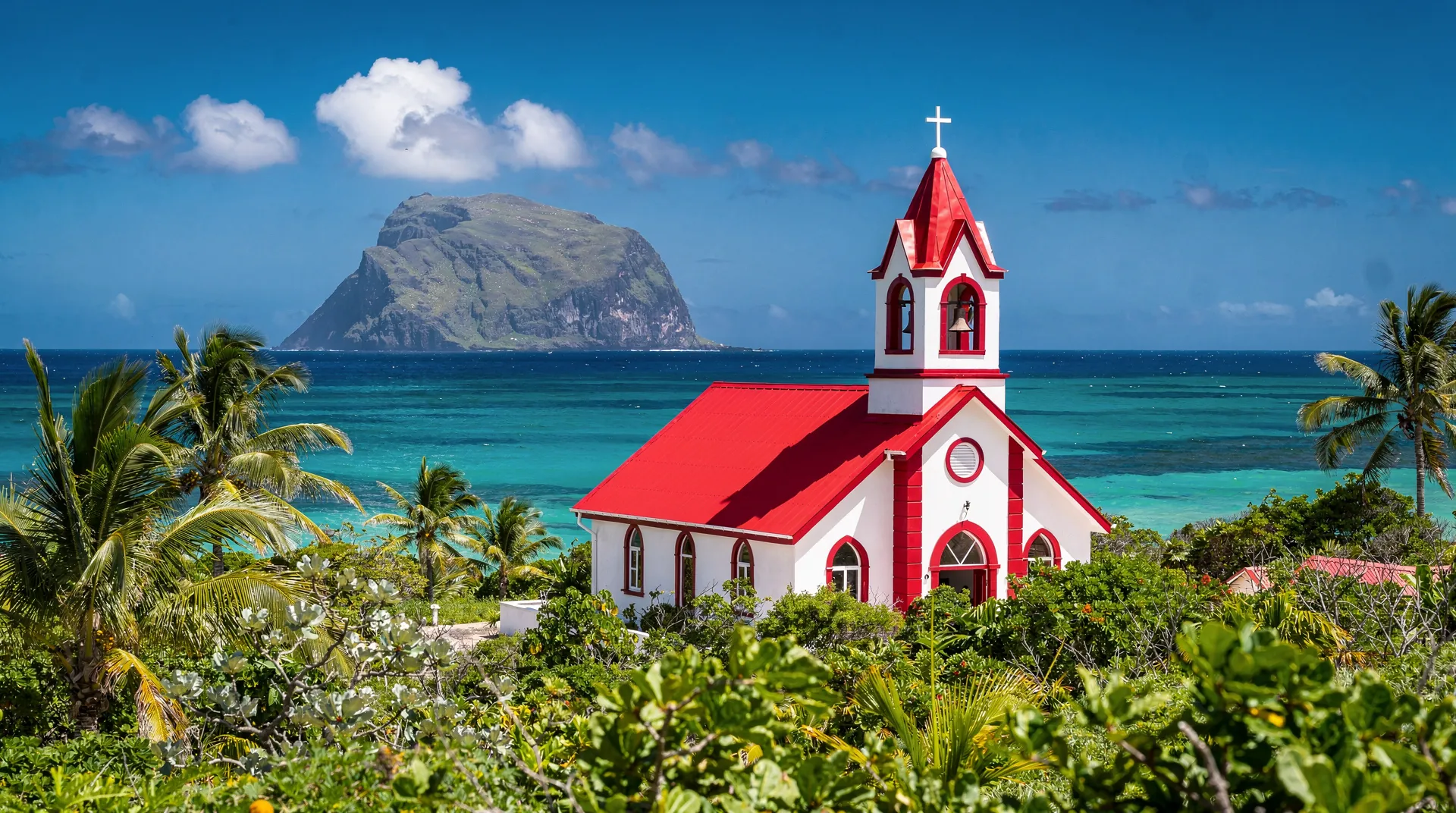
At the northernmost point of Mauritius, Cap Malheureux is a village that seems suspended between sky and sea. Less well known than Grand Baie or Péreybère, this small fishing village is nonetheless one of the most photographed spots on the island, thanks to its Notre-Dame-Auxiliatrice church with its distinctive red roof, framed by the northern islets in the background.
The name itself hints at a dark history: it was here that British forces landed in 1810 to seize control of the island from France. But today, Cap Malheureux has nothing unfortunate about it. It’s a haven of serenity, a stretch of preserved coastline where colorful fishing boats bob in the lagoon, filao trees whisper in the trade wind, and the eye drifts toward the volcanic silhouette of Coin de Mire.
This corner of the north will particularly appeal to travelers seeking Mauritian authenticity away from the tourist trail, photographers chasing the perfect composition, and anyone who simply wants to slow down, read, wander and watch the sea without being approached by beach vendors. If you’re planning your itinerary, our guide to the beaches of Mauritius will give you an overview of the north coast and its hidden gems.
At a glance
| Where | Northern tip of Mauritius, 15 minutes from Grand Baie |
| Price | Village and church free; boat excursions to Coin de Mire, Ile Plate and Ile Gabriel around €60-90 per person with lunch |
| Time needed | Half a day for the essentials, 1 to 2 days with a boat excursion |
| Getting there | Car or taxi from the airport, 50 to 55 minutes, around 1,200 to 1,400 rupees by taxi |
| Best time | May to November, ideally May-June for the light and moderate crowds |
What to do in Cap Malheureux
Photograph the Notre-Dame-Auxiliatrice church
This is the iconic image of Cap Malheureux and one of the most emblematic photographs of the whole of Mauritius. The small church, with its white walls and coral-red roof, stands facing the sea, with Coin de Mire in the background. In the morning, when the light turns golden and the sea is still calm, the scene is striking.
The church is still active and welcomes the village’s congregation every Sunday. It should therefore be visited discreetly, without disturbing services, and with respect for the sacred space. Entry is free and the grounds are well kept. The best photographs are taken between 6:30am and 8:30am, when the low light gives the red roof a warmer glow and the garden’s bougainvillea are still damp with dew.
Watch Coin de Mire from the coast
Coin de Mire (Gunner’s Quoin in English), this imposing, triangular volcanic islet, is the region’s natural landmark. From the cape, its silhouette stands out on the horizon about 7 kilometres offshore. The sight changes with the hour: green and mysterious in the morning, golden at sunset, almost black in silhouette at midday.
Several operators in the area run catamaran or boat excursions to Coin de Mire and the neighboring islets (Ile Plate, Ile Gabriel). These trips let you get close to the nature reserve islet, go snorkeling in clear waters and picnic on deserted beaches. It’s one of the best boat trips in Mauritius.
If you’d rather book a structured excursion departing from the north coast, a catamaran cruise to the northern islets will let you discover these islets in excellent conditions, with a Creole lunch on board.
Wander through the fishing village
Cap Malheureux is above all a living village, with its residents, its fishing nets laid out to dry, and its colorful pirogues pulled up on the shore. A stroll through its lanes early in the morning, as fishermen return from a night at sea, offers a glimpse of authentic Mauritian life.
A handful of small restaurants and local snack shops line the main road. Here you’ll find fresh fish curry, rougailles and gâteaux piments at very reasonable prices. It’s the perfect opportunity to chat with locals, who are always warm and proud of their village. To dig deeper into local cuisine, our Mauritius food guide lists the best table d’hôtes and restaurants on the whole island.
Coastal walk toward Anse la Raie
Heading east from Cap Malheureux, the coastal road leads to Anse la Raie and Grand Gaube through sugarcane fields and quiet, rocky coastline. This walk or scenic drive reveals a still-untouched slice of northern Mauritius, far from the big resorts. The coastal stretch between Cap Malheureux and Grand Gaube is among the least visited on the island, making it an ideal spot for nature and photography lovers.
For hikers wanting to venture further inland or along coastal trails, our guide to hiking in Mauritius covers the best options by level and region.
Excursions to the northern islands
Excursions to the northern islands are one of the highlights of a stay in or near Cap Malheureux. Ile Plate, a protected nature reserve, is one of Mauritius’s last refuges for endemic wildlife. Ile Gabriel offers white sand beaches and crystal-clear waters ideal for snorkeling. These excursions can be booked through local operators or from Grand Baie.
The crossing to the islets takes between 20 and 45 minutes depending on the departure point and type of boat. By catamaran, the journey itself is an enjoyable experience. Snorkeling around Ile Gabriel, in particular, reveals remarkable marine richness, with healthy corals and a striking diversity of tropical fish.
Kitesurfing and water sports in the area
The northern tip of Mauritius enjoys steady winds that make it a popular playground for watersports enthusiasts. The Anse la Raie area, a few kilometres east of Cap Malheureux, is one of the island’s most renowned kitesurfing spots. Our guide to kitesurfing and surfing in Mauritius details the best spots by level and season.
The beaches of Cap Malheureux
Cap Malheureux doesn’t have the sweeping white-sand beach you’ll find at Trou aux Biches or Mont Choisy. Its shores are wilder, rockier in places — and that’s precisely their charm.
The beach in front of the church
The small beach stretching in front of the Notre-Dame-Auxiliatrice church is the most photographed spot on the cape. The sand is fine, the water fairly calm, and the view of Coin de Mire is ever-present. It’s not a large swimming beach, but it’s perfect for quiet contemplation, relaxed sunbathing and gazing at the horizon.
Early in the morning, this beach is nearly deserted, making it a haven of peace before the day’s first visitors arrive. In the late afternoon, the golden light illuminating the church and reflecting off the sea creates a scene of soft, wistful beauty.
The shoreline toward Anse la Raie
Following the coast eastward, you’ll find small coves and rocky areas battered by a choppier lagoon. These spots are more popular with local fishermen and snorkelers who explore the crevices in the rocks. A few interesting spots for observing tropical fish exist close to the reef.
Snorkeling in this zone requires some experience, as the lagoon is less calm and entry points into the water are less obvious than at Blue Bay or Trou aux Biches. Bring a good mask and snorkel and explore these waters outside periods of strong wind.
Nearby alternatives
For a classic swimming beach, the beaches of Péreybère (about 8 kilometres to the southwest) and Trou aux Biches (15 kilometres) are the best options from Cap Malheureux. Both beaches are easily reached by car or bus. Our complete guide to the beaches of Mauritius compares all the options along the north coast to help you choose according to your preferences.
Where to stay in Cap Malheureux
Accommodation in Cap Malheureux is more limited than in the big resorts of the north, which is exactly what preserves its village atmosphere. That’s precisely why people come here. If you want to compare all the accommodation options in the region, our guide to hotels in Mauritius and our guide to where to stay in Mauritius give you a complete picture of the possibilities for any budget.
Guesthouses and local villas
Several family-run guesthouses offer simple, clean rooms or apartments at very affordable rates. These lodgings are run by Mauritian families who know the area inside out and can arrange excursions or recommend the best local restaurants. Warm hospitality is guaranteed.
Independent villas with pools are also available for weekly rental. These rentals are ideal for families or groups of friends who want their own space while enjoying the tranquility of the cape. Short-term rental platforms list a good selection of villas in the Cap Malheureux and Grand Gaube area.
Mid-range accommodation nearby
A few kilometres to the south, toward Grand Gaube and Péreybère, several mid-range hotels and residences offer good facilities with pools and restaurants. These bases make it easy to explore Cap Malheureux on day trips.
Resorts nearby
For those who want the comfort of a large resort while staying close to Cap Malheureux, Grand Baie (15 kilometres) has the largest hotel offering in the north, from guesthouses to four-star hotels. If your budget allows, some properties in Grand Gaube offer a very high level of service with direct views of the northern islets.
Getting to Cap Malheureux
Cap Malheureux is about 50 to 55 minutes by road from the international airport of Mauritius, via Pamplemousses and Grand Baie. By taxi from the airport, the ride costs around 1,200 to 1,400 rupees. For an organized transfer from the airport, a private transfer service guarantees a stress-free arrival, with a driver waiting for you right at baggage claim.
The bus network serves Cap Malheureux from Grand Baie and Port Louis. From Grand Baie, connections are frequent and the trip takes about twenty minutes. From Port Louis, allow about an hour including the connection. Buses don’t run at night.
Car rental in Mauritius remains the most convenient way to explore Cap Malheureux and its surroundings at your own pace. The roads are well maintained and traffic is light in this area.
Practical tips for visiting Cap Malheureux
The best time to photograph the church is early in the morning, before 9am, when the light is soft and tourists are still scarce. Golden hour in the late afternoon also produces beautiful lighting effects on the red roof.
Cap Malheureux is best visited in combination with other sites in the north: half a day at the cape is enough to see the essentials, but the area deserves a night or two if you want to add a boat excursion to the islets. A 7-day Mauritius itinerary can easily fit Cap Malheureux into a northern circuit before heading down to the center and south.
Wind can be strong at the northern tip, especially between July and September. Pack a light jacket for boat trips. Conditions are, however, ideal for windsurfing and kitesurfing enthusiasts in the areas suited to these sports.
The village’s handful of restaurants close early in the evening. It’s best to have dinner before 8pm, or plan to head to Grand Baie for evening meals if you want more choice and liveliness.
Avoid visiting Cap Malheureux during major local religious festivals if you want guaranteed peaceful access to the church. On the other hand, attending a local Sunday mass is an enriching cultural experience, provided you’re discreet and respectful.
Budget and costs in Cap Malheureux
Cap Malheureux is one of the most affordable destinations in northern Mauritius. Guesthouse accommodation runs €30-60 per night for two people, meals at local snack shops €5-10 per person, and boat excursions to the islets €60-90 per person with lunch. To plan your overall budget, our Mauritius budget guide gives precise figures depending on your type of trip.
Best time to visit
The north coast enjoys remarkable sunshine year-round. The dry season, from May to November, offers the best conditions: clear skies, temperatures between 22 and 27 degrees, a relatively calm sea and a fresh but bearable wind. It’s the ideal period for boat excursions to the islets.
The rainy season (December to April) brings tropical showers, often brief but intense. Cyclone risk exists from January to March, but Cap Malheureux remains a pleasant place to visit even in low season, for a smaller budget and fewer tourists. Our Mauritius weather guide will help you choose the ideal time based on your priority activities.
May and June, at the start of the dry season, offer a perfect balance between weather that reliably delivers beautiful days, moderate crowds and mid-range prices. The vegetation is still lush from the last rains of the wet season, and the northern islets are at their best.
Cap Malheureux for families or couples
Cap Malheureux is a versatile destination that suits different types of travelers. Families will appreciate the calm waters for children, the boat excursions that appeal to all ages, and the village’s reassuring atmosphere. Couples will find a romantic serenity at this edge-of-the-world spot, especially at sunset when the light tints Coin de Mire in shades of orange.
For honeymoons or romantic getaways, our guide to couples’ activities in Mauritius and our honeymoon itinerary include Cap Malheureux in a northern circuit that blends nature, authenticity and quiet moments far from the big tourist resorts.
Cap Malheureux or Grand Baie: which to choose?
Northern Mauritius offers two very different vibes less than 20 minutes apart. This table sums up the main differences to help you decide where to base yourself, or where to spend an evening.
| Criteria | Cap Malheureux | Grand Baie |
|---|---|---|
| Atmosphere | Peaceful fishing village | Lively, international |
| Accommodation | Guesthouses and villas, limited options | Wide choice, all budgets |
| Restaurants and nightlife | Few, close early | Many, open late |
| Beaches | Small, contemplative | Sandy beaches and calm lagoon |
| Boat excursions | Popular departure point for Coin de Mire | Wider choice of operators |
| Best for | Photography, quiet, couples | Nightlife, shopping, social scene |
Many travelers choose to stay in Grand Baie or Péreybère for convenience, while setting aside half a day to visit Cap Malheureux and its iconic church.
Frequently asked questions about Cap Malheureux
Can you visit the Notre-Dame-Auxiliatrice church at any time? Entry is free, but the church remains an active place of worship with a Sunday mass. Visit discreetly and avoid disturbing services by being mindful of celebration times.
How much time should you allow to visit Cap Malheureux? Half a day is enough to photograph the church, wander through the village and enjoy the view of Coin de Mire. Allow a full day if you add a boat excursion to the northern islets.