
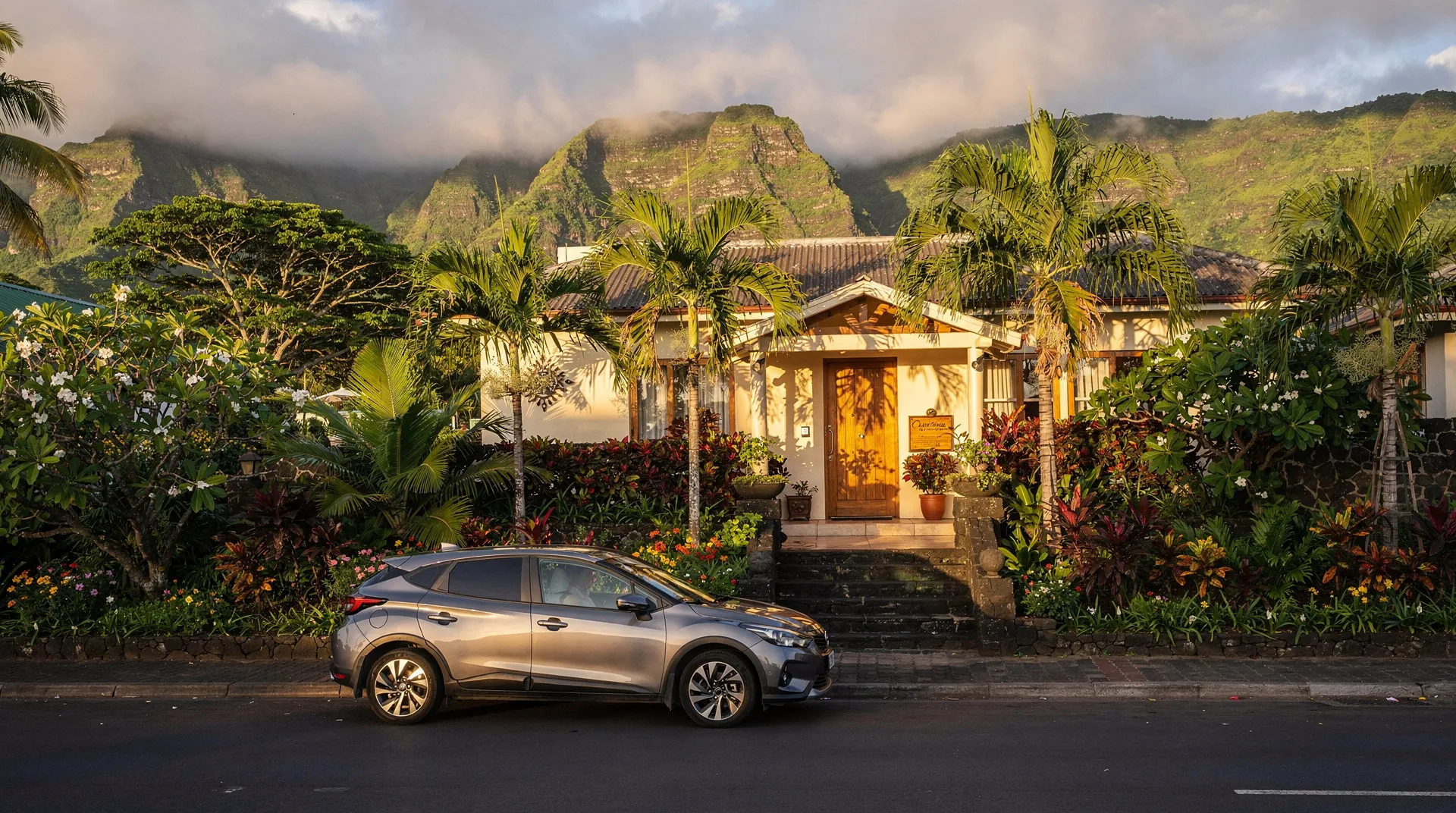
Where to Stay for a Road Trip in Mauritius: A Multi-Base Strategy
Updated: August 2026
How many bases should you plan for a one-week road trip in Mauritius?
For a week, 2 to 3 bases are enough and avoid switching hotels too often. Classic strategy: 3 nights north (Grand Baie or Trou aux Biches), 2 nights east (Belle Mare or Mahebourg), 2 nights west/south-west (Tamarin or Flic-en-Flac). You can cross the island in 1h30.
Road tripping in Mauritius: a smart way to travel
Mauritius is small but strikingly diverse. At 2,040 km², it can be crossed end to end in under two hours on the main roads. That compactness is a real advantage for the road tripper: in one or two weeks, you can see several coasts, experience radically different atmospheres, and enjoy the highlights of each region without ever spending more than ninety minutes in the car.
The multi-base strategy — staying in several different areas rather than settling into a single hotel for the whole trip — is ideal for curious travellers, for those who don’t want to choose between the luxury of the east coast and the authenticity of the west coast, or simply for anyone who wants to make the most of exploring the island. This guide helps you plan that strategy efficiently.
Before you go, check out our complete guide to road tripping in Mauritius for detailed itineraries, and our guide to driving in Mauritius for practical driving rules.
Quick answer
| Where | 2 to 4 bases spread across north, east, west and south depending on trip length |
| Price | from around 35 to 55 EUR/day all-in (car + mid-range accommodation) |
| Time needed | 7 nights minimum, 14 nights for a comfortable pace |
| Getting there | rental car essential, see our car rental guide |
| Best time to go | May to November, dry season, for clear roads and more relaxed driving |
Understanding the island’s geography before you plan
Before choosing your bases, it helps to understand how the island is laid out. Mauritius is roughly oval-shaped, about 65 km from north to south and 45 km from east to west. A central mountain range crosses the island and naturally divides it into an east coast, a west coast, a north and a south — each with its own climate, landscapes, atmosphere and range of accommodation.
The north coast (Grand Baie, Cap Malheureux) is the liveliest and most touristy — cafes, restaurants, shops, public beaches and catamaran bases.
The east coast (Belle Mare, Trou d’Eau Douce) is known for its spectacular white sand beaches, deep lagoons and luxury resorts. Quieter and less commercial than the north.
The west coast (Flic-en-Flac, Tamarin) is more family-friendly and authentic, with the island’s best weather thanks to the foehn effect from the central mountains. Sunsets here are spectacular.
The south (Mahebourg, Souillac, Chamarel) is the wildest and least touristy region — fishing villages, ocean cliffs, coloured earth and nature parks. For travellers who like to get off the beaten track.
Our north vs south comparison and our east coast vs west coast comparison help you weigh up these differences before choosing your itinerary.
Strategy for a week (7 nights)
Option A: the classic north-east-west-south
This is the itinerary for seeing the big must-sees without wearing yourself out with constant moves. The island naturally splits into three zones for a one-week trip.
Nights 1 to 3: Grand Baie or Trou aux Biches (north). These first three nights let you recover from the journey and any jet lag, visit the north’s key sights (Pamplemousses, Cap Malheureux, Gabriel Island, Mont Choisy), and enjoy the northern beaches. Grand Baie is the most practical base for anyone after nightlife and shops within walking distance. Trou aux Biches is quieter, with a spectacular beach.
Nights 4 and 5: Belle Mare or Mahebourg (east and south-east). The drive from the north takes around 1 hour 15. These two nights let you visit Ile aux Cerfs, go snorkeling at Blue Bay if you’re based in Mahebourg, have lunch looking out over the Belle Mare lagoon, and discover the more unspoilt east. Mahebourg is the budget option with local authenticity; Belle Mare is the comfort option with resort beaches.
Nights 6 and 7: Tamarin or Flic-en-Flac (west). Drive from the south-east: about 1 hour 30 via the central road. This final base lets you visit Chamarel (coloured earth, Tamarin waterfalls), the Black River Gorges national park, and enjoy the sunsets on the west coast — among the finest on the island.
Option B: prioritising the wild south via Chamarel
If you’re drawn more to wild nature than resort beaches, this variant makes the most of the often under-explored south.
Nights 1 and 2: Grand Baie (for arrival, settling in and getting your bearings).
Nights 3 to 5: Tamarin or La Gaulette (for Chamarel, the gorges and Le Morne).
Nights 6 and 7: Mahebourg (for Blue Bay, the south coast, the market and local authenticity).
This itinerary deliberately leaves out the east coast — perfect for a return trip, with something new still to discover.
Option C: the full west coast — guaranteed good weather
For travellers who want to maximise sun and good weather, the west coast is the obvious choice.
Nights 1 and 2: Grand Baie (arrival and settling into the north).
Nights 3 and 4: Flic-en-Flac (west coast, beach, diving).
Nights 5 to 7: Tamarin or Le Morne (south-west, kitesurfing, dolphins, Chamarel).
The entire west coast benefits from the same sunny microclimate, sheltered by the central mountains. A geographically coherent route, with landscapes that shift gradually from north to south.
Strategy for two weeks (14 nights)
With two weeks, you can afford to slow down, linger in an area you love, and add in some lesser-known stops.
Nights 1 to 4: north (Grand Baie or Trou aux Biches). Time to settle in, visit the island’s northern tip (Cap Malheureux, Gabriel Island reachable by catamaran), and take a catamaran outing to the northern islets. Four nights let you take it easy and really enjoy the north.
Nights 5 to 7: east (Belle Mare or Trou d’Eau Douce). Ideal for a mid-trip resort experience, with a visit to Ile aux Cerfs and time to explore the calm east coast. The waters here are clearer and warmer than anywhere else on the island.
Nights 8 and 9: south-east and Mahebourg. Discover the Mahebourg market on Monday morning, go snorkeling at Blue Bay, visit Ile aux Aigrettes, and explore the south coast (Gris-Gris, Rochester Falls, Souillac).
Nights 10 to 12: south-west (Tamarin, Le Morne or La Gaulette). The island’s wild heart: Chamarel and its seven-coloured earth, the Black River Gorges, Le Morne Brabant, and the dolphins of Tamarin Bay.
Nights 13 and 14: back to the north or Flic-en-Flac. Use the last two nights to unwind, pick up souvenirs (Chamarel rum, local herbal teas, vanilla) and calmly prepare for the trip back to the airport.
The best bases for each area
North: Grand Baie vs Trou aux Biches
Grand Baie is the most practical base: a lively village atmosphere, everything within walking distance, plenty of tour agencies. Ideal if you have children or enjoy a bit of buzz. Trou aux Biches is quieter with a gorgeous beach — better for couples. The distance between the two is 10 minutes by car.
East: Belle Mare vs Mahebourg
Belle Mare for luxury and the finest beach on the east coast. Mahebourg for authenticity and budget — and for its proximity to Blue Bay. The two are less than an hour’s drive apart.
West: Flic-en-Flac vs Tamarin
Flic-en-Flac for the long beach, the lively village atmosphere and scuba diving. Tamarin for authenticity, surfing and dolphins. Tamarin is slightly smaller and more local. The two are 20 minutes apart.
South-west: Tamarin vs Le Morne
Tamarin for authenticity and surfing. Le Morne for luxury and kitesurfing. The Le Morne peninsula consists almost entirely of large resorts — if you’re not on an all-inclusive package, you’ll depend on your car for everything.
How to choose the right accommodation for a road trip
Prioritise flexible arrivals
On a road trip, guest houses and small independent hotels are often preferable to large resorts that enforce strict check-in times. A guest house owner will send you the keys by message if you arrive late — something a resort with a standardised reception desk simply can’t do.
Apartment or villa rentals through booking platforms offer great flexibility, with self-service access codes that let you arrive whenever suits you.
Avoid all-inclusive packages on a road trip
An all-inclusive stay ties you down, both psychologically and financially, to your hotel. If you’ve paid for your meals as a package and then spend the day out on excursions, you lose money on the deal. On a road trip, half-board at most is the right format: breakfast at the hotel, lunch on the road at a local snack shop (a guaranteed culinary experience), and dinner either at a local restaurant or at the hotel if it’s convenient. Our Mauritian food guide will help you pick out dishes not to miss along the way.
Book early, especially in high season
In July-August and around Christmas-New Year, the good independent properties fill up fast. Guest houses with character and well-located small hotels are often fully booked months in advance. Book 3 to 4 months ahead for these periods. In low season (May-June, September-October), one to two weeks’ notice is usually enough.
Rental car: practical advice
For a road trip, a car is essential. Our car rental guide for Mauritius compares agencies and terms. Local agencies are often cheaper than the big international chains, but offer fewer guarantees if something goes wrong. You can also compare and book directly: car rental in Mauritius for your road trip.
Look for a car with good air conditioning (essential in summer) and a GPS or the ability to use your phone for navigation. A local eSIM lets you run Google Maps continuously without eating into your French data plan: eSIM for Mauritius — unlimited GPS navigation.
A few essential practical points:
Driving is on the left in Mauritius (a legacy of British rule) — allow half a day to adjust your reflexes. Coastal roads are generally wide and well maintained. Mountain roads towards Chamarel or through the Black River Gorges can be narrow and winding — slow down and give way to oncoming vehicles. Parking is generally free and easy outside tourist areas.
Fuel in Mauritius costs around 1.30 to 1.50 EUR/litre depending on the type. Given the island’s short distances, fuel consumption over a week-long road trip isn’t a significant expense.
Budget comparison by road trip style
For two people over 7 nights on a road trip with a rental car:
Budget style (guest houses, local restaurants, public beaches):
- Accommodation: 40 to 70 EUR/night = 280 to 490 EUR for 7 nights
- Rental car: 25 to 35 EUR/day = 175 to 245 EUR
- Food (snacks + local restaurants): 30 to 50 EUR/day for two
- Activities (snorkeling, Ile aux Cerfs excursion): 100 to 150 EUR
- Approximate total: 800 to 1,300 EUR
Mid-range style (small 3-star hotels, good local restaurants, a few premium activities):
- Accommodation: 80 to 150 EUR/night
- Car: 35 to 50 EUR/day
- Food: 60 to 90 EUR/day
- Activities: 200 to 300 EUR
- Total: 1,800 to 2,800 EUR
Luxury style (4-5 star hotels, fine dining):
- Budget 4,000 EUR and up for the same duration
Our Mauritius budget guide breaks down every expense category and will help you calibrate your budget.
Common mistakes to avoid
Too many bases in too few days. More than 4 bases in a week gets exhausting — you’ll spend more time packing than enjoying the island. Two or three bases at most is the right balance for a week.
Moving base on the same day as a big excursion. Arriving worn out at a new place in the evening after a long day of sightseeing isn’t pleasant. Plan moving days as lighter, transitional days.
Underestimating real travel times. On the map, the island looks tiny. But roads can be winding, traffic around Port Louis can be heavy at peak times, and some areas are further away than they appear. Check actual travel times on Google Maps for each leg.
Not booking headline activities in advance. Ile aux Cerfs, catamaran outings, dolphin trips in Tamarin — these popular activities sell out fast in high season. Book from your accommodation or online as soon as you’re planning.
Leaving no margin. Keep at least one unplanned day free during your trip. Mauritius always has good surprises in store — a secret beach pointed out by a local, an impromptu village market, an encounter that leads you down an unexpected path. Having a free day to extend a discovery, or simply to rest, is invaluable.
Best seasons for a road trip
For a road trip, the dry season (May to November) is ideal: dry roads, clear views from viewpoints, and the best driving conditions even in mountainous areas. May, September and October offer the best trade-off between weather, prices and crowds.
In summer (December to March), roads can be wet and some tracks to waterfalls or wild beaches can get slippery after downpours. But the landscapes are greener, the waterfalls more impressive, and accommodation prices lower.
Check our best time to visit Mauritius guide to match your dates to your travel style.
Should you book every night in advance, or stay flexible?
This is a common question for a road trip: is it better to book everything from home, or improvise on the go? In practice, a middle ground works best. Book the first two or three nights in advance (so you’re not hunting for accommodation straight off the plane, tired from the flight), as well as high-season periods (July-August, Christmas-New Year) when good places fill up fast.
For the rest, booking 3 to 5 days ahead is usually enough outside peak periods — early enough to have a good choice, late enough to adjust your route if you fall for a region and want to stay longer. That flexibility is exactly one of the great advantages a road trip has over an all-inclusive stay at a single resort.
Road tripping with a family: what changes
A road trip with children calls for a slower pace than the same itinerary as a couple. Plan for one extra base compared with the strategies above, with drives of under an hour between each stop to avoid tiredness and boredom in the car. Families particularly enjoy the north (organised activities, calm and shallow beaches like Mont Choisy) and Ile aux Cerfs for a fun day out. Our family activities guide and our where to stay with family guide cover the best options by region for travelling with children.
A road trip in Mauritius remains one of the best ways to grasp the richness and diversity of this small island that hides endless facets. A week is enough to see the highlights — two weeks let you savour it in depth.