
Mauritius in March: Weather, Activities and Tips
Updated: August 2026
What's the weather like in Mauritius in March?
March is still hot and humid but cyclone risk is decreasing. Prices drop after the school holidays. A good option for flexible travelers.
Mauritius in March: the gentle end of summer
March marks the beginning of the transition between the hot, humid summer and the mild winter to come. The month remains under the influence of the hot season, with temperatures still high and significant rainfall, but the peak of cyclone risk has passed. The atmosphere slowly starts to shift, and the first signs of relative freshness appear toward the end of the month.
For those torn between March and other months, our complete Mauritius weather guide compares every month in detail. The guide to the best time to visit helps you choose based on your profile: family, couple, budget or adventurer.
In brief: Mauritius in March
| Weather | Hot and humid, 27-31°C, declining cyclone risk |
| Sea | 27-28°C, calm lagoon on the west coast |
| Prices | Mid-range, rising 30-40% during Easter holidays |
| Crowds | Moderate, except during Easter weeks |
| Who it’s for | Flexible travelers, fans of lush nature and diving |
| Best window in the month | Second half, outside Easter holidays |
Weather and temperatures in March
Temperatures easing slightly
Temperatures in March stay close to those of January-February, but extreme heat is less frequent. Daytime highs range between 27 and 31°C along the coast, with days reaching 32°C still possible early in the month. Nights are warm (22 to 24°C), but slightly more bearable than in the height of summer.
Humid heat remains characteristic of the month, with humidity levels of 78 to 85%. The main difference from February is a slight drop in the frequency of the most stifling days. Toward the end of the month, some evenings offer a first hint of coolness that foreshadows April — a promise of the approaching austral winter.
On the central plateau (Curepipe, Vacoas, Moka), temperatures are 3 to 4°C cooler than at the coast. The highlands offer a welcome escape on the hottest days.
Weather by coast in March
Rainfall distribution remains very uneven between the coasts in March. The west coast — Flic-en-Flac, Tamarin, Le Morne — keeps its climatic edge thanks to the foehn effect of the central mountains. It remains significantly drier and sunnier than other areas.
The north coast around Grand Baie offers a pleasant middle ground — less exposed to rain than the east coast, with more developed tourist amenities and services than the west coast.
The east coast, particularly Belle Mare, continues to see heavy rainfall until mid-March. It’s not the ideal time for an extended stay on the east coast, though beautiful days are still possible.
Rainfall: a gradual decline
March is still a rainy month, though rainfall is easing slightly compared to January and February. On average, 120 to 140 mm falls on the northwest coast, over about 11 to 14 days. The rain remains tropical in nature: short and intense, generally concentrated in late morning and early afternoon, giving way to sunshine afterward.
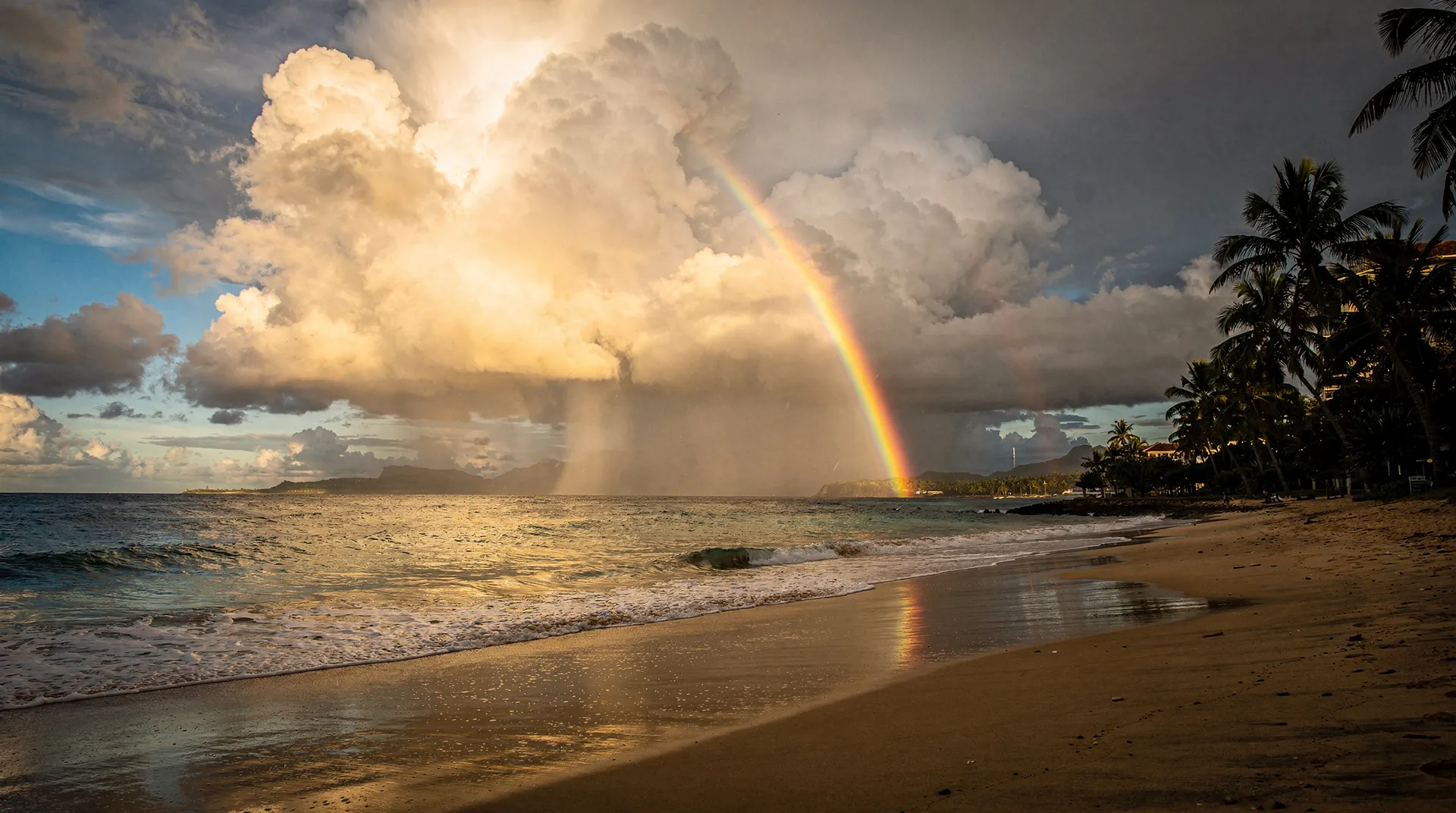
Vegetation is at its most lush in March. Waterfalls swell, forests turn deep green, and the island’s colors become extraordinarily vivid. For landscape photographers, March offers special light after the rain — a golden moment that professional photographers particularly appreciate.
Sea in March
The sea remains warm and pleasant: 27 to 28°C in March. The lagoons are still delightful for swimming. Underwater visibility starts improving slightly from its lowest point in summer: 20 to 28 m depending on the site. Swell conditions gradually stabilize as storms decrease.
The west coast — Flic-en-Flac, Tamarin, Le Morne — still offers calm, sheltered lagoons. The north coast around Trou aux Biches and Grand Baie is also pleasant. Snorkeling and diving remain of good quality across all west coast sites, with tropical marine life still very active.
Cyclone risk clearly declining
Cyclone risk drops noticeably in March compared to the January-February peak. Although the cyclone season is officially active until the end of April, statistics show a marked decline in significant events from mid-March onward. Late-season systems are rare and generally less intense than those of peak summer.
A traveler heading out in March statistically faces half the risk of encountering a cyclone compared to January or February. Our guide to cyclones in Mauritius explains the warning systems and the right precautions to take, even though the risk in March is significantly reduced.
Crowds and prices in March
Moderate crowds
Outside French school holidays (which sometimes partially fall in March depending on the region and Easter’s date), March is a month of moderate crowds. After the end-of-season rush and the last high-season travelers, the island returns to a calmer pace. Beaches are less crowded, restaurants more accessible and the atmosphere more relaxed.
Easter holidays, which fall in March or April depending on the year, are the month’s main crowd peak. Check the school calendar to anticipate these variations — prices can rise by 30 to 40% during this window.
Mid-range prices
Rates are noticeably lower than in December-January. Outside the Easter period, hotels offer more accessible prices, with frequent promotions to fill the last rooms of the hot season. It’s the time when travelers who watch for price alerts find good deals on quality properties.
Airlines often offer mid-range fares in March — higher than the true low season (September), but well below the December and July-August peaks. Our Mauritius budget guide gives you detailed benchmarks for every spending category.
Recommended activities in March
Diving and snorkeling: still excellent
March is excellent for diving and snorkeling. The warm sea (27-28°C) and abundant marine life of the summer season are still present. Divers find pleasant conditions, including sightings of sea turtles still active, reef sharks in the channels and stingrays resting on the sand. Water temperature allows for diving in a light wetsuit or shorty.
The lagoon at Blue Bay, a protected marine park on the southeast coast, offers top-tier snorkeling in March. The regular presence of green turtles in this lagoon makes it one of the most popular spots among snorkelers. The most sheltered beaches of Mauritius on the west coast are perfect for extended sessions during this period.
For a guided experience in the marine park, the snorkeling excursions at Blue Bay include equipment and a guide covering the best coral spots.
Discovering Chamarel and the colored earth
After the rains, the colors of Chamarel’s ferruginous earth are at their most intense. The combination of ochre, red, purple and green creates a landscape unlike anywhere else in the world. The Chamarel waterfall — the island’s tallest — is at full flow in March. The sight of this waterfall framed by lush tropical vegetation is one of the most impressive on the whole island.
Pamplemousses Garden and inland nature
The giant Victoria amazonica water lilies at the Pamplemousses botanical garden are in full bloom in March. The garden is lush and flowering, at its finest state of the year. Red-collared parakeets nest in the trees during this period. If you’re in the north of the island, visiting Pamplemousses in March is a remarkable sensory experience.
The Black River Gorges are also outstanding in March, with vegetation at its peak. Java deer and cynomolgus green monkeys are easily spotted amid the lush nature. Our Mauritius hiking guide points out the best trails for March — early morning starts are essential to avoid the heat.
Catamaran excursions and dolphin encounters
Catamaran trips are possible in good weather, and March often offers nice windows between showers. The spinner dolphins of Tamarin bay are present year-round in the mornings — swimming with dolphins in March is an experience of identical quality to that of the winter months.
Trips to Ile aux Bénitiers in the southwest lagoon, combining Crystal Rock, snorkeling and a barbecue on board, make for an excellent day out in March. Book preferably for the mornings, before possible afternoon showers.
Ile aux Cerfs in March
Ile aux Cerfs is accessible and beautiful in March. The turquoise lagoon and white sand beaches are spectacular, and the still-warm waters are perfect for swimming and snorkeling. Make the most of it before the winter trade winds make the crossing to the east coast more challenging.
The most complete option remains the catamaran excursion to Ile aux Cerfs with lunch on board, combining the crossing, snorkeling and a seafood meal on the boat.
Family and couple activities
March suits families with children traveling during the Easter holidays. The warm sea, varied water activities and the island’s cultural richness suit all ages. Our family activities guide in Mauritius lists the best options. For couples, the west coast’s stunning sunsets and the wealth of romantic experiences available make March a pleasant honeymoon month. Our couple activities guide will give you great ideas.
Activities to adjust
High-altitude hiking: favor early morning starts (before 8am) to make the most of the relative coolness. Avoid mountain outings after heavy rain — trails can be slippery and muddy for 24 to 48 hours.
Wind sports: March is still too calm for high-level kitesurfing. The trade winds haven’t fully returned yet. For kitesurfing and surfing, wait for May-June.
Swimming on the south coast: the south coast can be rough in March during residual disturbances. Check local conditions before swimming at Gris-Gris or Souillac.
Events and festivals in March
Holi (Hindu festival of colors, often in March): one of the island’s most joyful festivals. The Hindu community, which makes up around 50% of the population, celebrates spring by throwing brightly colored powders at each other. A participatory, festive celebration open to respectful visitors. The Monday market in Mahébourg and the Wednesday market in Flacq take on particular color around this period.
Maha Shivaratri (if in March according to the lunar calendar): a massive pilgrimage to Grand Bassin. Hundreds of thousands of Hindu pilgrims walk from all over the island — an unforgettable sight worth planning your trip around.
Sugar cane harvest festival: in some regions, March marks the start of the harvest. Trucks loaded with cane on the roads, sugar mills running at full capacity — a traditional agricultural sight that’s part of Mauritian identity.
Ugadi (Telugu Hindu New Year, sometimes in March): a family and community celebration marking the start of a new lunar year. Temples are decorated with flowers and families gather for traditional meals.
Recommended areas in March
West coast (Flic-en-Flac, Tamarin, Le Morne): still the safe bet for maximizing sunshine and minimizing rainfall. Le Morne offers spectacular sunsets, and the peninsula is stunning this colorful season with vegetation at its best.
South coast (Blue Bay, Mahébourg): the Blue Bay lagoon is especially appealing in March. Warm water, living coral, exceptional wildlife. The Mahébourg region is pleasant for cultural exploration — the historical museum of the Battle of Grand Port, the Monday market, creole architecture.
Central plateau: waterfalls and natural spaces are spectacular after the rains. Chamarel, the Black River Gorges and the forests around Curepipe are at their visual peak. A day combining Chamarel’s colored earth and the gorges is especially recommended.
North coast (Grand Baie, Trou aux Biches): pleasant for a main base with a good range of restaurants and activities. Grand Baie’s buzz is still present in March without the overcrowding of high season.
What to do on rainy days in March
March showers, though short, can spoil an entire day if they set in during the morning. Our guide to rainy-day excursions in Mauritius lists indoor options: the Blue Penny Museum and the Aapravasi Ghat in Port-Louis, rum distilleries like the Chamarel rum distillery, hotel spas and spa and wellness sessions, or the Sugar Adventure Museum near Pamplemousses.
In practice, the best strategy in March is to schedule outdoor activities early in the morning — tropical rains most often fall in late morning or early afternoon — and save indoor visits for that window. This approach lets you avoid losing almost any vacation day.
Travel insurance: a point not to overlook in March
March remains within the official cyclone season window (until the end of April), even though the risk has dropped significantly compared to January-February. Taking out travel insurance suited to Mauritius before departure covers weather-related mishaps (cancelled flights, cut-short stays) as well as medical costs, which are often poorly covered by standard policies outside the European Union.
Accommodation and transport in March
Accommodation: air conditioning remains essential early in the month. By late March, it becomes less necessary. Accommodation with a powerful ceiling fan can be enough by the end of the month if you handle warm weather well. Our guide to accommodation in Mauritius covers all the options available for your budget.
Transport: March is a good month for renting a car and exploring the whole island. Our Mauritius car rental guide recalls the practical rules — mountain roads can be slippery after rain, so adjust your speed.
Verdict: should you go to Mauritius in March?
March is an honest month, neither exceptional nor disappointing. It offers a lush, colorful island at its greenest, a warm and lively sea, prices lower than high season, and clearly declining cyclone risk. Humid heat is still present, especially early in the month.
It’s a good option for travelers who want to enjoy the warm sea, avoid the austral winter crowds and skip high-season prices. Fans of diving, local culture and exploring the island’s interior will find plenty to enjoy. Families with children also do well in March, provided they accept the heat and plan physical activities in the morning rather than in the afternoon.
If you can wait a month, April brings a clear improvement on nearly every front. For the best conditions of the year, May and October remain the absolute references according to our guide to the best time to visit Mauritius.
Overall rating for March: 6.5/10 — A pleasant transition month, better than January-February but not yet the peak of the cool season. Excellent for travelers curious about local culture and green landscapes.