
Coin de Mire, Île Plate and Îlot Gabriel: Boat Excursions from the North
Updated: August 2026
Can you visit Coin de Mire without an organised excursion?
No, Coin de Mire is a protected nature reserve. Access is only possible by boat with licensed operators. The island itself isn't open to tourists — you sail around it by boat.
Coin de Mire, Île Plate and Îlot Gabriel: the paradise islands of northern Mauritius
The north of Mauritius conceals an archipelago of small, unspoiled islands and islets that make up one of the most spectacular settings in the Indian Ocean. Coin de Mire — also known as Gunner’s Quoin — rises rocky and dramatic 8 kilometres offshore from Grand Baie, alongside Île Plate and Îlot Gabriel, two islets with crystal-clear waters and deserted beaches that look every bit like the tropical paradise of your imagination.
These islands can’t be reached on foot from the coast — they’re all surrounded by lagoon waters and accessible only by boat. That very fact is what keeps them so unspoiled and so spectacular: with no bridge, no road, no permanent tourist infrastructure, they’ve kept their wild beauty intact. An excursion to these islands ranks among the most memorable experiences of a stay in Mauritius, and the photos you bring back are the ones that make friends back home dream.
| At a glance | |
|---|---|
| Where | Offshore from Grand Baie, in northern Mauritius |
| Price | Around 2,500 to 4,000 MUR/adult for a day catamaran trip, more for a private speedboat |
| Time needed | A full day (generally 7:30am-4pm) |
| Getting there | By boat only, from Grand Baie, Péreybère or Trou aux Biches |
| Best time to go | May to November (calm seas, best visibility) |
Coin de Mire: the north’s landmark rock
Introduction and history
Coin de Mire (Gunner’s Quoin in English — a reference to the wedge-shaped gun block used by artillerymen, describing the island’s shape as seen from the sea) is a distinctively shaped volcanic island, with sheer cliffs rising 280 metres above the ocean. Seen from the north coast or from a boat, its silhouette is instantly recognisable — a tilted block of basalt jutting from the water like a giant tooth.
The island is a protected nature reserve managed by the National Parks and Conservation Service of Mauritius. It’s home to colonies of rare seabirds, including the masked booby and the great frigatebird, and its coastal vegetation is practically untouched thanks to the absence of introduced predators. Landing on the island is generally forbidden for tourists in order to protect these sensitive species.
What you can do there
Excursions around Coin de Mire mainly offer snorkelling and diving around the reefs that surround the island. These sites are among the most highly rated in northern Mauritius: the drop-offs of Gunner’s Quoin are known for their spectacular marine life — reef sharks, sea turtles, barracudas, trevallies and a remarkable density of colourful reef fish.
Scuba diving around Coin de Mire is considered by many to be among the best on the island. Visibility can exceed 30 metres in the dry season, and the variety of terrain — vertical walls, coral gardens, wrecks — suits beginner and experienced divers alike. Our complete guide to snorkelling and diving in Mauritius covers all the details on required levels and the best times to dive.
Boats generally circle the island before anchoring in a protected zone for the water entry. Watching boobies dive vertically from their cliff into the blue waters, or seeing frigatebirds circle above the boat waiting for a scrap of bread, is all part of the show.
Île Plate and Îlot Gabriel: dream beaches
Two islets, two experiences
Île Plate and Îlot Gabriel are two neighbouring islets a few kilometres east of Coin de Mire. Unlike the rugged rock of Coin de Mire, these two islets offer immaculate white sand beaches, shallow, intensely turquoise waters, and seabeds easily explored by snorkelling straight from the beach.
Îlot Gabriel is the more frequented of the two. Its main beach, a few hundred metres long, is ringed by a lagoon so clear you can see the bottom at 5 metres depth from the boat. The corals fringing the beach shelter a multitude of tropical fish — blue tangs, butterflyfish, parrotfish, damselfish — that are easy to spot with just a mask and snorkel from the beach.
Île Plate, somewhat larger, is a nature reserve with more developed vegetation. Some excursions stop here for a swim or a lunch break on the beach.
Snorkelling and swimming
Snorkelling around Îlot Gabriel is remarkably accessible, even for beginners. The lagoon’s shallow waters let you enter straight from the beach without needing to swim hard. The fish are used to human presence and approach easily. Stingrays sometimes settle on the sandy bottom, and sea turtles regularly visit the outer reefs.
Snorkelling gear: most excursions provide masks and snorkels. Check when booking whether equipment is included or costs extra. If you have your own gear, bring it along — fins let you explore further and more interesting spots.
For an unforgettable experience with snorkelling at Île Plate and Îlot Gabriel, a Creole lunch on board and dolphin watching, book a boat excursion to the northern islands from Grand Baie with a quality operator. These trips generally include transport, lunch and basic equipment.
Planning your excursion
Choosing your type of excursion
There are two main categories of excursion to the northern islands.
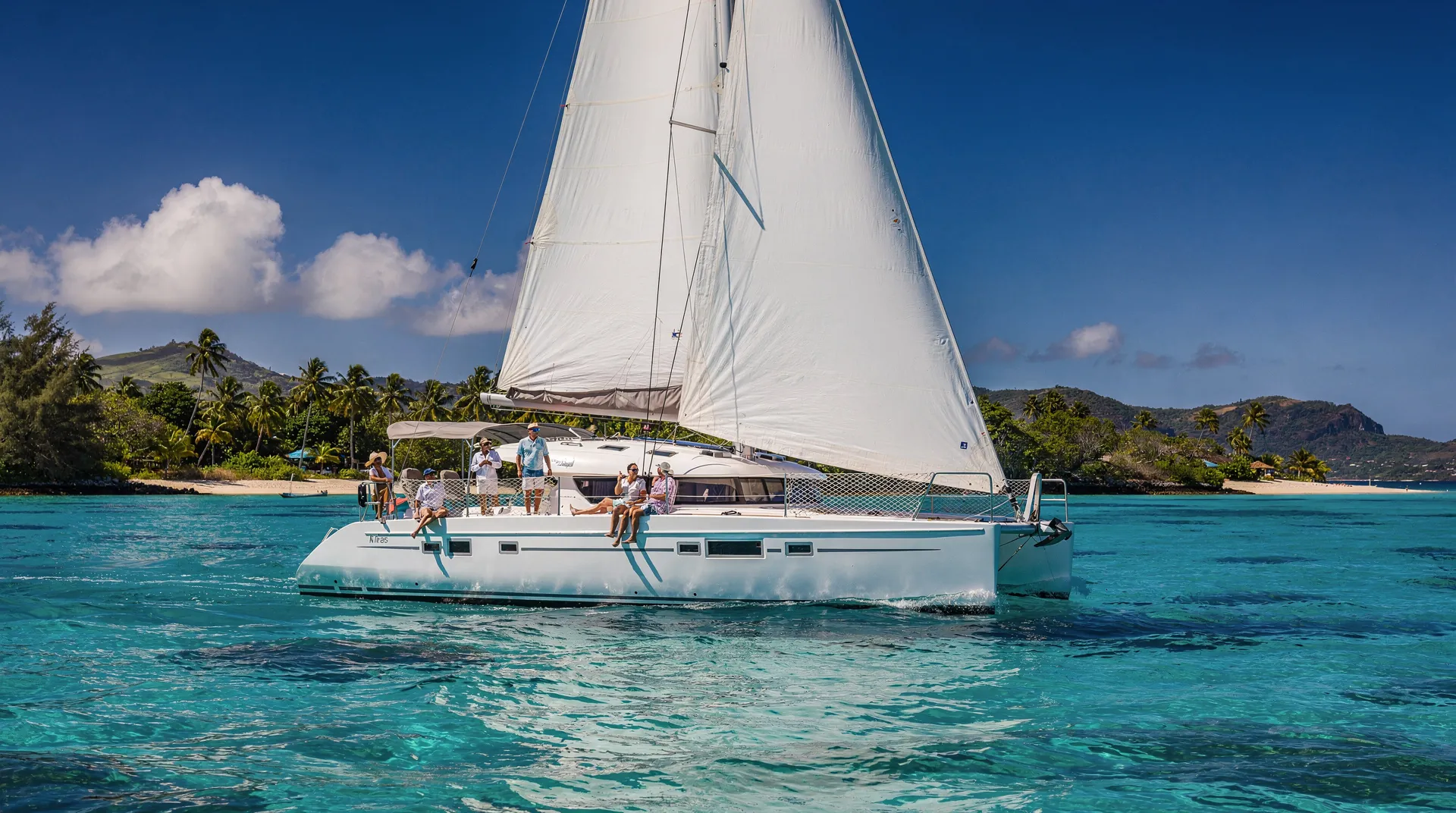
Catamaran excursions are the most popular. The catamaran offers more space, more stability and a more comfortable experience, especially for those prone to seasickness. These trips generally run for a full day (7am-4pm), with several snorkelling stops, a Creole lunch served on board, and a return leg that sometimes includes a “sailing” session adding a romantic touch to the day. Prices range between 2,500 and 4,000 rupees per adult depending on the operator and the inclusions.
Speedboat trips are faster and reach the islands in 20 to 30 minutes (versus 1 hour by catamaran). They’re less comfortable but let you combine more sites in a day. Some operators also offer exclusive speedboat trips for couples or small groups, with fewer people around.
Diving trips from the PADI centres of Grand Baie and Péreybère give access to the best dive sites around Coin de Mire with full professional equipment. These trips are aimed at certified divers.
Which port to leave from
The vast majority of excursions to the northern islands depart from Grand Baie, home to the largest marina in the north. Péreybère and Trou aux Biches also have a few operators, mainly serving guests staying in those areas.
If you’re staying in a distant area (east coast, south), it’s best to head to Grand Baie the evening before or early in the morning to board — boats generally leave between 7:30am and 9am depending on the operator. Our guide to travel times between areas of Mauritius will help you work out your departure time from your hotel.
Dolphin watching
The waters off the north-west coast of Mauritius (mainly around Tamarin and along the north coast) are frequented by pods of bottlenose and spinner dolphins. Many excursions to the northern islands include a stop in areas where dolphins have been spotted. Watching from the boat is usually possible, and some operators offer supervised swimming with dolphins.
This practice has been regulated in Mauritius since 2020. Reputable operators respect minimum distances and approach times so as not to disturb the animals. Be wary of offers promising “guaranteed dolphin swims” — no one can guarantee the presence of wild, free-ranging animals, and operators who make that claim often have questionable practices.
Which season for these excursions
The northern islands can be visited year-round, but the best period is the dry season from May to November. During these months, the sea is calm, underwater visibility is at its best (often 25 to 30 metres) and there’s no risk of cyclones.
From December to April, excursions are still possible but depend on weather conditions. Trade winds can churn up the sea on certain days, making the crossing uncomfortable or even impossible. Operators cancel trips in rough seas (force 4 and above on the Beaufort scale). Our guide to weather in Mauritius explains in detail the climate specifics of each season and each coast.
Detailed budget for a northern islands excursion
The price advertised by operators sometimes hides extra costs. Here’s what to plan for to budget correctly for this outing.
A full-day catamaran excursion generally includes transport, supervised snorkelling, a Creole lunch (often grilled fish barbecue, rice, salads) and soft drinks. Budget an extra amount for alcohol on board if it’s not included, and for fin rental if you don’t have your own gear (around 100 to 200 MUR). Private speedboat excursions, pricier, tend to be negotiated from 8,000 to 12,000 MUR for the boat (split among participants), but offer a pace and itinerary tailored to you — a good option for a group or a honeymoon. Our guide to budgeting for Mauritius helps place this expense within your overall trip budget.
Also factor in the transfer to the departure port if your hotel isn’t in the north: a return taxi trip from the west or east coast can add 20 to 40 EUR to the day. Those already staying in the north only need to walk or take a short local taxi ride.
With children: what you need to know
Families with children can absolutely enjoy this excursion, provided they choose the right type of trip. The catamaran, being more stable, suits young children prone to seasickness better than a speedboat. The shallow waters around Îlot Gabriel are ideal for a first, supervised snorkelling experience, unlike the deeper drop-offs of Coin de Mire, which are reserved for divers and strong swimmers.
Bring life jackets (often provided, but check when booking), a hat and extra sun protection: sunlight reflected off the water exposes you more than it would on land. To plan a family stay in this part of the island, our guide Mauritius with a family covers the best-suited areas and activities.
Practical tips
Against seasickness: If you’re prone to seasickness, take preventive medication (Nautamine, a Scopoderm patch) the evening before. The outbound journey to the islands can be choppy depending on the wind — the return leg by catamaran with the wind behind you is generally more comfortable.
Sunscreen: Choose mineral sunscreens (zinc oxide, titanium dioxide), which are less harmful to coral. Several countries have banned chemical sunscreens in their protected marine areas.
Hydration: Bring water even if the boat provides drinks. The sun on the water is intense, and it’s easy to become dehydrated without noticing.
Camera equipment: A phone in a waterproof case or a GoPro camera will considerably enrich your snorkelling memories.
From Grand Baie or Péreybère, excursions to Coin de Mire and the northern islets make for one of the most memorable days of a stay in Mauritius. The wild beauty of these unspoiled waters, the spectacle of marine wildlife and the Creole lunch on board the catamaran combine into an experience that’s hard to forget. Round out your discovery of the north with our guide to hiking in Mauritius to explore the island from land, and check out our guide to 7-day itineraries to fit these excursions into a complete programme.
To base yourself in the north, our guide to where to stay in Mauritius covers every price range, from the guesthouses of Trou aux Biches to the large resorts of Grand Baie. To get to the north from the airport, book a private airport transfer to reach your hotel stress-free before heading out to sea the next day.
Our guide to travel times between areas of Mauritius will give you precise durations and the best routes. Mauritian gastronomy is the perfect complement to a day at sea — discover where to eat once you’re back from the boat. To prepare your overall budget, our guide to budgeting for Mauritius factors in the cost of sea excursions when working out a full trip.