
Tipping in Mauritius: customs, amounts and situations
Updated: August 2026
Tipping in Mauritius: a practical and cultural guide
Tipping is one of the questions travelers ask themselves most often before heading abroad. Should you leave a tip? What amount is appropriate? In which situations is it expected, and in which is it optional? And above all: how do you avoid coming across as either overly generous to the point of seeming condescending, or stingy to the point of causing offense?
In Mauritius, the customs are fairly simple and welcoming. Tipping culture exists here without being as pervasive as in the United States. A tip is never mandatory but always appreciated — and in an economy where tourism-sector wages remain modest, it makes a real difference to employees.
At a glance
| Custom | Not mandatory but culturally welcomed, especially where no service charge applies |
| Typical amount | Around 10% at restaurants, 100-500 rupees elsewhere depending on the service |
| Indicative budget | Around 6,000-7,000 rupees (130-140 euros) for two over a week |
| How to pay | In cash, in Mauritian rupees, handed directly to the person |
| What to check | Whether a “service charge” is already included in the bill |
To plan your overall travel budget, our Mauritius budget guide and our real-life budget report for a trip to Mauritius will help you factor in this expense.
Economic context: why tipping matters
The Mauritian minimum wage is around 13,000-15,000 rupees per month (about 260-310 euros). Tourism-sector employees (waiters, housekeepers, drivers, guides) generally earn 20,000 to 35,000 rupees per month, depending on their position and employer.
Relative to the local cost of living (rent, food, transport), these wages allow people to live decently in Mauritius. A tip is therefore a welcome bonus, not a survival necessity.
Large luxury hotels sometimes include a “service charge” of 10-15% on bills. In that case, an additional tip is optional.
Tipping by type of stay
The expected tip amount varies significantly depending on the accommodation package chosen. Here’s a comparative overview:
| Type of stay | Expected tip | Note |
|---|---|---|
| All-inclusive hotel | Moderate, often partly included via the service charge | Check the bill before tipping again at the restaurant |
| Standard hotel (breakfast or half-board) | Standard, 10% at restaurants, a daily amount for the room | Staff rely more on tips than in all-inclusive resorts |
| Villa with staff (cook, housekeeper) | More generous, often a lump sum at the end of the stay | A collective tip of 1,000 to 3,000 rupees per week is common depending on staff size |
| Guest house or B&B | Optional but appreciated | The owner rarely receives a service charge, a small gesture is welcome |
Restaurants: tipping at the table
The general rule
In tourist restaurants, brasseries and hotel restaurants, a 10% tip on the bill is the usual standard if you were happy with the service. This is slightly lower than European standards (generally 10-15% in France) but consistent with local practice.
For a meal for two costing 2,000 rupees (about 40 euros), a tip of 200 rupees is appropriate.
The service charge
Always check your bill before leaving a tip. Some restaurants automatically include a 10% “service charge” in the total. In that case, an additional tip isn’t expected, although a small extra for exceptional service is always appreciated.
The phrase “service not included” — or its absence — indicates whether service is included.
Street food and small snacks
For meals at small Mauritian snack stalls, food markets and street stands, tipping isn’t really an established practice. Prices are already very low (a full meal for 100-200 rupees) and service is often quick counter-style. If you’d like to show your appreciation, rounding up or leaving a few coins is a nice gesture but not expected.
Dining at luxury hotels
At the restaurants of major resorts (Shangri-La, One&Only, Constance, Heritage), the level of service is very high and meal prices considerably higher. A 10-15% tip is appropriate for attentive service. For a gourmet dinner at 200-300 euros per person, a tip of 30-50 euros for two is reasonable. To choose where to eat, our guide to Mauritian cuisine lists the island’s best tables, from street snacks to Michelin-starred restaurants.
Hotels and accommodation
Housekeepers and chambermaids
Room cleaning staff are often the least well paid and least visible of hotel teams. A tip of 100-200 rupees per day, left on the nightstand or on the pillow with a “thank you” (or “merci/thank you”) note, is a much-appreciated gesture.
Many travelers leave one lump-sum tip at the end of their stay rather than daily. This approach works, but make sure the tip reaches the actual person concerned if possible.
Porters and bellhops
For a porter who carries your bags to the room: 50-100 rupees per person helped (so 100-200 rupees if there are two of you). For larger hotels with a lot of luggage, tip accordingly.
Concierge
If your hotel’s concierge has gone above and beyond (a difficult reservation at a fully booked restaurant, organizing a custom excursion, solving a problem), a tip of 200-500 rupees at the end of your stay is a nice way to show appreciation.
Room service
For room service, if the service charge isn’t already included in the bill, 100-200 rupees per delivery is appropriate.
Drivers and transport
Taxis
For taxis where the fare has been negotiated in advance (the norm in Mauritius), tipping isn’t automatic but is welcome for good service. Rounding up the fare or leaving 10% of the amount is appropriate.
For example: a fare negotiated at 550 rupees — leave 600 rupees and say “keep the change.” For everything about fares and negotiating, see our taxis in Mauritius guide.
Day drivers
If you’ve hired a taxi for the day (a common option in Mauritius for 2,500-4,000 rupees), a tip of 200-500 rupees for an 8-10 hour day is generous and much appreciated, especially if the driver also acted as a guide.
Transfer drivers
For airport transfers organized through your hotel or an agency, a tip of 100-200 rupees is a polite gesture if you received good service (help with luggage, on-time pickup…). Our airport transfer in Mauritius guide details all the options, from private transfers to shared shuttles.
Activities and excursions
Hiking guides
For a guided hike (national park, Le Morne Brabant, Lion Mountain), a tip of 200-500 rupees per group for a half-day, and 500-800 rupees for a full day, is fitting recognition for a good guide.
Surf, kitesurf and diving instructors
For a 2-3 hour lesson, 200-300 rupees per instructor is an appreciated gesture. For a memorable first dive, 300-500 rupees for the dedicated instructor reflects the value of such an experience.
Catamaran and sea excursion crews
A catamaran crew usually includes the captain, a sailor and sometimes a cook. A collective tip of 500-1,000 rupees for the crew at the end of a day at sea is customary and expected. Some operators mention this discreetly in their pre-departure instructions. To easily book your catamaran day trip from France with a clear cancellation policy: see Ile aux Cerfs catamaran excursions.
Guides at tourist sites
At the Pamplemousses garden, sugar factories, or the Chamarel rum distillery — the guides who lead tours appreciate 100-200 rupees per person if the visit was enriching.
Spas and treatments
Masseurs and beauticians
For a 60-90 minute massage, a tip of 200-400 rupees per therapist is customary practice at resort spas. For a longer treatment or a couples’ experience (duo massage, flower bath), tip accordingly.
Independent spas (outside hotels) generally follow the same customs. Check whether a service charge is already included in the bill. To choose the right place, our spa and wellness in Mauritius guide lists the island’s best addresses.
Getting rupees for tips
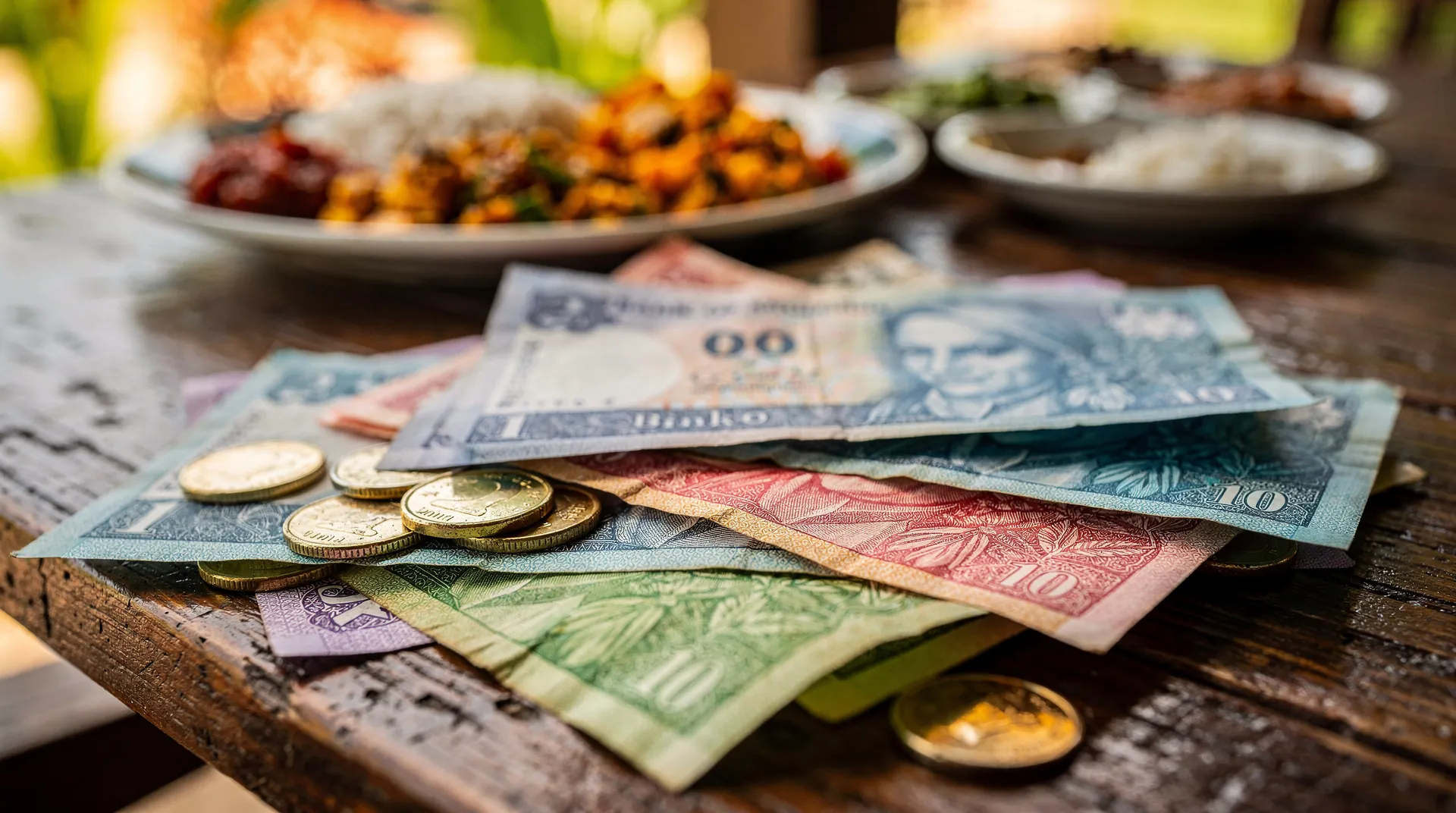
Always plan to carry small denominations of Mauritian rupees for everyday tips — 25, 50 and 100 rupee notes are the most practical. ATMs are present in all tourist centers (Grand Baie, Flic-en-Flac, Port-Louis, the airport) and generally dispense 500 and 1,000 rupee notes, which are worth breaking as soon as you arrive at a convenience store or restaurant so you have change on hand throughout your stay.
Our currency in Mauritius guide details exchange rates, the best places to withdraw cash and how cards are used locally. Always keep a small cash reserve on you: many small businesses and independent guides don’t accept cards.
How to give a tip in Mauritius
In cash, in Mauritian rupees
Tips are best given in cash (Mauritian rupees), directly to the person concerned. Avoid asking the cashier to “pass on” a tip — you can never be sure it will actually happen.
At restaurants, leave the tip on the table as you leave, or hand it directly to the server with a smile and a “thank you.”
By card
Some tourist restaurants let you add a tip to your card payment on the terminal. This is convenient if you don’t have cash, but check that it actually goes to the staff (at some establishments, card tips are absorbed by the house).
Discretion and naturalness
In Mauritius, as everywhere, a tip should be given naturally, without ostentation. No need for grand gestures or speeches — a smile, direct eye contact and a “thank you” or “merci” alongside the gesture are enough.
What not to do
Don’t promise a tip in advance as a bargaining chip for better service. This can come across as condescending.
Don’t overlook invisible staff (housekeepers, laundry staff) in favor of waiters alone. They’re often the ones working hardest for the least recognition.
Don’t tip in foreign currency if you can avoid it. Euro notes are hard for local staff to exchange. Rupees are always preferable.
Don’t confuse tipping with bargaining: haggling over prices (taxis, crafts, markets) is normal practice in Mauritius. A tip is a distinct gesture of thanks and shouldn’t be confused with a bargaining “bonus.”
Weekly tipping budget
To help plan your budget, here’s a reasonable estimate of tips for two people over 7 days:
- Restaurants (14 meals x 200 rupees): 2,800 rupees
- Housekeeping (7 days x 200 rupees/day): 1,400 rupees
- Taxis (5-6 rides x 100 rupees): 500-600 rupees
- Excursion guides (2-3 x 400 rupees/group): 800-1,200 rupees
- Spa (1 session x 400 rupees/therapist x 2): 800 rupees
- Estimated total: 6,300 to 6,800 rupees (about 130-140 euros)
This figure is an indication for a couple with an average activity schedule. It can vary considerably depending on your travel style, accommodation category and number of guided activities.