
Mauritius, Reunion or Seychelles: which one should you choose?
Updated: August 2026
Mauritius, Reunion or Seychelles: which one should you choose?
Mauritius is the most versatile (beaches, culture, activities, mid-range budget), Reunion is the most adventurous (mountains, hiking, volcano), and Seychelles is the most luxurious (postcard beaches, but a high budget). For a first tropical trip, Mauritius offers the best all-round compromise.
The right way to compare these three destinations
Mauritius, Reunion and Seychelles share the Indian Ocean, tropical temperatures and a certain idea of paradise. But they are three radically different travel propositions — and choosing between them has less to do with beauty than with your traveler profile, your budget and what you expect from a tropical trip.
To make the comparison useful, we’ve broken the analysis down into six dimensions: beaches, activities, budget, climate, access and traveler profile. For each one, we say who wins and why — no sugarcoating.
| Mauritius | Reunion | Seychelles | |
|---|---|---|---|
| Status | Independent island, Mauritian rupee | French overseas department, euro | Independent archipelago, Seychellois rupee |
| Direct flight from Paris | About 11 h | About 11 h | About 10 h (or a Gulf stopover) |
| Couple’s budget, 8 days | About €5,200-6,800 | About €4,300-5,600 | About €9,800-15,100 |
| Best time to visit | May to December (quiet in Jan-Feb) | April to November | Year-round |
| Without a car | Doable (buses, taxis) | Difficult (terrain) | Difficult (transfers) |
Overview
Summary comparison
| Criterion | Mauritius | Reunion | Seychelles | |
|---|---|---|---|---|
| Beaches | Extensive turquoise lagoon | Few, mostly wild | Postcard-perfect granite beaches | |
| Land activities | Moderate (Chamarel, Casela) | Excellent (volcano, cirques) | Limited | |
| Water activities | Excellent | Good (but few lagoons) | Excellent | |
| 4-star hotel budget | €120-220/night | €100-180/night | €350-700/night | |
| Average meal | €12-25/person | €15-30/person | €30-60/person | |
| Direct flight from Paris | 11 h | 11 h | 10 h (or stopover) | |
| Best for Recommended | First tropical trip, families, couples | Sporty types, hikers, teens | Honeymoons, well-off travelers |
Criterion 1: the beaches
Seychelles wins this contest hands down. Anse Source d’Argent (La Digue), Anse Lazio (Praslin), Beau Vallon (Mahe): these are literally the beaches that screensavers are made of. Pristine white sand, red granite boulders, translucent turquoise water. It’s the “dream beach” promise in its purest form.
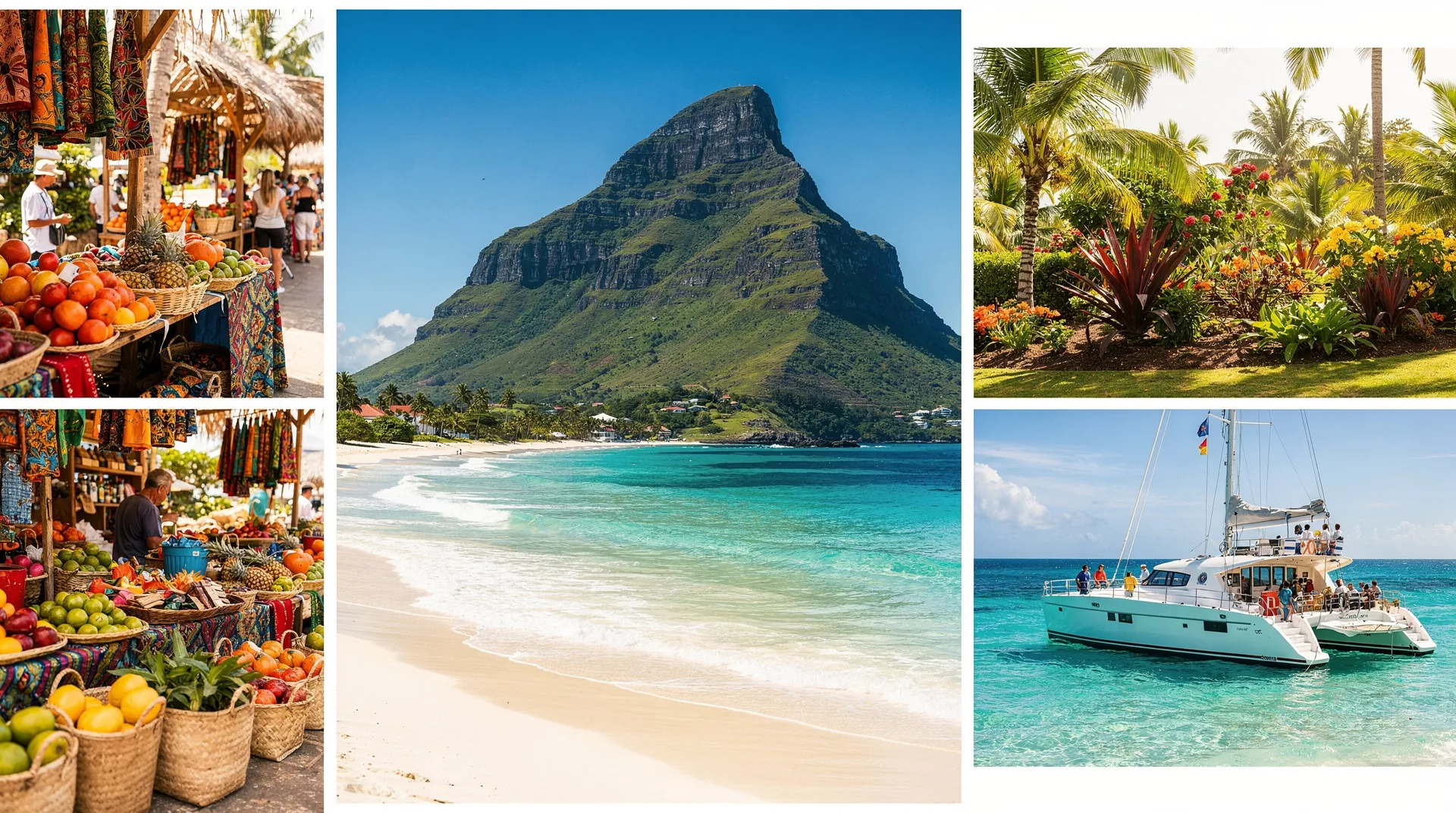
Mauritius comes second, but with a nuance: quantity. The island has more than 150 kilometers of public beaches, freely accessible, with a turquoise lagoon that sometimes stretches for hundreds of meters before the reef. The beaches aren’t as individually photogenic as in the Seychelles, but the accessibility and variety are unmatched. Trou aux Biches, Belle Mare, Mont-Choisy, Flic-en-Flac, Le Morne, Blue Bay: each has its own character.
Reunion has a genuine handicap: few beaches, and the ones that exist are either black sand (Etang-Sale), fragmented, or dangerous (sharks present on the west coast). Boucan Canot and l’Hermitage remain pleasant but don’t hold up against the other two islands.
Beach verdict: Seychelles for beauty, Mauritius for accessible quantity, Reunion last.
Criterion 2: land activities
Reunion is in a different league here. It’s an active volcanic island covering 2,500 km², with more than 1,000 km of waymarked hiking trails, three UNESCO-listed cirques (Mafate, Salazie, Cilaos), an active volcano (Piton de la Fournaise) you can approach, and the Piton des Neiges at 3,071 meters. For hiking, canyoning, paragliding, cycling, there’s simply no comparison.
Mauritius offers decent but limited land activities: the Le Morne Brabant hike (3 hours), the 7 Cascades at Tamarind Falls (4-5 hours), the Black River gorges, Casela Park for families. Quad biking, 4x4 tours and golf are also well developed. It’s enough for 2-3 days of land activities over a 10-day trip, not more.
Seychelles is the most limited on this front: short trails in the Vallee de Mai (Praslin), Anse Major (Mahe), the Morne Blanc climb. But these are not hiking destinations.
Land verdict: Reunion unrivaled, Mauritius decent, Seychelles best skipped.
Criterion 3: water activities
A tighter match.
Seychelles has exceptional marine biodiversity: rays, (harmless) sharks, turtles, dolphins, and a coral reef that’s still very well preserved at certain sites (Aldabra, southern La Digue). But access remains fairly exclusive — few group catamarans, high prices, and scattered snorkeling spots.
Mauritius offers the widest, most accessible range: catamaran trips to Ile aux Cerfs, dolphins at Tamarin, kitesurfing at Le Morne, diving at Coin de Mire, snorkeling at Blue Bay, water sports on almost every beach. And prices are noticeably lower than in the Seychelles.

Île aux Cerfs en catamaran — journée avec déjeuner BBQ
Navigation toute la journée vers l'île aux Cerfs, baignade dans le lagon, snorkeling et déjeuner barbecue à bord. La sortie en mer la plus réservée de Maurice.
Voir les disponibilitésReunion doesn’t have the same marine offering. Bull sharks have made swimming and surfing off-limits on the west coast since 2011. Diving and snorkeling take place in the protected Marine Reserve zone, but the offering is more limited.
Water verdict: Mauritius wins on the quality-quantity-price ratio. Seychelles for biodiversity purists. Reunion trails behind.
Criterion 4: budget
For an equivalent trip (8 days, 4-star hotel, 1 rental car, 3 excursions):
| Item | Mauritius | Reunion | Seychelles |
|---|---|---|---|
| Direct flight from Paris | €800-1,100 | €700-1,000 | €900-1,400 |
| 7 nights, 4-star hotel | €1,100-1,500 | €900-1,300 | €3,000-5,000 |
| Car rental, 7 days | €250-350 | €200-300 | €400-600 |
| Meals (×14) | €250-400 | €280-450 | €600-1,000 |
| 3 excursions | €200-300 | €250-400 | €400-700 |
| Total for a couple | €5,200-6,800 | €4,300-5,600 | €9,800-15,100 |
Reunion is the cheapest, and for good reason: no currency exchange, food prices close to mainland France, plentiful local accommodation (gites, guesthouses). Mauritius sits in the middle but remains very accessible with mid-range hotels and villas. Seychelles is almost 2 to 3 times more expensive.
Criterion 5: climate
All three are tropical with two seasons (dry and wet), but with nuances.
Mauritius: summer from November to April (hot, humid, cyclone risk in January-March), winter from May to October (dry, mild, trade winds). Best time: May-June and September-November.
Reunion: very similar to Mauritius. Weather also varies with altitude (cool in the mountains above 1,500 meters). Best time: April to November.
Seychelles: fewer seasonal variations than Mauritius/Reunion. Southeast trade winds (May-October) or northwest trade winds (November-April). No cyclone season since the islands sit outside the zone. Can be visited year-round.
Climate verdict: Seychelles is slightly more stable, but all three are comparable outside their difficult season.
Criterion 6: access from France
Mauritius: daily direct flight Paris-Mauritius (11 h) with Air France, Air Mauritius, Corsair. Time difference of 2-3 hours, mild jet lag.
Reunion: direct flight Paris-Saint-Denis (11 h) with Air Austral, Air France, Corsair. Same time difference as Mauritius.
Seychelles: direct flight Paris-Mahe (10 h) with Air Seychelles, or via Dubai/Istanbul with Gulf carriers (more affordable). Time difference of 2 hours.
Which island for which profile
You’re traveling with young children (3-10 years old): Mauritius. Protected lagoon, family-friendly hotels, varied kids’ activities, safety, direct flights.
You’re a couple on honeymoon: Seychelles if budget is no object (legendary beaches), otherwise Mauritius (a sea-view suite in a 5-star, 3 times cheaper than in the Seychelles).
You want to move, walk, do sports: Reunion. No other option compares for outdoor and adventure lovers.
You want it all: beach, culture, activities, moderate budget: Mauritius. It’s the island with the broadest range.
You’re a couple of diving enthusiasts: Mauritius (more accessible, more dive clubs, reasonable prices) or Seychelles if budget allows.
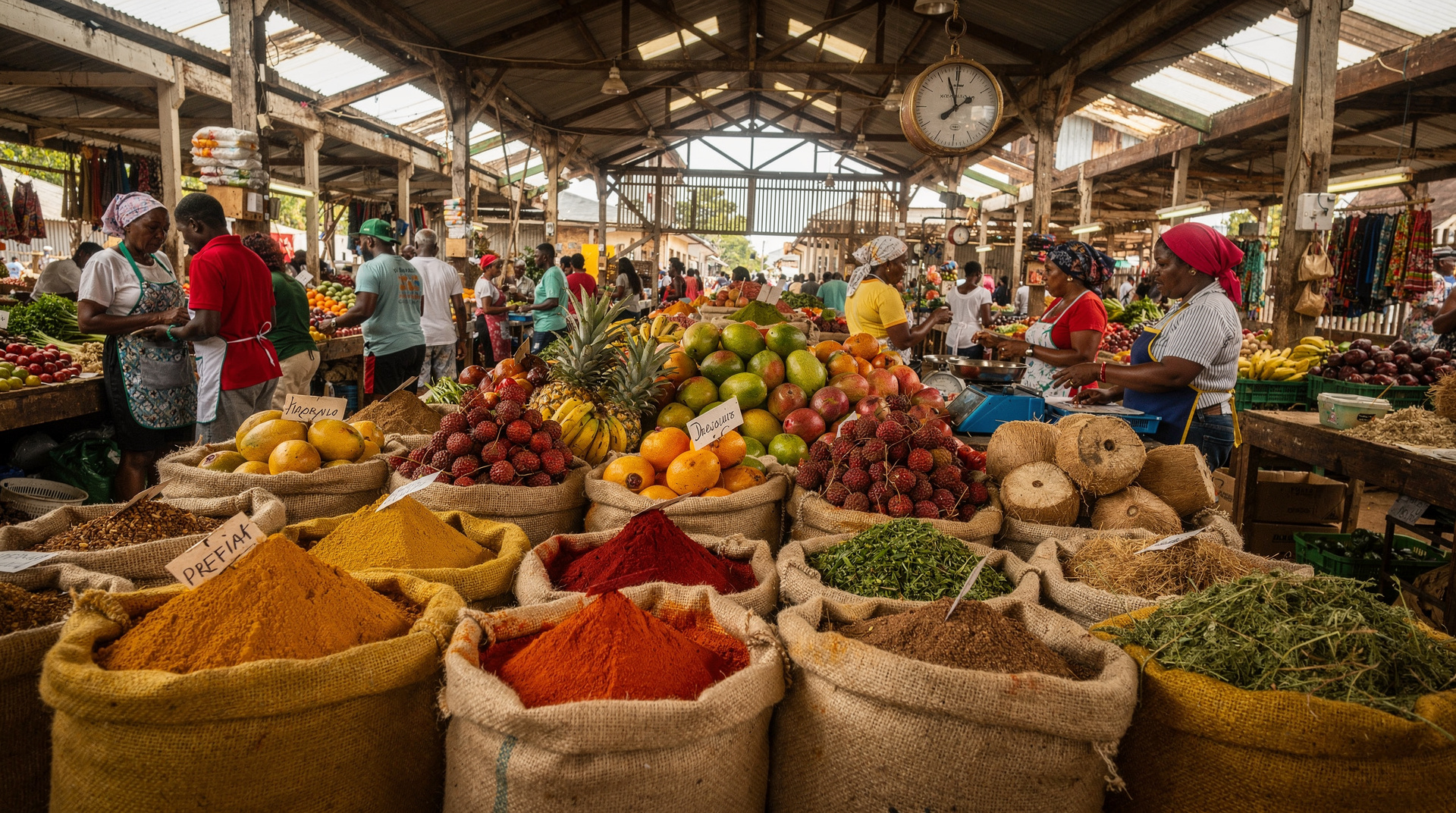
You want an authentic cultural experience: Mauritius. Mauritian creole culture is unique (a blend of Indian, African, Chinese, European influences), the cuisine is extremely varied, and markets and villages are very accessible.
Street food à Port-Louis — visite guidée à pied
Visite à pied du centre historique de Port-Louis avec dégustations dans 5–6 stands emblématiques. Le meilleur intro à la cuisine créole.
Voir les disponibilitésYou’re traveling solo or with friends looking to meet people: Reunion (youth hostels, community gites) or Mauritius (catamaran excursions with a mix of travelers).
What about combining destinations?
The most natural option is Mauritius + Reunion: a 45-minute flight between the two, with several daily connections. Allow at least 8 days (4 + 4) to make the most of both. The complementarity is perfect: beaches and lagoon in Mauritius, mountains and nature in Reunion.
Mauritius + Seychelles is technically feasible (2 h 30 direct flight) but the total cost nearly doubles. It’s worth it for an exceptional honeymoon or anniversary trip, less so for a standard holiday.
Reunion + Seychelles is rare because you have to connect via Mauritius or Madagascar, and the gap between the two propositions is too wide.
Getting around and where to stay: an often overlooked factor
How you get around weighs more heavily than expected in the final decision. In Mauritius, our with-or-without-a-car comparison shows that it’s perfectly possible to explore the island by bus and taxi, which can save a car-free couple several hundred euros. In the Seychelles, the islands’ scattered layout requires boat or plane transfers between Mahe, Praslin and La Digue, which mechanically adds to the budget and complicates logistics. In Reunion, the volcanic terrain makes a car nearly essential as soon as you leave Saint-Denis or Saint-Gilles.
On accommodation, Mauritius offers the widest range: from a €40-a-night guesthouse to 5-star suites at over €500, with a hotel-vs-villa comparison that helps you decide based on your trip’s setup (family, couple, group). Seychelles has a smaller and generally pricier hotel scene, even at the entry level. Reunion offers plenty of gites and guesthouses at gentle prices, consistent with its “hiking” positioning rather than a beach-lounging one.
The wrong way to compare: don’t judge by photos alone
Many travelers pick a destination based solely on Instagram photos, which mechanically favors the Seychelles (the most photogenic beaches) at the expense of Mauritius and Reunion, whose strengths — versatility for one, wild nature for the other — are mostly felt on the ground. Before deciding, it’s worth asking the right questions: how many days of pure beach time do you really want, how tight is your budget, and do you want an island where everything is easy (Mauritius) or one that rewards effort (Reunion, or the more remote Seychelles).
Conclusion
If you’re discovering the Indian Ocean and want a single trip that ticks the most boxes, go to Mauritius. It’s the most versatile island, the most budget-accessible among the three “luxury” options, and the one that appeals to the widest range of profiles.
Then book your first excursions, compare where to stay and enjoy. If you loved Mauritius, Reunion is just 45 minutes away by plane for a different kind of trip next time.
Frequently asked questions
Which destination is the cheapest?
Reunion remains the cheapest thanks to its status as a French overseas department (no currency exchange, prices close to mainland France, affordable accommodation). Mauritius sits between Reunion and the Seychelles. Seychelles is 30 to 50% more expensive than Mauritius for equivalent services.
Which island has the most beautiful beaches?
Seychelles undeniably has the most spectacular beaches (Anse Source d’Argent, Anse Lazio, red granite against a turquoise lagoon). Mauritius offers a very extensive turquoise lagoon and more accessible public beaches. Reunion has few beaches, and they tend to be wild, black-sand or coral-based.
Do you need a visa for these destinations?
For French citizens: no visa is required for Mauritius, Reunion (French territory) or Seychelles, for tourist stays of under 90 days. A passport valid 6 months after the return date, a return ticket and proof of accommodation must be presented.
Which destination is best for hiking and nature?
Reunion, without question: 1,000 km of trails, Piton de la Fournaise (active volcano), three UNESCO-listed cirques, Mafate accessible only on foot. Mauritius offers more modest hikes (Le Morne, Tamarind Falls). Seychelles has few trails but islets worth exploring.
Which destination is best suited to families?
Mauritius is the best suited to families: a protected lagoon for children, plenty of family-friendly hotels, varied kids’ activities, direct flights from France and Reunion. Seychelles suits well-off families. Reunion appeals more to sporty families with teens and older children.
How long is the flight from France?
Mauritius: 11 hours direct from Paris (Air France, Air Mauritius). Reunion: 11 hours direct from Paris (Air Austral, Air France). Seychelles: 10 hours direct from Paris (Air Seychelles) or with a stopover in Dubai/Doha (Gulf carriers).
Can you combine two islands?
Yes, particularly Mauritius and Reunion (45-minute flight between the two, several connections a day). Mauritius and Seychelles is also possible (2 h 30 direct flight) but the cost climbs quickly. The Reunion-Seychelles combination is rarer because it’s logistically more complex.
Which destination is best for a first trip without a rental car?
Mauritius remains the most practical without a car: an affordable bus network, reasonably priced day taxis, and short distances between tourist areas. Seychelles almost forces you into renting a car or paying for inter-island transfers. Reunion, larger and more mountainous, doesn’t lend itself well to a trip without a vehicle.
Should excursions be booked in advance?
In Mauritius, booking flagship excursions (Ile aux Cerfs catamaran, dolphins at Tamarin, Ile aux Aigrettes) one to two weeks before departure is usually enough, except in peak season (Christmas, July-August) when it’s better to book a month ahead.