
Le Morne Beach: Complete Guide, Kitesurfing and Wild Beauty
Updated: August 2026
Is Le Morne good for kitesurfing?
Le Morne is one of the best kitesurfing spots in the world, with steady wind and a vast, shallow lagoon. Conditions are best from May to November.
Le Morne Beach: Wild Beauty and a Natural Spectacle
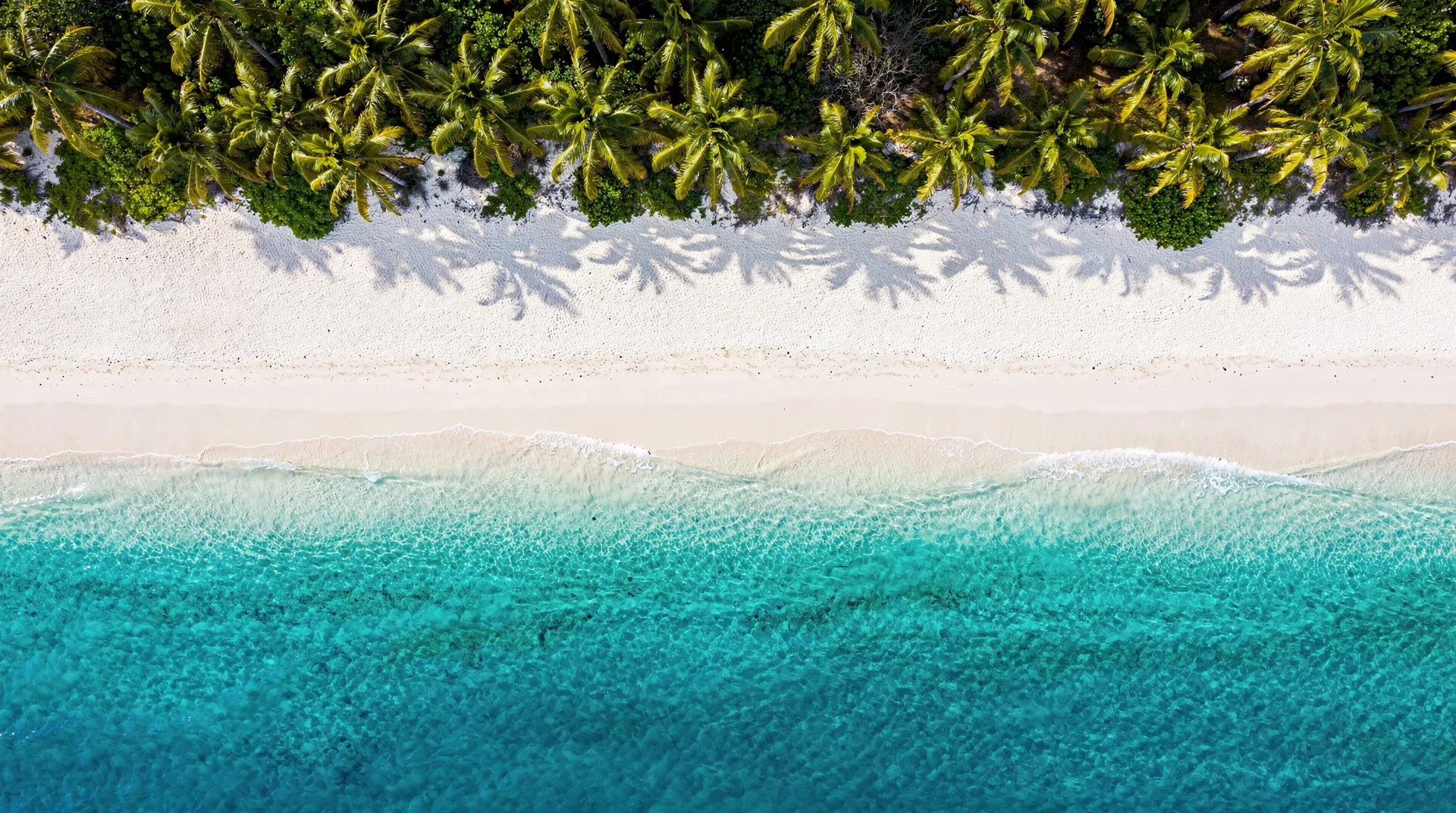
There are beautiful beaches, and then there is Le Morne. One of the most iconic images of Mauritius — perhaps of the entire Indian Ocean — is this lagoon of turquoise and deep blue gradients, dominated by the imposing silhouette of Le Morne Brabant, a 556-metre basalt monolith listed as a UNESCO World Heritage Site. This beach is a unique visual and sensory experience.
The Le Morne peninsula forms the southwestern tip of Mauritius. It is bordered by two beaches with very different characters: the main beach facing the west lagoon, calm and shallow, ideal for swimming and kitesurfing, and a secondary beach facing south, wilder and more exposed to the wind. Between the two, the mountain’s silhouette creates a breathtakingly dramatic backdrop.
Le Morne is also a place steeped in history: the mountain was a refuge for runaway slaves fleeing servitude in the 18th and 19th centuries. Now UNESCO-listed, Le Morne Brabant stands as a powerful symbol of resistance and freedom for the Mauritian people.
At a Glance
| Where | Le Morne peninsula, southwest Mauritius, in the Le Morne region |
| Price | Beach and parking free; guided climb of Le Morne Brabant roughly 1,500 to 2,500 rupees per person |
| Time needed | Half a day for the beach and swimming, a full day with the hike |
| Getting there | Car recommended (1h to 1h15 from Port-Louis); bus possible but slow |
| Best time | May to November for kitesurfing and steady wind; year-round for swimming and the beach |
How to Get to Le Morne Beach
By Car
Le Morne beach is located about 50 kilometres southwest of Port-Louis. From the capital, take the M1 motorway south to Bambous, then follow the coast via Tamarin and Baie du Cap. The drive takes about 1 hour to 1h15. From Flic en Flac, allow 45 minutes via the coastal road.
Our guide to renting a car in Mauritius will help you plan your journeys in this part of the island, which is less well served by public transport.
By Bus
Buses connect Baie du Cap (near Le Morne) with Port-Louis and Souillac, but connections are less frequent than in the north of the island. The journey from Port-Louis can take 2 hours with transfers. For this region, a car is really the recommended option.
Parking at Le Morne
A gravel car park sits at the end of the main road leading to Le Morne beach. It is free and has reasonable capacity. In high season (July-August), it can fill up by late morning. Arrive before 9:30am to be sure of finding a spot.
Swimming and the Le Morne Lagoon
An Exceptional Lagoon
The lagoon at the Le Morne peninsula is one of the largest and most beautiful on the island. It stretches for kilometres and displays exceptional colour gradients, from translucent emerald near the shore to deep blue towards the coral barrier. The waters are warm (25-28°C in summer) and visibility is often excellent.
Depth varies greatly from one area to another: some parts of the lagoon are shallow enough to wade through for hundreds of metres, which is both the site’s appeal for kitesurfers (who need to be able to stand) and a safety asset for swimmers.
Points to Watch
The Le Morne lagoon has a few areas with stronger currents, particularly near the passes and natural channels. Winds can also be strong and unpredictable. Swimming is generally safe in sheltered areas, but check with locals or your accommodation before venturing beyond the usual swimming zone.
The water can be rougher on the south side of the peninsula, which is directly exposed to Indian Ocean swells. This area is not recommended for family swimming.
Kitesurfing and Water Sports at Le Morne
Le Morne is one of the most famous kitesurfing spots in the world. Conditions here are considered among the best on the planet: steady trade winds blowing from the east at 15 to 25 knots, a vast, shallow lagoon, and warm, clear water. Le Morne hosts international kitesurfing competitions every year.
The best season for kitesurfing runs from May to November, with the steadiest and strongest winds. Several kitesurfing schools are based on the beach, offering lessons for everyone from beginners to advanced riders. Our guide to kitesurfing and surfing in Mauritius covers all the options in detail.
Windsurfing, stand-up paddling and kayaking are also popular in the Le Morne lagoon.
Snorkelling at Le Morne
Snorkelling at Le Morne is very good. The coral reef bordering the lagoon shelters remarkable marine life: tropical fish, rays, turtles and occasionally harmless reef sharks. Visibility is generally good to excellent, especially in the morning.
Snorkelling spots are accessible directly from the beach, particularly around the coral areas to the north and south of the peninsula. To explore the best sites with a guide, boat and catamaran trips are organised from Le Morne.
A catamaran excursion from the west coast to Ile aux Benitiers — accessible from Le Morne — is one of the best options for combining top-quality snorkelling with dolphin watching. Our complete guide to Ile aux Benitiers has all the details.
Shade and Natural Setting
Natural shade on Le Morne beach is limited. A few palm trees and beach shrubs grow here and there, but nothing like the canopy of filao trees at Mont Choisy or Trou aux Biches. Bring a parasol or retreat to the shade of your accommodation during the hottest hours.
On the other hand, the visual spectacle is unmatched: the beach with Le Morne Brabant as a backdrop, the blue and turquoise gradients of the lagoon, the dense tropical vegetation on the mountain’s slopes — this is raw, wild beauty that’s hard to rival.
Atmosphere and Crowds
Le Morne beach has a very different atmosphere from the beaches in the north of the island. It is a less touristy destination in terms of infrastructure, wilder and more authentic. The hotels present (including several 5-star properties) are set within the vegetation and don’t visually clutter the beach.
Apart from the kitesurfers — who are out in force from May to November — Le Morne beach is often surprisingly uncrowded for such a beautiful site. Visitors who come here are generally seeking natural beauty and tranquillity rather than a lively atmosphere.
Peak tourist season (July-August) brings a few more visitors, but nothing comparable to the northern beaches. In low season (March-May, October-November), the beach is nearly deserted.
Who Le Morne Beach Is For
Kitesurfers and windsurfers: Le Morne beach is a pilgrimage destination for watersports enthusiasts. Conditions rank among the best in the world. For beginners, local schools offer quality lessons.
Photographers and nature lovers: The visual setting is exceptional at any time of day, but especially at sunrise (golden light on the mountain) and late afternoon (golden reflections on the lagoon).
Couples seeking wild beauty: Le Morne is one of the most romantic spots in Mauritius, in a natural and authentic sense. Not the romance of luxury hotels, but that of a grand landscape.
Hikers: Climbing Le Morne Brabant (with a mandatory guide) is one of the finest hikes in Mauritius, offering a 360-degree panoramic view of the island. Ask your accommodation to help you find a licensed guide.
Accommodation Nearby
The Le Morne peninsula is home to several of the grandest luxury hotels in Mauritius: Heritage Le Telfair, LUX Le Morne, JW Marriott Mauritius. These properties benefit directly from the beach and its exceptional setting.
For more modest budgets, guesthouses and rental villas can be found in Baie du Cap and neighbouring villages. See our guide where to stay in Mauritius for all the options in this region.
Nearby Activities
Ile aux Benitiers
Ile aux Benitiers is accessible by boat from the Le Morne coast. A catamaran excursion to Ile aux Benitiers with dolphin watching is the flagship marine activity in this region. Our guide to Ile aux Benitiers explains how to get there and what to do.
Swimming with Dolphins at Tamarin
A 25-minute drive to the northwest, Tamarin is the starting point for swimming with wild dolphins. Spinner dolphins regularly frequent the waters off the southwest coast. Our complete guide to swimming with dolphins explains how to experience this ethically.
Horseback Riding and Exploring the Region
Several local operators offer horseback rides on the beach and through the peninsula’s tropical vegetation. An original way to discover Le Morne’s exceptional setting.
The Southern Route
Le Morne is an excellent base for exploring the south coast of Mauritius: Souillac, the Chamarel waterfalls and the Seven Coloured Earths are all less than an hour’s drive away.
Practical Tips
Wind: Le Morne is windy, especially from May to November. Pack a light layer for evenings and mornings. The wind is a blessing for kitesurfers but can make picnics tricky.
Beach access: The main beach is accessible from the public car park. Respect the zones reserved for kitesurfers to avoid accidents — sharing space between kitesurfers and swimmers requires care.
Climbing Le Morne Brabant: The climb is physically demanding (3-4 hours round trip) and should never be attempted without a licensed guide. Wear sturdy walking shoes, bring water, and use sun protection.
Drinking water: The region is less developed than the north in terms of services. Bring enough drinking water for the day, especially for sporting activities in the heat.
Le Morne Beach FAQ
Can you climb Le Morne Brabant on your own? No, a licensed guide is mandatory for climbing Le Morne Brabant. This rule protects the UNESCO-listed site and keeps hikers safe on difficult terrain.
Are there restaurants on Le Morne beach? Restaurants are mostly located within the hotels. One or two independent establishments exist near the beach. The region has fewer independent dining options than Flic en Flac or Grand Baie.
Is Le Morne suitable for children? Partially. The calm swimming areas of the lagoon are safe for children. However, the presence of kitesurfers in certain zones requires closer supervision. The site isn’t as family-friendly as Trou aux Biches or Mont Choisy.
Can you see the “underwater waterfall” effect at Le Morne? The underwater waterfall optical illusion, visible from the air, is one of the most impressive sights in Mauritius. You can spot it from the plane on landing, from a microlight or from a helicopter. The illusion is created by sand and sediment flowing over the edge of the continental shelf.
How much does the guided Le Morne Brabant hike cost? Expect to pay generally between 1,500 and 2,500 rupees per person depending on the operator, guide included. Ask your accommodation, who can recommend a licensed guide and book a time slot suited to your level.
Do you need to rent a car to enjoy Le Morne? It isn’t mandatory but is strongly advised. The region is less well served by buses than the north of the island, and a car makes it easy to combine the beach with Chamarel or Souillac in the same day. See our guide to renting a car in Mauritius.
Le Morne Brabant: UNESCO Site and Place of Memory
Le Morne Brabant mountain isn’t just a spectacular backdrop for beach photos — it’s a site steeped in profound and painful history, making it one of the most symbolically important places in Mauritius and in the history of the Atlantic and Indian Ocean.
During the era of slavery (18th and early 19th centuries), runaway slaves found refuge in the inaccessible cliffs and caves of Le Morne Brabant. The mountain, with its steep walls and difficult access, offered natural protection against the colonists who sought to reclaim their “property.” These maroon slaves (from the term “marron,” referring to fugitive slaves) lived in precarious but free conditions within this natural fortress.
Mauritian oral tradition recounts that in 1835, when the British abolished slavery, soldiers climbed up to the fugitives at Le Morne to announce their freedom. But the slaves, seeing the soldiers approach, believed it was an attempt at recapture and threw themselves from the cliffs rather than be enslaved again. This tragedy, occurring at the very moment of liberation, is one of the most poignant episodes in Mauritian history.
Inscribed as a UNESCO World Heritage Site in 2008 under the designation “Le Morne Cultural Landscape,” the site is recognised as a “symbol of slave resistance.” It is also part of UNESCO’s “Slave Route” programme. A museum and memorial commemorate this history on the peninsula.
Advanced Water Sports at Le Morne
Le Morne is internationally recognised within the watersports community. Every year, world-class competitions take place in the Le Morne lagoon, drawing the best riders on the planet.
The “One Eye,” as professionals call the wave that breaks in the pass near the Le Morne peninsula (the name comes from an eye-shaped scar in the coral seen from above), is regarded by kitesurfers as one of the five best waves to kite in the world. Powered by the steady trade wind and carried by the southern swell, riders here perform spectacular aerial tricks that can easily be watched from the beach.
Stand-up paddling in the Le Morne lagoon is an experience accessible to all levels. The calm morning waters are ideal for beginners, while the afternoon wind creates more dynamic conditions for experienced paddlers. Lessons and rentals are available from local operators.
For everything about water activities at Le Morne and other spots on the island, our guide to kitesurfing and surfing in Mauritius is the definitive reference.
The Le Morne Peninsula: Beyond the Beach
The Le Morne peninsula is a geographic entity in its own right, worth exploring beyond the main beach. Walking all the way around the peninsula takes about 3 hours and reveals very different sides of the site: wild beaches on the south side directly exposed to the ocean, wetlands and mangroves in the lower areas, and spectacular views from the heights over the two-toned lagoon.
Photography enthusiasts will find fresh perspectives on this exploration of the peninsula: the beach seen from above on the mountain slopes, kitesurfers in action on the lagoon seen from a height that adds depth to the images, the two-toned lagoon viewed from an elevated vantage point.
Naturists will find isolated stretches of beach on the south side of the peninsula, accessible only on foot — though these beaches should be avoided for swimming due to waves and currents.
Luxury Accommodation at Le Morne: An Exceptional Setting
The Le Morne peninsula is home to some of the most luxurious and exclusive hotels in all of Mauritius. These properties were built in harmony with the exceptional natural setting, with tropical gardens sweeping down to the beach.
Heritage Le Telfair Golf Resort and Spa is an absolute benchmark of Mauritian luxury hospitality, with a private beach and a renowned golf course. LUX Le Morne Resort was designed with an eco-luxury vision — the architecture blends with the natural vegetation and minimises visual impact from the beach. JW Marriott Mauritius Resort is one of the most recent additions to the peninsula’s luxury segment, with contemporary architecture facing the lagoon.
These properties offer a complete hotel experience (fine-dining restaurants, luxury spas, water activities, kids’ clubs) in one of the most spectacular natural settings on the island. For families on an all-inclusive stay or for honeymoons, Le Morne is hard to beat. Our guide where to stay in Mauritius details all the options in this region.
When to Come to Le Morne Beach, Depending on What You Want
| Period | Conditions | Ideal for |
|---|---|---|
| May to November | Steady wind, sea sometimes choppy | Kitesurfing, windsurfing, photographers |
| December to April | Lighter wind, sea often calmer | Relaxed swimming, snorkelling, families |
| July-August | High season, a bit more crowded | Lively atmosphere but never overcrowded |
| March-May, October-November | Low season, nearly deserted beach | Tranquillity and beautiful photographic light |